The road to getting Full Self-Driving (Supervised) approved across the European Union has felt like a bureaucratic maze, but Europe’s biggest automotive powerhouse has officially clarified where it stands. Germany’s Federal Ministry for Transport (BMDV) has confirmed that a decisive vote on EU-wide recognition is currently scheduled for December 2026 after it was delayed from October 6.
The official correspondence came to light after @TeslaDE195932 shared a response from the BMDV’s citizen service division on X. While confirming that the Technical Committee – Motor Vehicles (TCMV) will hold further consultations on October 6 ahead of the December vote, the German ministry gave a candid look into its internal evaluation.
Technology-Open, But Skeptical on Speeding
According to the ministry, Germany is maintaining a “technology-open and safety-oriented” approach. Germany’s Federal Motor Transport Authority (KBA) is currently in direct talks with Dutch vehicle authority RDW — which was responsible for giving FSD entry into Europe earlier this spring — and Tesla to examine all technical data before solidifying its voting stance.
Regulators acknowledged that FSD (Supervised) appears capable of managing a wide variety of traffic situations, particularly in complex city driving. However, the BMDV highlighted specific safety reservations that mirror pushback seen elsewhere in Europe:
System Speeding: Regulators expressed concern over FSD automatically exceeding posted speed limits by up to 50% in certain conditions.
Urban Operation: The ministry is reviewing whether driver-assistance features of FSD’s caliber should be allowed to operate on dense inner-city streets.
Driver Liability: Officials stressed that driver responsibility remains absolute — FSD is still classified as an SAE Level 2 system, after all. They warned that in the event of any malfunction or incident, liability rests entirely with the driver rather than the manufacturer.
Where Europe Stands Ahead of December
Germany’s concern about potential overspeeding stems from FSD’s Speed Offsetfeature and isn’t new. Sweden, France, and Croatia have all voiced identical reservations, as have road safety groups like the European Transport Safety Council (ETSC). Croatia has overcome those qualms and already approved FSD for use on public roads, while Sweden is urging the EU to withhold bloc-wide clearance until Tesla ensures the system strictly adheres to posted limits.
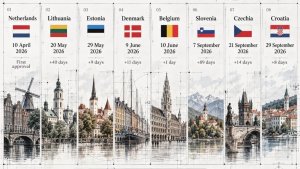
While Germany prepares its official position, the rest of the continent isn’t standing still. Rather than waiting on Brussels, eight European nations have already granted independent national approval for FSD:
Whether Germany will eventually issue an independent national permit ahead of the wider EU vote remains to be seen. But with the KBA actively evaluating real-world driving data alongside the Dutch approval framework, Germany’s willingness to engage keeps the door wide open for Tesla to conquer its European home base and the region’s most demanding highway network.
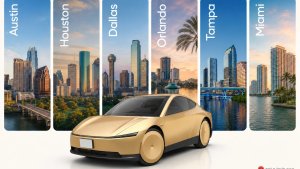
Tesla’s autonomous ride-hailing network has steadily grown from an experimental pilot in Austin into a commercial footprint spanning seven major metropolitan regions across the U.S. While early testing relied on human safety monitors in the driver's — or passenger’s — seat, several regions have already transitioned to fully unsupervised rides (and one quite notably hasn’t).
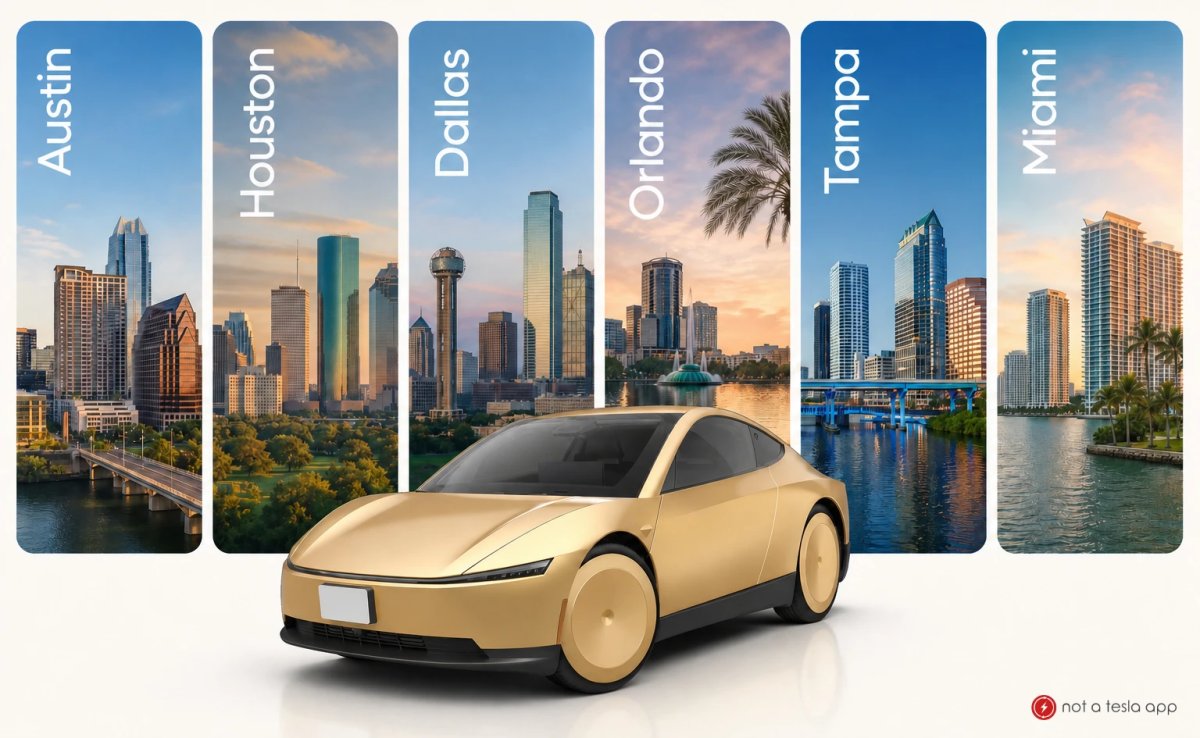
For passengers hoping to hail a Robotaxi, service availability depends entirely on where you are on the map. Here’s a comprehensive look at all seven active Robotaxi territories, how large their operational zones are, and what vehicles operate in each market.
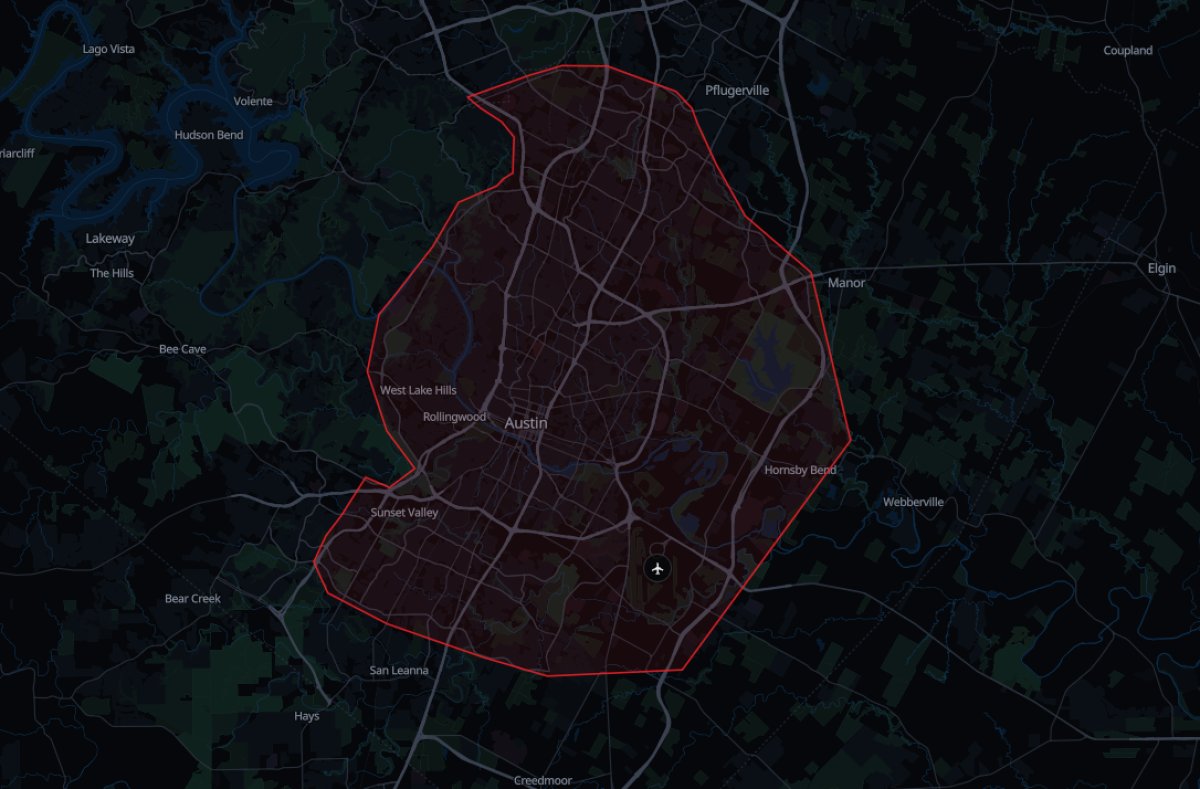
Austin, Texas: 246 sq. miles
Robotaxi Tracker
Austin serves as Tesla’s flagship proving ground and remains the most versatile market in the fleet. Covering a massive 246 sq. miles (637 sq. km), the geofence blankets almost the entirety of the urban core, spanning from North Austin and Tech Ridge down past South Austin and Del Valle, bounded roughly by Highway 183, Highway 71, and State Highway 130.
It wasn’t always this big, however. When the service launched as a beta program in June 2025, it was limited to just 20 sq. mi of territory. Tesla’s Robotaxi service area in Austin has grown to more than 12x its original size over the course of several expansions, the latest coming just last month.
Austin is also the first city where riders can hail steering wheel-less Cybercabs alongside unsupervised Model Y robotaxis, with the former offering even cheaper per-mile fares across downtown corridors, East Riverside, and surrounding suburban neighborhoods.
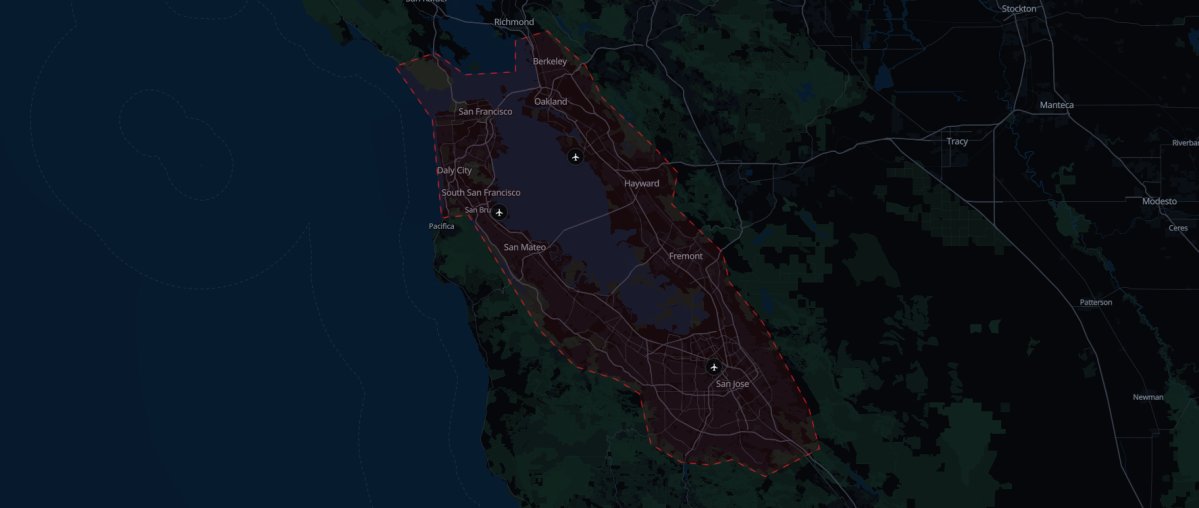
San Francisco Bay Area, California: 1,098.4 sq. miles
Robotaxi Tracker
By pure land area, Northern California is easily the largest territory in the network, spanning an enormous 1,098 sq. miles (2,845 sq. km). The zone extends from Richmond, Berkeley, and Oakland across the East Bay, down through Fremont and Milpitas into San Jose, and reaches across the peninsula through Palo Alto, San Mateo, Daly City, and San Francisco itself. Tesla’s Robotaxi vehicles even serve the San Francisco and San Jose International Airports.
Unlike the Texas and Florida markets, California operations are currently limited to Model Y builds with in-vehicle safety monitors while regulatory approvals for commercial driverless operation continue moving through state agencies. The California DMV has currently only given Tesla a testing permit that requires a driver even if the vehicle is driving itself.
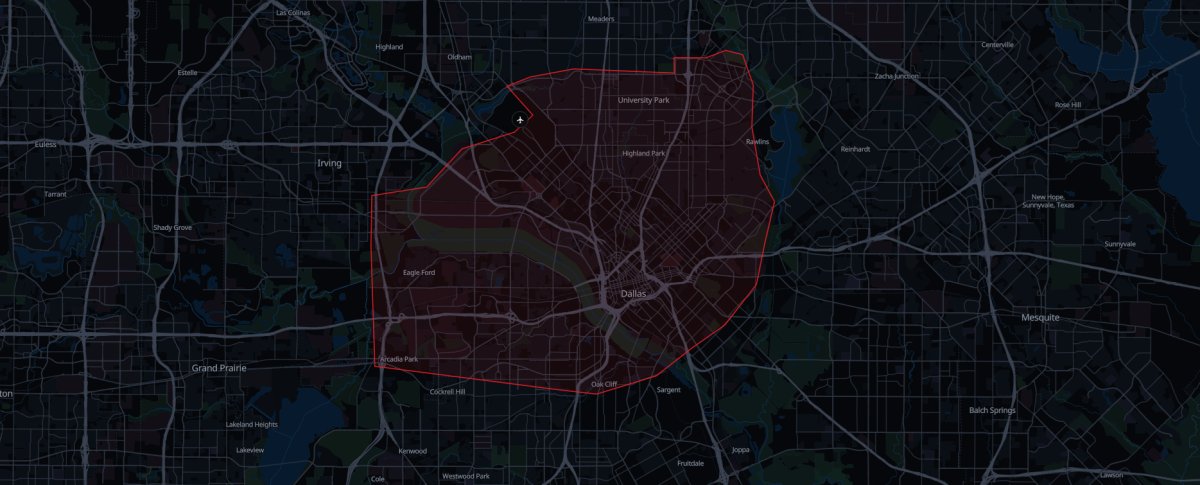
Dallas, Texas: 31 sq. miles
Robotaxi Tracker
Dallas operates as a focused urban pocket measuring 31 sq. miles (80.1 square km). The operational polygon centers around Downtown Dallas, stretching north through Oak Lawn, Highland Park, University Park, and Bluffview, while bordering Dallas Love Field airport on the west and Lower Greenville on the east.
Rides here run fully unsupervised using retrofitted Model Y vehicles, connecting major commercial hubs and medical districts like Parkland Health.
Houston, Texas: 25 sq. miles
Robotaxi Tracker
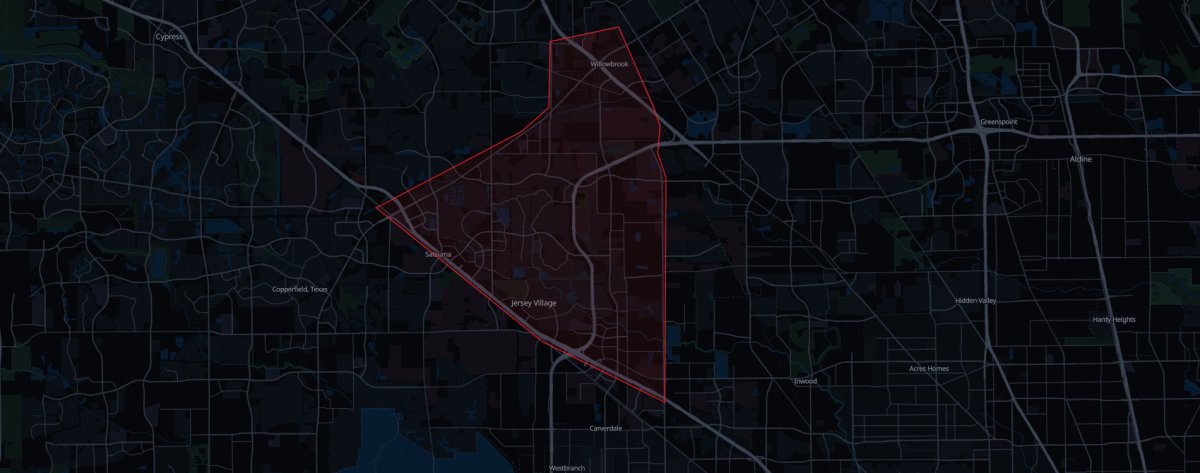
Houston’s service boundary spans 25 sq. miles (64.6 square km) in the northwest quadrant of the city. The perimeter encloses Jersey Village, Harvest Bend, Windermere Lakes, and North Houston Gardens, running along Highway 290 and reaching toward Willowbrook Mall along State Highway 249.
Like Dallas, trips are handled by unsupervised Model Y vehicles servicing both residential neighborhoods and retail corridors.
Miami, Florida: 30.8 sq. miles
Robotaxi Tracker
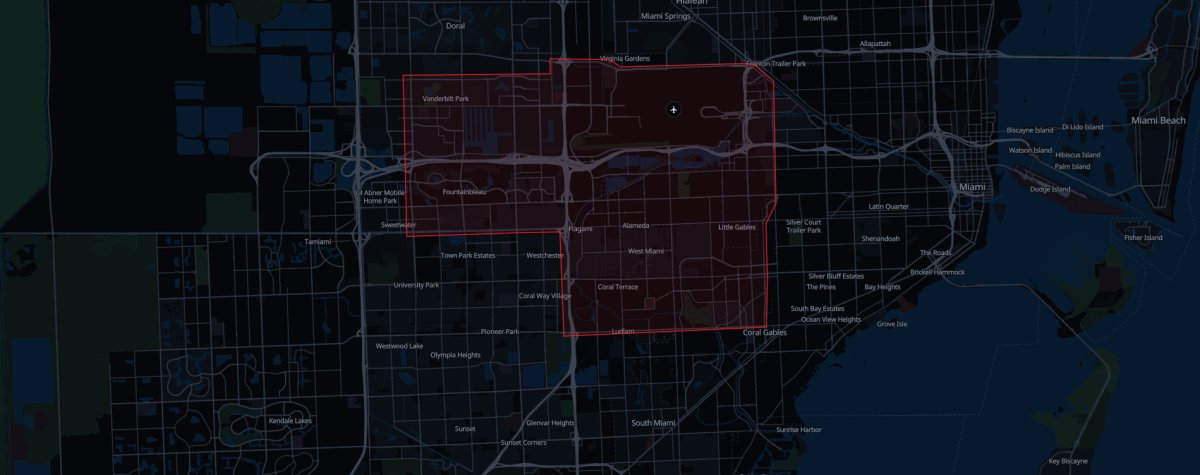
Marking Tesla’s first foray into the Southeast, Miami features a compact 30.8 sq. mile (79.9 sq. km) corridor. The geofence sits just west of downtown, wrapping directly around Miami International Airport and reaching south into Coral Gables, bordered by Highway 836 and Highway 41.
The fleet operates driverless Model Y rides, providing convenient transport for airport travelers and nearby business districts.
Orlando, Florida: 26.2 sq. miles
Robotaxi Tracker
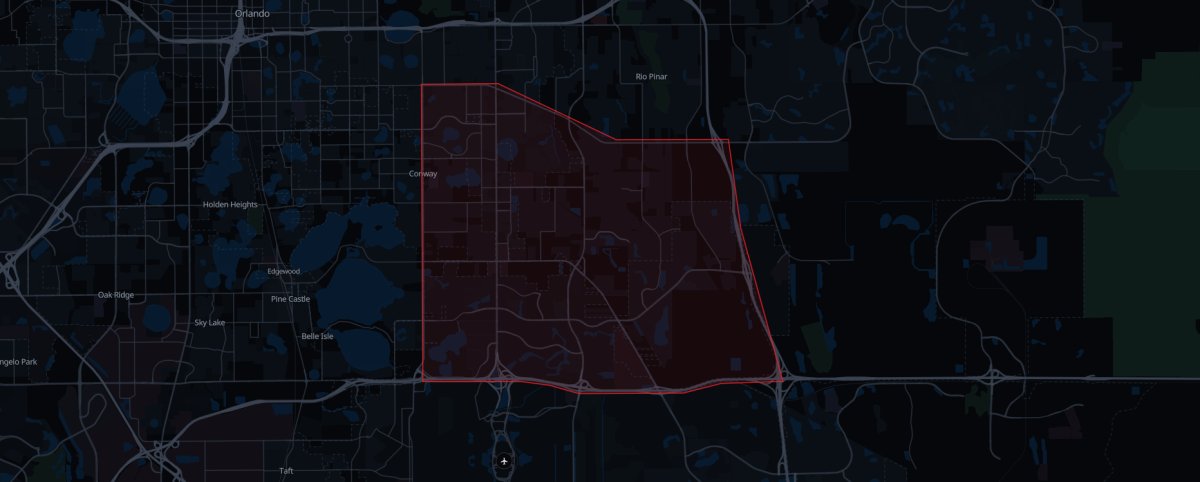
Covering 26.2 sq. miles (67.9 sq. km), Orlando’s geofence covers eastern neighborhoods just north of Orlando International Airport. The boundary spans Conway, Azalea Park, and Semoran Boulevard (State Road 436), framed by State Road 408 on the north and State Road 417 on the east. Service is fully unsupervised.
Tampa, Florida: 23.6 sq. miles
Robotaxi Tracker
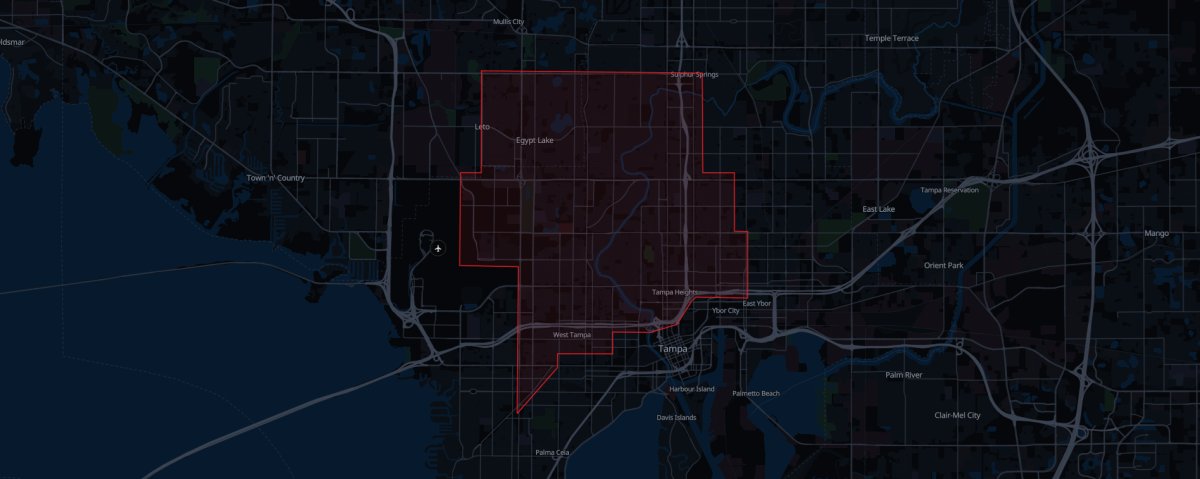
Rounding out the Florida triad, Tampa spans 23.6 sq. miles (61.2 sq. km) directly east of Tampa International Airport. The zone covers Egypt Lake-Leto, Old Seminole Heights, and Tampa Heights, stretching down toward the northern edge of downtown near Interstate 275 and Highway 92. Riders in the service area can hail unsupervised Model Y rides.
Ready to Scale With FSD v15
While these geofences might look modest compared to rivals like Waymo that have been at it for years, they’re designed as tight validation perimeters before wider expansion.
Tesla plans to release FSD v15 to the Robotaxi fleet in October. The software update introduces a 10-billion-parameter neural network — up from roughly one billion on current branches — and is expected to unlock 24/7 service hours.
As Tesla’s Robotaxi network accumulates real-world commercial miles, expect these individual city boundaries to grow outward consistently and entirely new ones to crop up often.