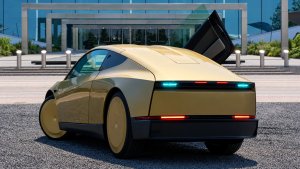
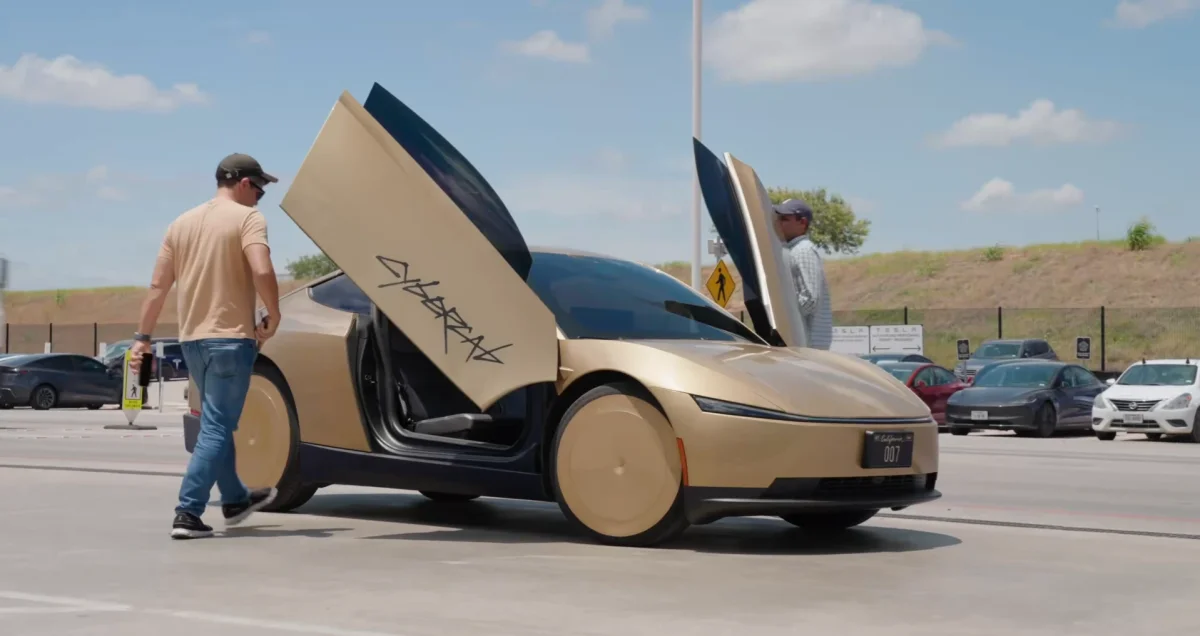
Tesla’s Cybercab doesn’t go through a traditional paint shop. Its color comes from color-infused plastic panels made through reaction injection molding, or RIM. But that wasn’t the only option Tesla considered.
In a recent deep dive with Munro Live, Engineering VP Lars Moravy, Cybercab lead Eric Earley, and other members of the Tesla team behind the Cybercab explained why they ditched paint and what other approaches they tried first.
Why Skip the Paint Shop?
Moravy called the paint shop “one of the most expensive parts of a factory,” costing a few hundred million dollars and around a million man-hours to build. So the team went back to “rule number one at Tesla: question the requirements. Why do you need paint?”
Skipping paint also fit Tesla’s new unboxed manufacturing process. The Model 3 and Model Y are built as a full body shell that gets painted before parts are fitted through its openings. The Cybercab is built in separate front, rear, floor, and side modules that come together at the end. Running those segments through a paint shop would have meant boxing them back up first, which defeats the point. Tesla says this approach could eventually build one Cybercab every 10 seconds at full tilt.
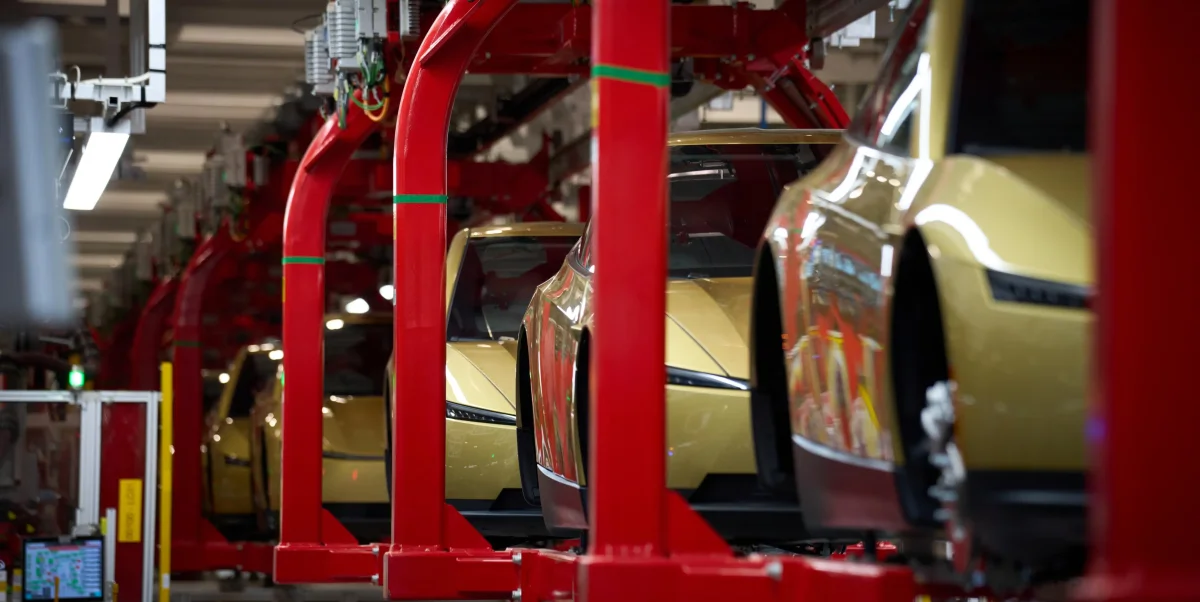
Tesla even dropped the e-coat used on the Model Y and Cybertruck in many areas. The aluminum alloys used in the Cybercab’s castings don’t oxidize and lose strength over time like many other alloys, so they don’t need to be coated.
The Other Options Tesla Tried
“This isn’t the only idea we had,” the team said. Tesla looked at in-mold lamination, where a vinyl film is placed inside the mold, and the plastic is molded onto it. It also tested a film-over-panel approach, where a painted film is applied to a stamped panel, pressed on, and folded over the edges.
Tesla got pretty far with both, to the point that it started using in-mold lamination on the Semi, which recently entered high-volume production at the new Nevada factory. RIM ultimately won out because it’s fast and cost-effective across panels with different shapes. It only adds a step inside the molding machine Tesla already uses.
The team said “we get no orange peel,” and that if you scratch a panel, “you can repair it just like you would normal paint shop.” Since the color goes all the way through, small scratches won’t reveal a different color underneath. We’ve also looked at how RIM helps reduce the Cybercab’s environmental footprint.
Coming to Other Teslas?
Tesla said it will try to bring these ideas to future vehicles, and that the Cybercab is designed to run “half a million miles at least.”
For now, Cybercab production exceeds how fast Tesla can actually deploy the vehicles, since they only operate on the Robotaxi network in Austin. That could change soon, with Cybercab rides launching in Dallas next month and Tesla trying to deliver its first customer Cybercabs before the end of the year.
Follow Us on Google
Add Not a Tesla App as a preferred source on Google to see more of our stories in Top Stories.
Add to Preferred SourcesOrdering a New Tesla?
Get FSD free for 3 months by using our referral code.