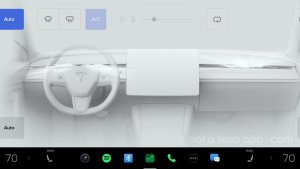
Tesla’s Halloween Mode (photos and videos of all its features) brings Halloween inspired FSD visuals, a trick or treating mode and spooky sounds, but it looks like Intel vehicles won’t be included in the festivities.
Intel-equipped vehicles have started receiving the software update and unfortunately Halloween Mode is missing in the release notes.
AMD-equipped Model S, Model X and Cybertruck vehicles are receiving Halloween features alongside compatible Model 3 and Model Y vehicles.
Not a Tesla App
Halloween Features Missing
Some exclusions were expected. Intel vehicles already lack the fullscreen parked visualization and Photobooth, so their Halloween versions were unlikely to appear.
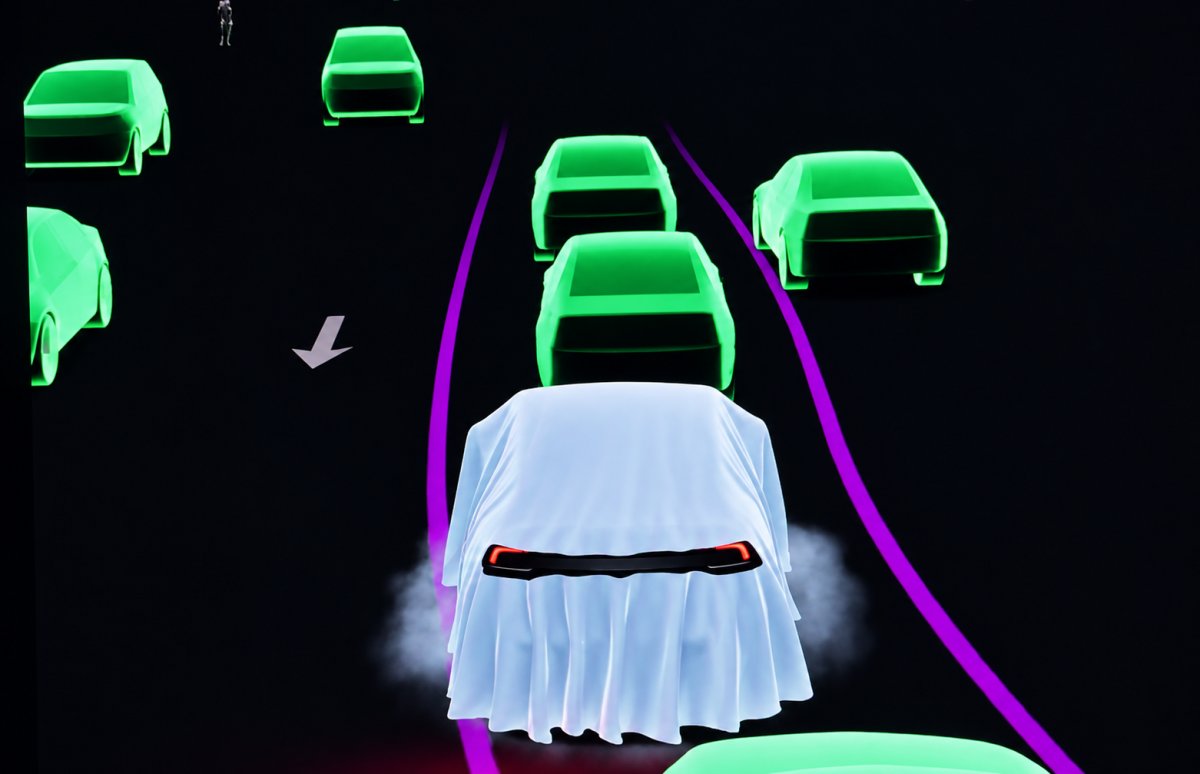
The remaining omissions are less clear. Our Halloween Mode feature walkthrough shows the FSD visualizations, such as green vehicles, skeleton pedestrians, pumpkin traffic lights and purple lane markings and driving paths. These replace the familiar visualization elements, which made an Intel version seem likely.
The ghost sheet over the vehicle does change its movement depending on the vehicle speed, which likely wouldn’t have run well on Intel vehicles. However, Tesla could have implemented a simpler, static alternative. Trick or Treat mode, which displays a grinning and winking jack-o’-lantern and reacts to approaching visitors with sounds and lights, is likely also missing.
However, most surprising are the apparently missing Halloween wraps, lock sound, owl turn signal sound, exterior-speaker voice effect and Fright Show light show, which are completely possible on Intel vehicles. The vehicles already support custom wraps and, with the required exterior speaker, custom lock sounds.
Not a Tesla App
The Intel and AMD Infotainment Divide
Tesla’s transition from Intel Atom to AMD Ryzen took place across models during 2021 and 2022. Older hardware already misses several graphics-heavy features, but that still left room for some Halloween Mode features on Intel vehicles.
The newest Intel-based vehicles are now approaching five years old, so we understand Tesla has to move on at some point, but it still comes as a disappointment. Catering development of features to a slower infotainment unit either slows down development or reduces the quality of features on more powerful vehicles, but unfortunately, it is going to disappoint owners of these vehicles.
Could Halloween Features Still Reach Intel Vehicles?
A later update could potentially add Intel-compatible Halloween Mode features. It’s also possible some smaller Halloween features, such as the Halloween wraps are included in the update, but Tesla has simply not mentioned it in the release notes.
SpaceX is taking a big step toward becoming a mobile carrier in the U.S. In an update on its website, SpaceX announced an agreement to acquire a nationwide portfolio of up to 14 MHz of paired low-band spectrum in the 800 MHz range. SpaceX says the deal will “pave the way for Starlink Mobile to become a major mobile carrier in the U.S.”
The licenses come from Grain Management, a digital infrastructure investment firm, which acquired the 800 MHz portfolio from T-Mobile in August. Financial terms for the deal weren’t disclosed.
Why Low-Band Spectrum Matters for Starlink Mobile
Until now, Starlink has offered satellite connectivity to smartphones through existing carriers like T-Mobile. With Starlink Mobile, SpaceX would become a carrier itself, offering service directly to phones across the U.S. and eventually around the world.
Starlink Mobile already has global 2 GHz mid-band spectrum for high-bandwidth capacity, thanks to SpaceX’s earlier spectrum agreements with EchoStar. The new 800 MHz spectrum adds a coverage layer, letting the signal pass through walls and other obstacles so phones stay connected inside buildings. As SpaceX points out, “most existing mobile devices already support this underused band.”
Once the FCC gives final approval for the deal, SpaceX plans to combine its satellite-to-mobile constellation with an advanced ground network. SpaceX says that would make Starlink Mobile the first network operator to deploy both satellite and terrestrial spectrum, covering indoors, outdoors, and cellular dead zones in one network.
FCC Approves 15,000 Next-Gen Satellites
SpaceX also got a regulatory win this week. The FCC approved Starlink Mobile’s Gen 2 constellation, authorizing SpaceX to launch 15,000 satellites optimized for 2 GHz spectrum worldwide. SpaceX says the second-generation satellites will deliver more than 100 times the bandwidth of the current hardware, bringing high-speed service to unmodified phones anywhere. The FCC also granted a conditional U.S. waiver of satellite power limits and approved the backhaul bands Starlink’s V3 broadband satellites use.
A New Rival for Verizon, AT&T, and T-Mobile
Wall Street took notice. Shares of T-Mobile, Verizon, and AT&T each fell more than 5% in extended trading after the announcement.
Starlink was SpaceX’s largest revenue source when it went public earlier this summer, and its profitability has only grown since. A carrier business could add a new revenue stream on top of that. The spectrum deal still needs FCC approval, but SpaceX now has the satellites, spectrum, and regulatory momentum to start building Starlink Mobile into a real alternative to the big three carriers.