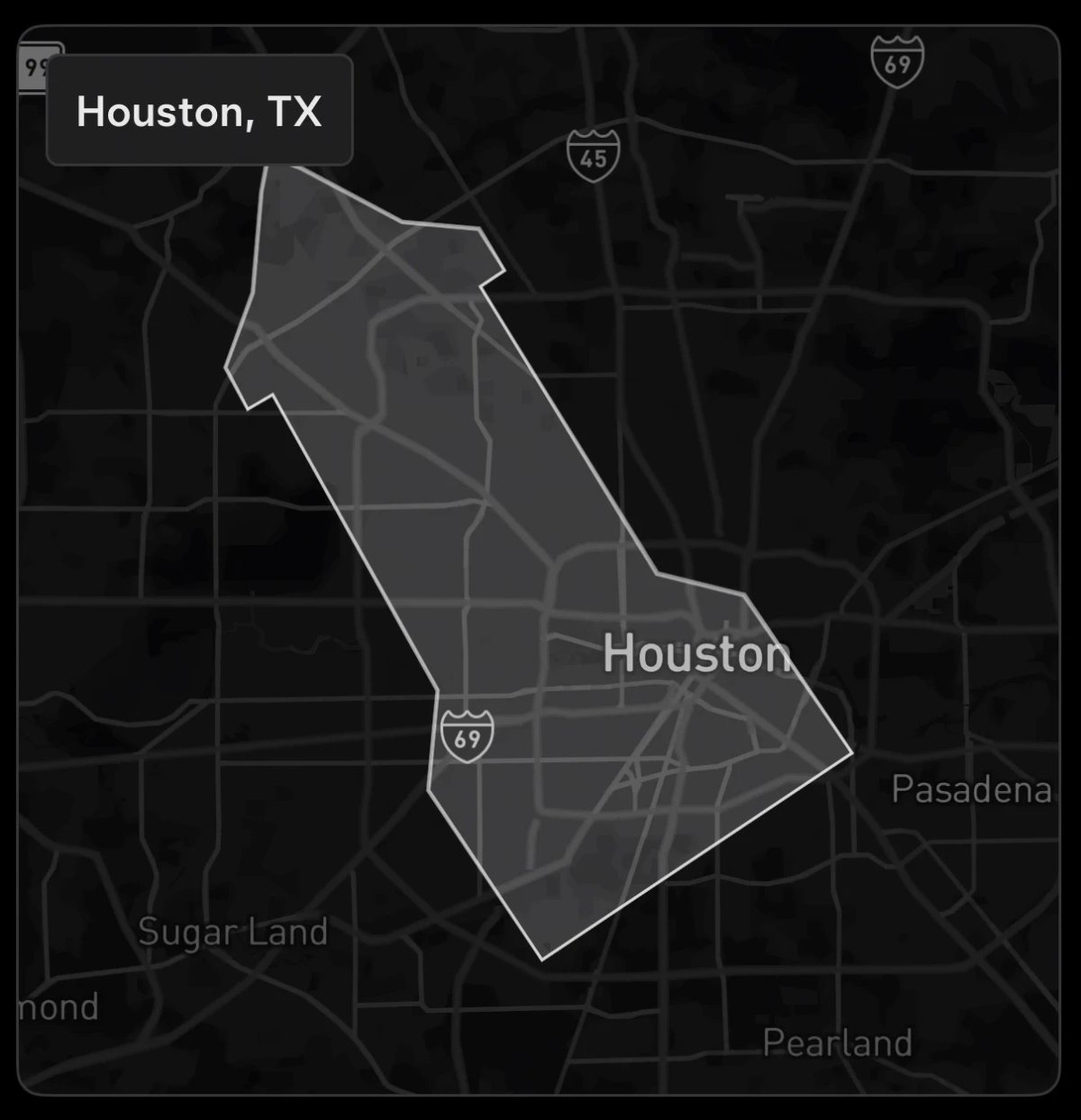
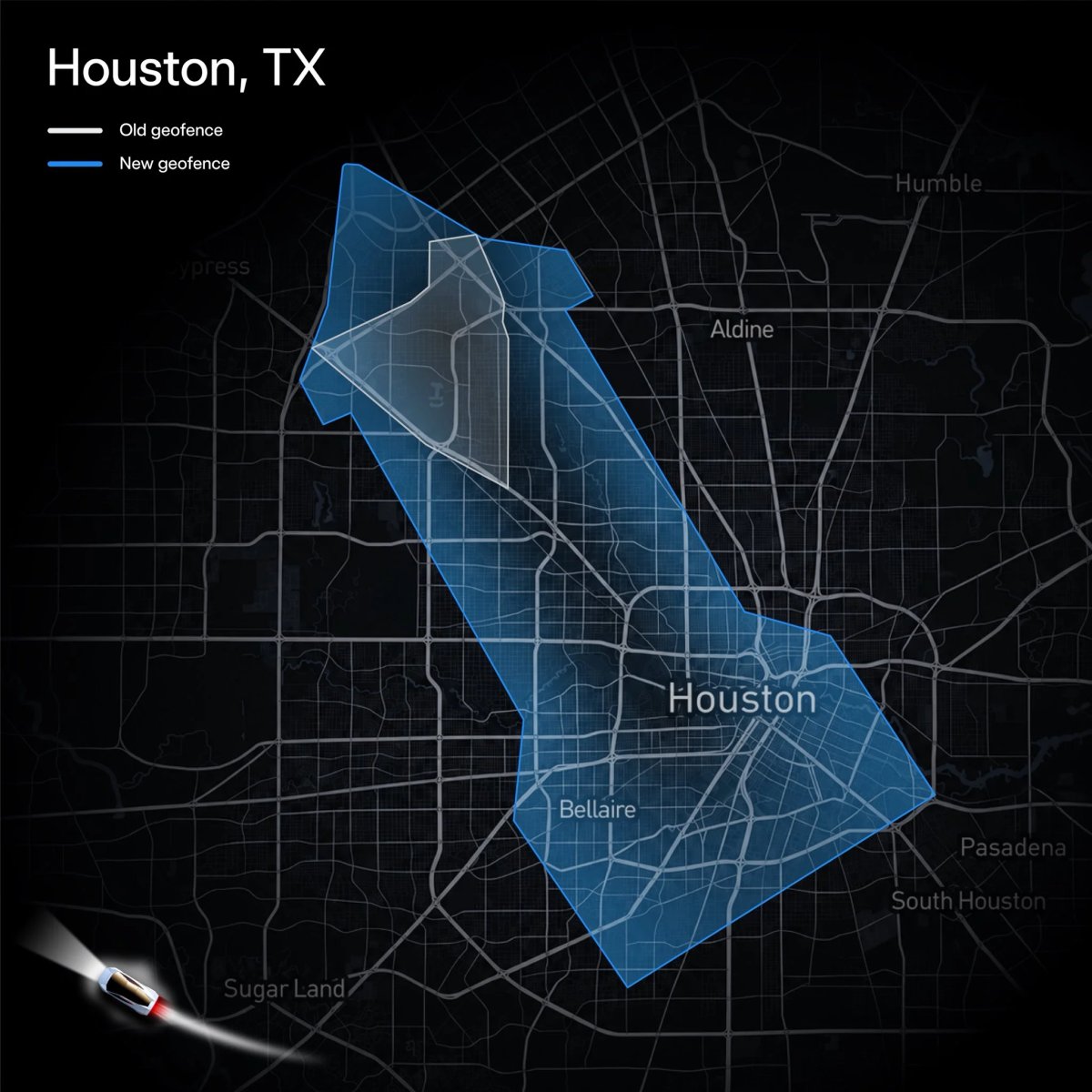
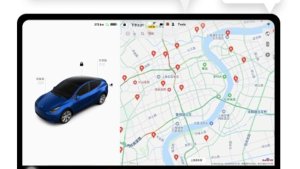
Tesla’s Robotaxi service area in Houston just got a lot bigger. Tesla’s official Robotaxi account announced the expansion on X, confirming the bigger service area is now live.
The geofence has grown about 10x from about 25 square miles to roughly 254 square miles, an increase of 916%. It’s the first time Tesla has expanded its Houston service area since launching unsupervised Robotaxi rides in the city in April. Rides there are fully driverless and are currently given in retrofitted Model Y robotaxis.
Not a Tesla App
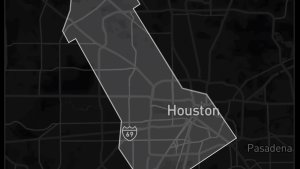
A Rocket-Shaped Service Area
The new geofence stretches from the northwest, near Copperfield and Jersey Village, all the way down through Downtown Houston and Bellaire. It ends near Missouri City in the southwest and just short of Pasadena and South Houston in the east. It now covers about 1.2 million residents but still stops short of serving either of Houston’s major airports, George Bush Intercontinental (IAH) and William P. Hobby (HOU).
The zone’s shape is hard to miss. It looks a lot like a rocket, likely a nod to Houston’s role in human spaceflight as home to NASA’s Johnson Space Center and Mission Control. Then again, Tesla’s Austin geofence took on a phallic shape for a while, so maybe this is a more family-friendly version of the same joke.
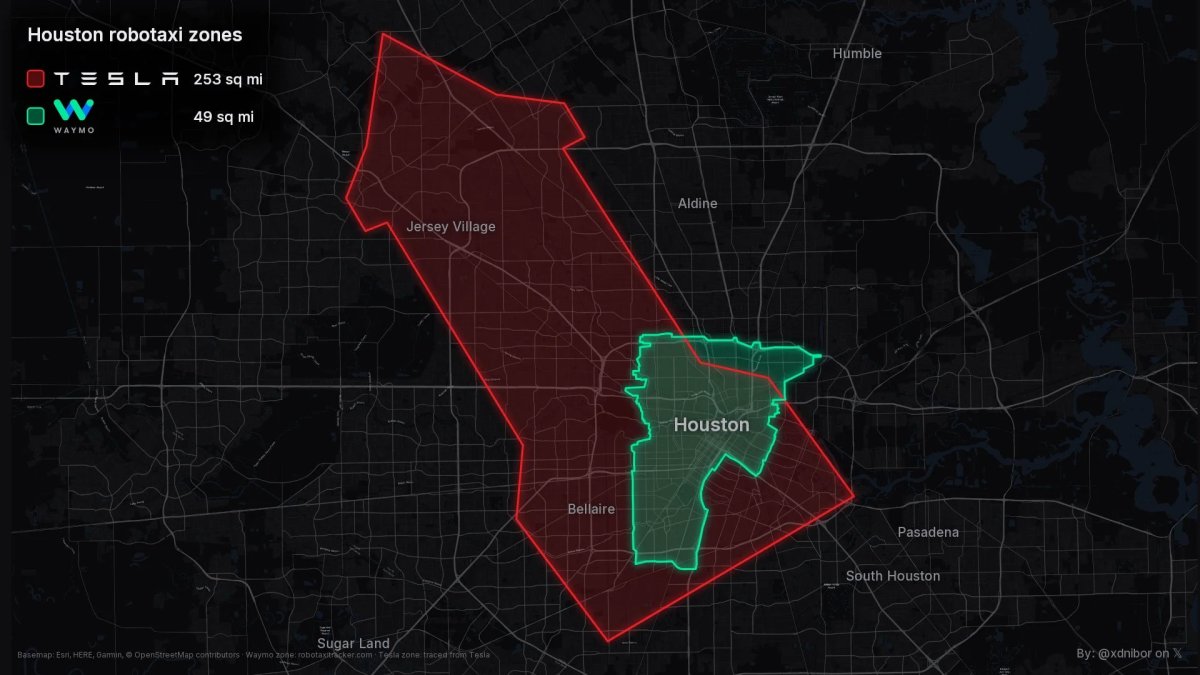
Now About 5x Larger Than Waymo
The expansion also puts Tesla well ahead of Waymo in Houston. A comparison map from @xdNiBoR on X shows Waymo’s Houston service area at just 49 square miles, mostly centered on Downtown. That makes Tesla’s zone roughly five times larger, and it now fully surrounds most of Waymo’s coverage.
@xdNiBoR / X
Houston was already logging major miles before the change. Tesla’s recent safety report showed Houston’s Robotaxi fleet had driven nearly 226,000 autonomous miles as of mid-October, and that number should climb faster with this much more ground to cover.
Dallas Was Supposed to Be Next
We weren’t expecting a jump this big in Houston so soon. Dallas seemed like the more likely candidate, since Tesla plans to launch Cybercab rides there next month, making it only the second market after Austin to offer them. In comparison, the Dallas geofence is still just 31 square miles. Cybercabs have been spotted testing and nesting in Houston too, but they aren’t set to start commercial rides there yet.
Houston Robotaxi riders can hail a ride in the bigger zone now. With Cybercabs due to launch in Dallas next month, a similar expansion there may not be far behind.
Latvia has officially approved Tesla’s Full Self-Driving (Supervised) for use on its roads. Tesla Europe announced the news on X, adding that the rollout will begin soon.
Latvia is now the 10th EU member nation to independently approve FSD and the 18th country worldwide. It also joins its Baltic neighbors Lithuania and Estonia, which approved FSD back in May. In Europe, FSD now goes by a new name after Tesla rebranded it as Tesla Assisted Driving as part of its push for EU-wide approval.
Where FSD Is Approved in Europe
These EU countries have independently approved FSD for public roads so far:
As in other European markets, the Latvian rollout should start with HW4 vehicles and ship Tesla’s European build of FSD v14. That version is tuned for local speed limits, traffic patterns, and road rules.
Progress Toward EU-Wide Approval
Tesla still needs a qualified majority of at least 15 countries in the upcoming EU vote for bloc-wide FSD approval, which was previously delayed to the end of the year. Germany, a key player, has said it will back FSD in the vote if Tesla renamed it and limited it to not go more than 10% over the speed limit, while France and Sweden have pushed back over the Speed Offset feature.
If Germany and all 10 approving countries vote in favor, Tesla would still need four more to reach 15.
Approval across Europe would also give FSD a bigger audience. Tesla said in its Q3 2026 earnings report last week that FSD has hit a record 1.74 million subscribers, with more than half on monthly plans, and Europe should start materially moving the needle as more countries come on board.