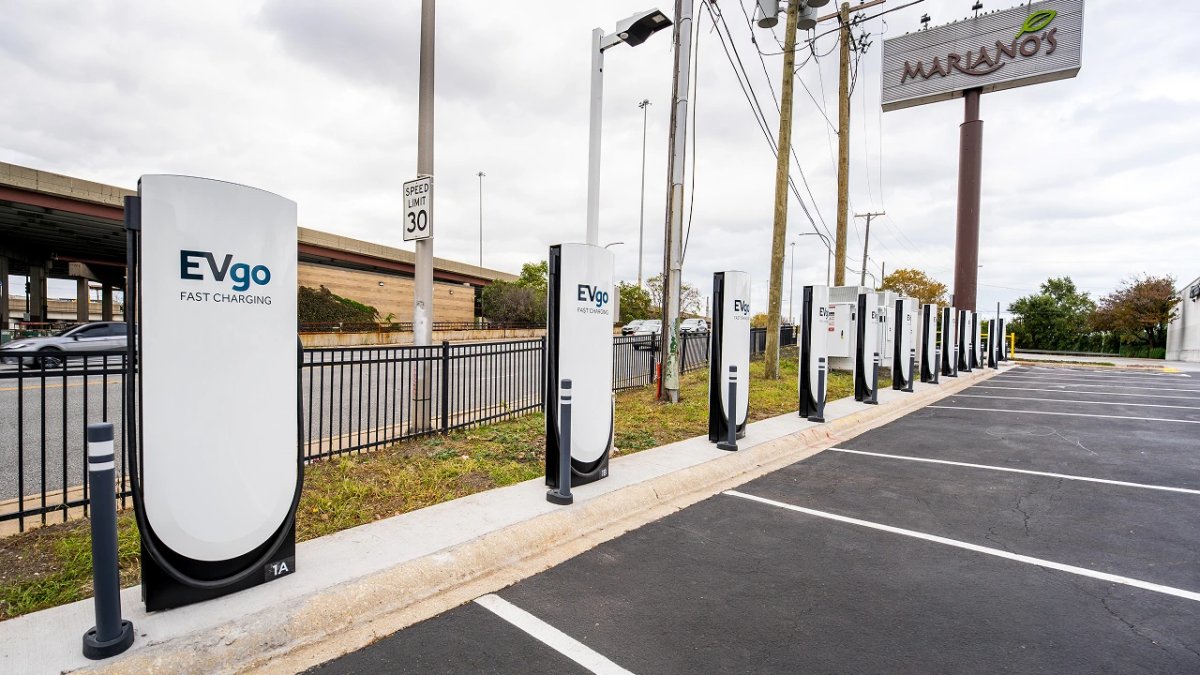
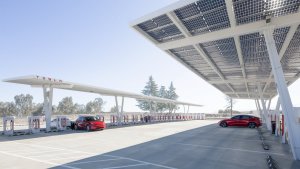
EVgo has opened its first Tesla Supercharger site. According to an EVgo press release, the new “EVgo Supercharger” station near downtown Chicago has 12 stalls, the first of hundreds EVgo plans to add to its network across the U.S.
“By serving both Tesla and non-Tesla NACS drivers, we’re doubling EVgo’s addressable market and continuing to meet EV drivers where they are and where they want to charge,” said EVgo CEO Badar Khan.
The stalls can deliver up to 500 kW at up to 1,000 volts, and they come with Magic Dock, so both NACS and CCS vehicles can charge without an adapter. The longer V4 cables also make it easier to reach charge ports in different spots.
The first locations are at grocery-anchored shopping centers owned by Regency Centers, a longtime EVgo partner, so drivers can shop or grab food while they charge.
Easier to Find for Tesla Drivers
EVgo Superchargers show up in Tesla’s Trip Planner and in-car navigation, just like Tesla’s own Superchargers. Since early September, Tesla drivers who enable third-party chargers in their navigation can also see other EVgo locations with NACS stalls.
It’s the latest step in a relationship that goes back years. EVgo was the first public charging network to offer a Tesla connector, and in 2022 it added Autocharge+ support for CCS-equipped Teslas, letting owners plug in and charge without swiping a card.
More NACS Stalls Coming
EVgo started adding NACS connectors to its own chargers in 2025 and expects to have 500 NACS stalls nationwide by the end of this year, on top of its Superchargers. It plans to have a NACS connector at all of its sites built in 2023 or later within the next two years.
EVgo hasn’t said where its next Supercharger sites will open or when, but with hundreds more planned, Tesla owners should start seeing more EVgo pins in their navigation soon.
Nearly every part in a Shanghai-built Tesla now comes from China. According to CnEVPost, Tesla says Giga Shanghai’s parts localization rate has reached 98%, up from the “over 95%” figure it has used for the past several years.
Tesla shared the new number in a press release during the ninth China International Import Expo (CIIE), which opened in Shanghai this week.
400+ Local Suppliers
Tesla now works with more than 400 tier-1 suppliers in China, and more than 60 of them have joined its global supply chain. That means parts developed with Chinese suppliers are making their way into Teslas built in other parts of the world.
Some of that work goes beyond just supplying parts. The Model Y L’s seat armrests and leg supports were co-developed with Chinese suppliers to suit local buyers. The six-seater first launched in China and has since expanded to Japan, South Korea, Australia, and the U.S., where it launched in July.
Inside Tesla’s Biggest Factory
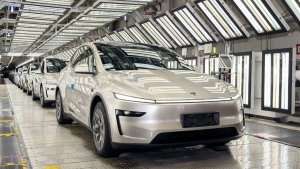
Giga Shanghai broke ground in January 2019 and started production by the end of that year. It’s Tesla’s largest factory, with an annual capacity of about 1 million vehicles, mainly the Model 3 and Model Y.
Tesla says about 93.3% of the plant’s roughly 730,000 square meters (7.9 million sq. ft.) is used for production. There are no fancy reception halls or executive-only dining rooms and elevators, so more space goes toward building cars. The factory produces a vehicle about every 30-plus seconds and reuses more than 94% of its industrial waste.
In the first 10 months of this year, Giga Shanghai’s wholesale sales, including exports, reached 810,889 vehicles, up 21.42% from last year. Tesla China sold 67,829 vehicles in October alone, up about 10% year over year.
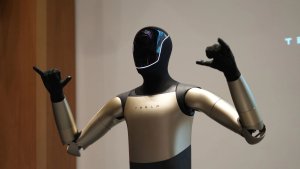
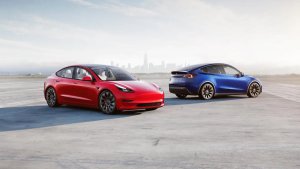
At CIIE, Tesla is showing off the new Model Y Performance, an exploded-parts display of the Model Y, Optimus, and the Cybercab. Tesla has now delivered more than 10 million vehicles worldwide, and with Shanghai’s sales up more than 20% this year, its biggest factory doesn’t look like it’s slowing down.