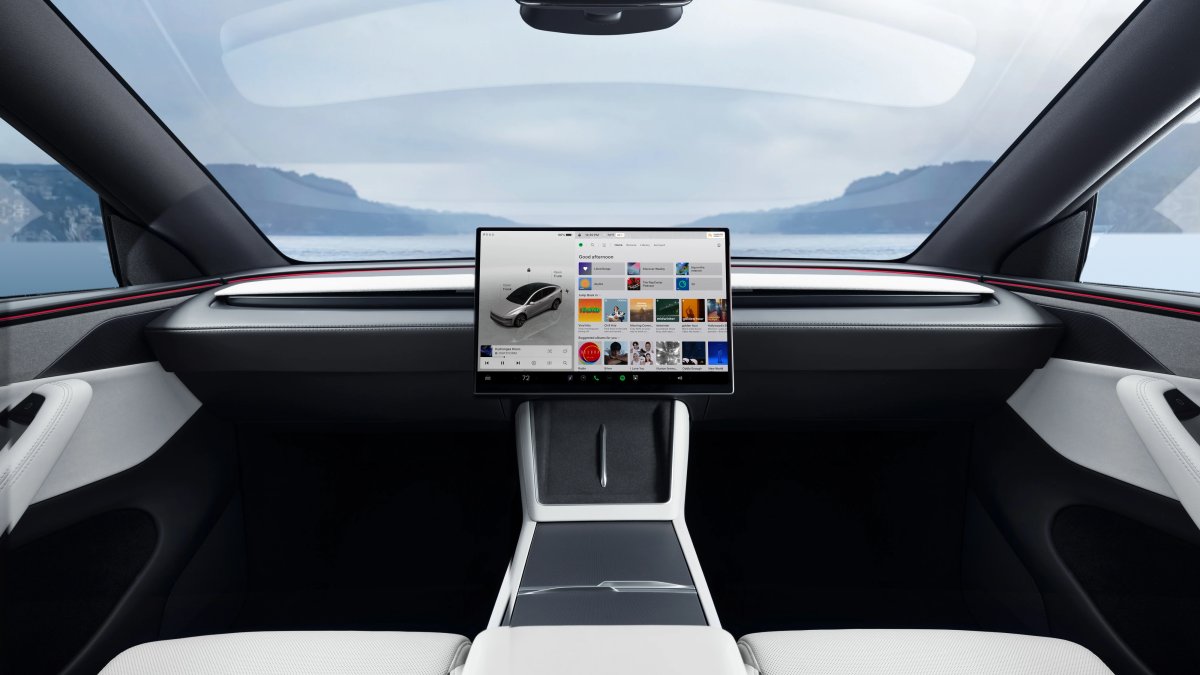
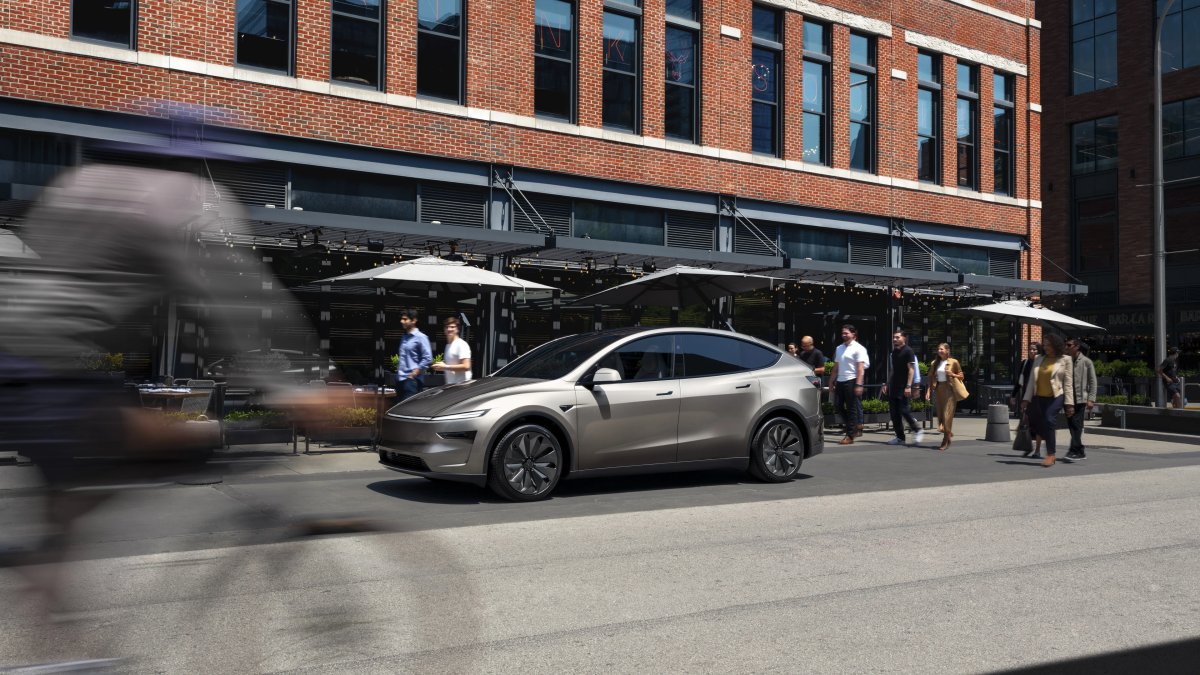
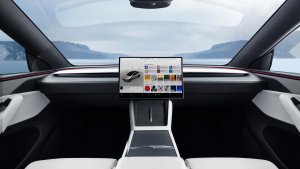
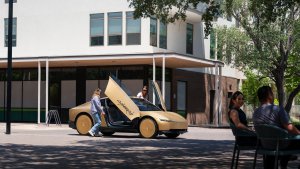
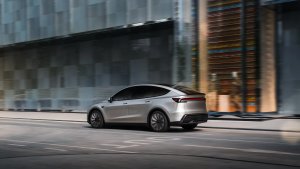
This is a render of what an autonomous Model Y L without a steering wheel, pedals, or side mirrors could look like.
Not a Tesla App
The Cybercab won’t be Tesla’s only vehicle without a steering wheel. In his interview at The New York Times’ DealBook Summit, Elon Musk said Tesla plans to build an autonomous version of the Model Y that “wouldn’t have steering wheels and pedals,” designed for “transporting groups of six or seven people.”
Musk made the comment right after saying Tesla should move all Model Y production to the Model Y L. The interviewer asked whether Tesla would keep selling cars or just build robotaxis. Musk didn’t give a direct answer, but he did explain where the Cybercab fits and where it doesn’t.
Why a Bigger Autonomous Vehicle
According to Musk, the average ride carries about 1.2 people, so the two-seat Cybercab covers about 90% of all passenger miles driven. That still leaves families and larger groups, which is where the steering wheel-less Model Y would come in.
Musk only said “Model Y,” but he’s most likely talking about the Model Y L. He mentioned groups of four, six, or seven people, and the only Teslas that can seat that many are the Model X, older seven-seat Model Y configurations (which are notoriously not the most comfortable), and the six-seat Model Y L. The Model Y L can technically fit seven if three kids squeeze into the third row.
Not a Tesla App
Until now, Tesla has said that Robotaxi riders who need more than two seats would be able to hail a Model Y or Model X. But Tesla ended Model S and Model X production earlier this year to make room for Optimus. Meanwhile, the Model Y L offers a lot more room than the regular Model Y, along with efficiency upgrades like faster cabin cooling and better range in hot weather, both of which would help in an autonomous fleet setting.
Then there’s camera cleaning. The Cybercab has washers for each of its external cameras, since there’s no driver to step in when a camera gets dirty. The Model Y L only has a washer for its front bumper camera, so Tesla would likely need to add washers to the rest of its cameras. If it does, that change could make its way to the regular Model Y L that customers already drive.
Musk didn’t give a timeline, and Tesla is still ramping up Cybercab production while also developing a silver Cybercab with a smaller battery but similar range thanks to efficiency improvements. For now, an autonomous Model Y L looks like the most likely way Tesla will handle larger groups of Robotaxi riders.
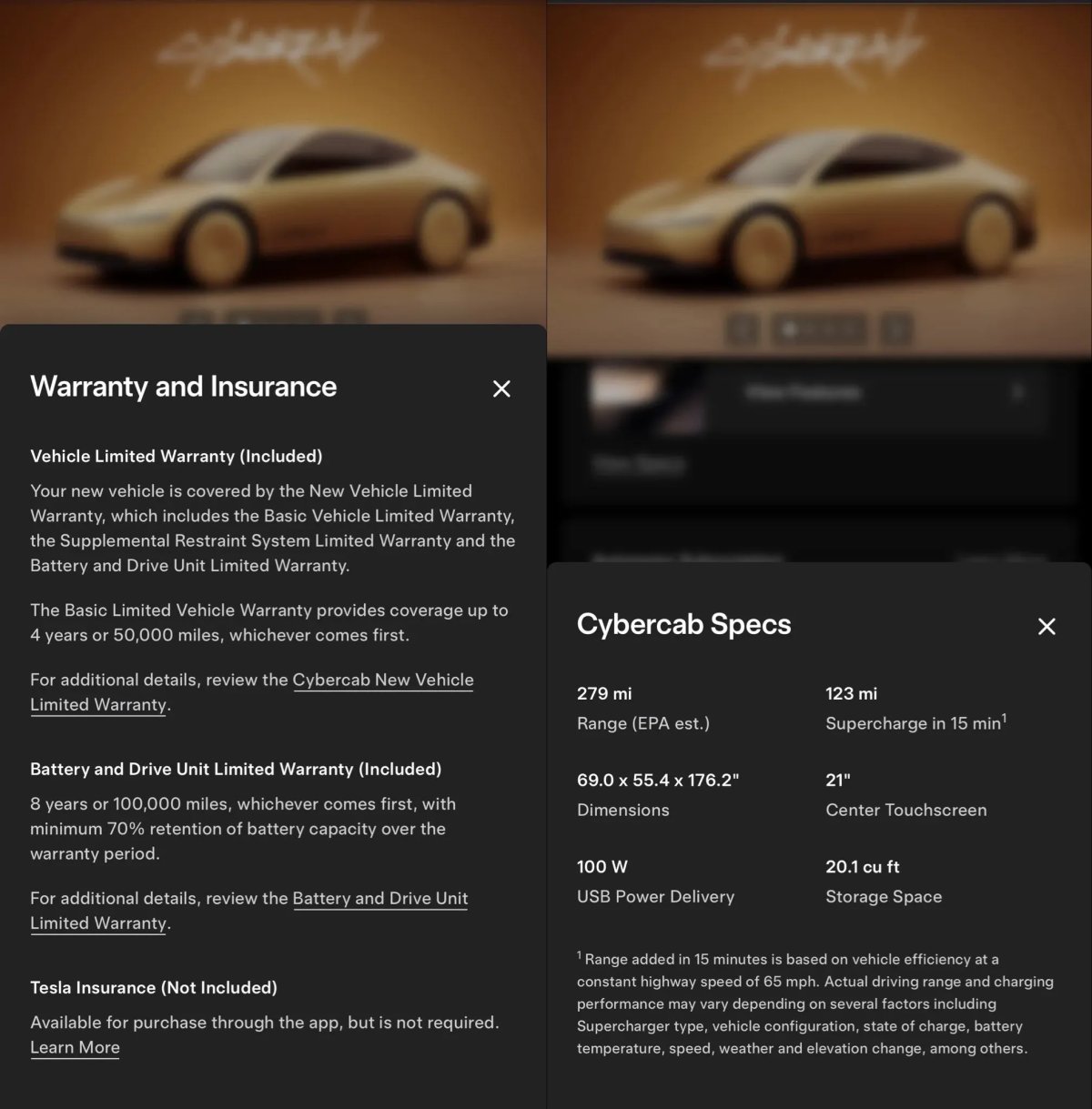
Tesla has started sending a new round of invites to buy the Cybercab, about a week after it first opened Cybercab orders for personal use. With more people getting into the configurator, we now have a better look at the specs of the Cybercabs Tesla will deliver to end users, thanks to screenshots shared on X by @sa_futurist.
Range, Charging, and Dimensions
Tesla lists the Cybercab with an EPA-estimated range of 279 miles, and it can add up to 123 miles in 15 minutes at a Supercharger. That’s a bit less than the roughly 293 miles that earlier Cybercab spec details pointed to, based on its 47.6 kWh battery. It’s also well below the 418-mile figure Tesla listed in its June EPA filings, which weren’t adjusted for real-world driving.
The Cybercab measures 69.0 inches wide, 55.4 inches tall, and 176.2 inches long, with 20.1 cubic feet of storage space. Inside, there’s a 21-inch center touchscreen and 100W USB power delivery for charging phones, laptops, and more.
Not a Tesla App
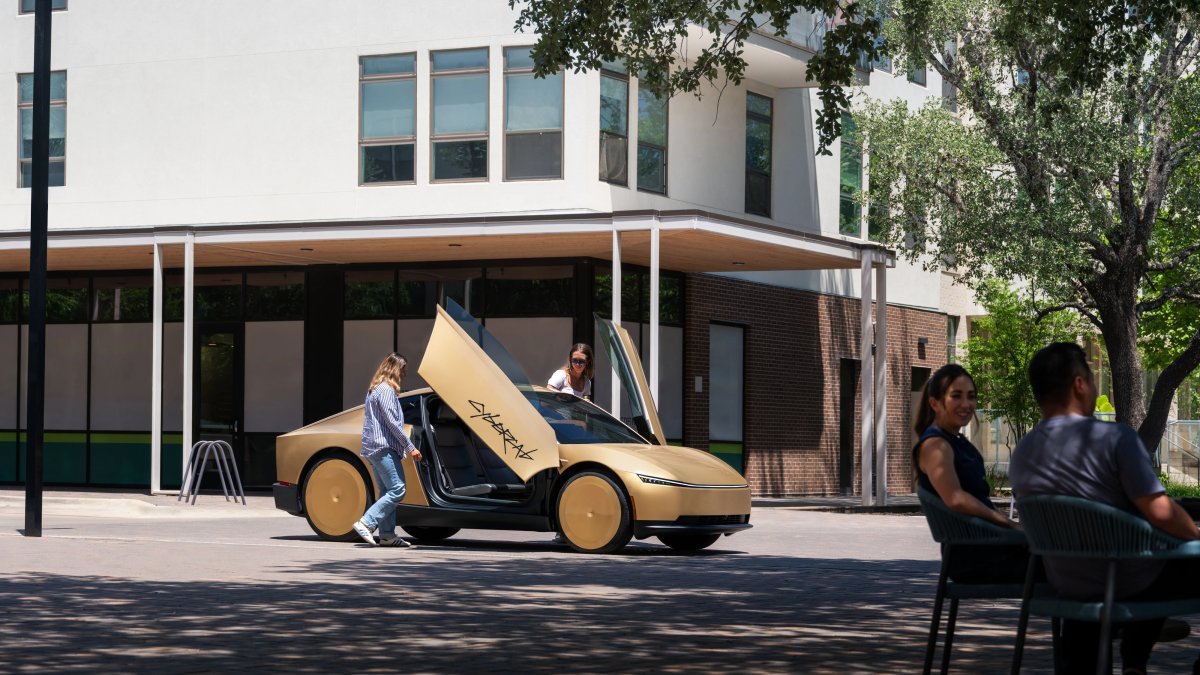
That’s on top of what we already knew. The Cybercab has no steering wheel, pedals, or side mirrors (you’ll still be able to move it yourself at up to 2mph, though), and it relies on eight exterior cameras plus a cabin camera, with washers on every exterior camera.
Warranty and Insurance
Every Cybercab comes with a Basic Vehicle Limited Warranty covering 4 years or 50,000 miles, whichever comes first. The Battery and Drive Unit Limited Warranty runs for 8 years or 100,000 miles, with Tesla guaranteeing a minimum of 70% battery capacity retention over that period.
@sa_futurist / X
Tesla Insurance isn’t included, but it’s available to purchase through the app and isn’t required.
What Else Owners Should Know
Buyers will also pay a $299 monthly fee for the Cybercab Autonomy Subscription, which covers the self-driving software, connectivity, roadside assistance, and tire and windshield replacements. There are also some strict ownership rules, including no wraps or tint and operation only inside Tesla’s designated Robotaxi service areas.
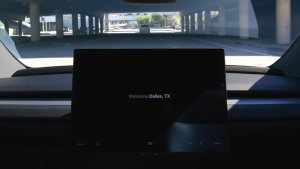
Those areas include Austin, San Antonio, Houston, Fort Worth, and Dallas, where Tesla just launched Cybercab rides with a new V1.5 design that adds an integrated Starlink dish and a trunk camera. With customer deliveries expected to begin next month, more details should come out as the first owners get their Cybercabs.