Tesla’s Full Self-Driving (Supervised) is handling more than routine driving these days. New footage shows a Cybertruck on FSD clearing a path for an ambulance from a full stop at a red light, without any input from the driver.
Cybertruck owner @mrtimer2022 shared the video on X, saying the truck was stopped in the middle of five lanes of traffic when an ambulance approached from behind, with the intersection mostly blocked.
How FSD Cleared the Way
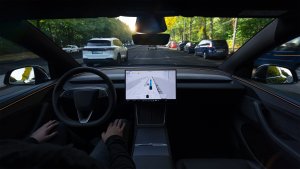
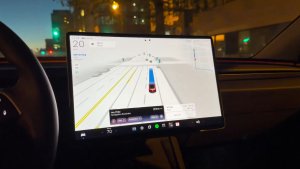
Dashcam clips from the Cybertruck’s external cameras show the truck sitting at 0 mph with Self-Driving active. As the ambulance’s lights appear behind it, FSD engages the right turn signal and starts creeping forward, turning right across three lanes into an open pocket. That leaves a clear lane for the ambulance, which passes through the intersection without slowing down. Once it’s safe, the truck merges onto the new road and picks up speed.
Check out the videos below:
FSD also updated the truck’s navigation automatically to account for the unplanned turn. The owner noted that “this wasn’t just a pull over while driving,” calling it “a full ‘let’s make a gap for that emergency and keep them on their way’ purposeful action from a full stop.” The maneuver shows that FSD today is worlds ahead of the troubles it had with emergency vehicles during its early days.
FSD Keeps Getting Smarter
This is the latest example of FSD taking on more complex situations and reacting to traffic in real time. Tesla recently added Automatic Collision Evasion, a new feature that can engage FSD to steer around a crash when braking alone isn’t enough, even while you’re driving manually. It can also re-engage FSD if the cabin camera spots severe inattentiveness or FSD is accidentally disengaged. The feature is exclusive to HW4 vehicles.
Then there’s FSD v15, which is expected later this year or early next year. It’ll increase the underlying neural network parameters 10x, from about 1 billion to 10 billion. With that much more capacity, edge cases like making room for an emergency vehicle should become even easier for FSD to handle.
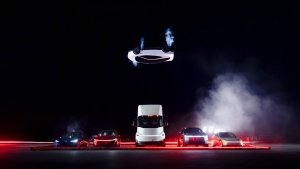
Tesla’s new Roadster stole the show by flying, flipping, and hitting 0-60 mph in just 0.81 seconds at its reveal event this week. Beyond the stunts, Tesla has also shared plenty of details about what’s under the skin, from its motors and battery to its suspension, aerodynamics, and interior.
Here’s a full rundown of the new Tesla Roadster’s specs, based on details shared at the event, Tesla’s Roadster page, and a recent Top Gear video featuring Tesla’s Lars Moravy and Franz von Holzhausen, and, of course, the Roadster itself.
Power, Battery, and Charging
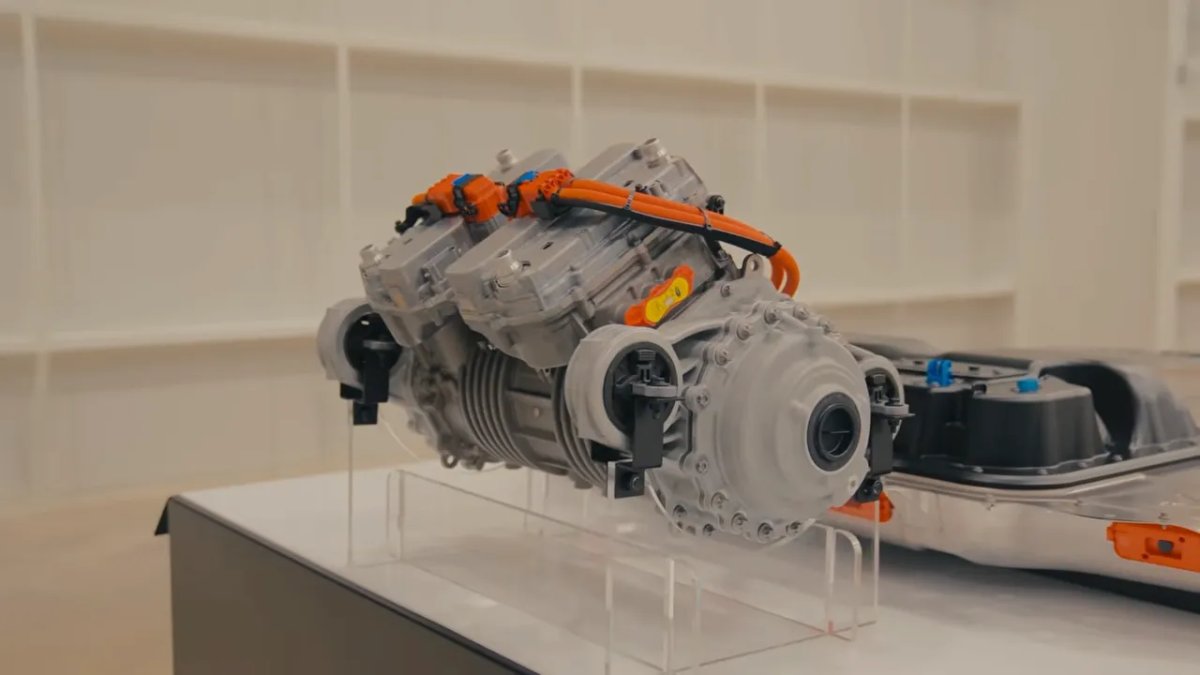
Every version of the Roadster is rear-wheel drive, with two motors on an 800- to 1,000-volt architecture. Each motor gets its own inverter, which enables torque vectoring between the rear wheels.
Not a Tesla App
According to Tesla, even the standard Roadster makes 1 MW of power, or about 1,340 hp (execs have also thrown around 1,500+ hp figures for the final production build), with roughly 960 lb-ft of torque. Higher trims add more torque, pushing past 1,032 lb-ft. That output is one-third more than the Model S Plaid, from a drive unit with half the mass. Feeding it is a battery pack of roughly 150 kWh built with new 4680 cells designed for sustained power.
TopGear
It’s also Tesla’s fastest-charging battery yet. The Roadster can charge from 15% to 85% in about 10 minutes, pulling close to a megawatt from Tesla’s newest Superchargers. Tesla hasn’t shared an official range figure yet, though early reports point to more than 300 miles.
Four Versions of the Roadster
The Roadster will come in four versions:
Standard: The base Roadster, with 1 MW of power and roughly 960 lb-ft of torque.
Performance (By Reservation): Adds more torque, fans for ground-effect suction, adaptive suspension, and other tweaks. Tesla describes it as road-ready with seating for two.
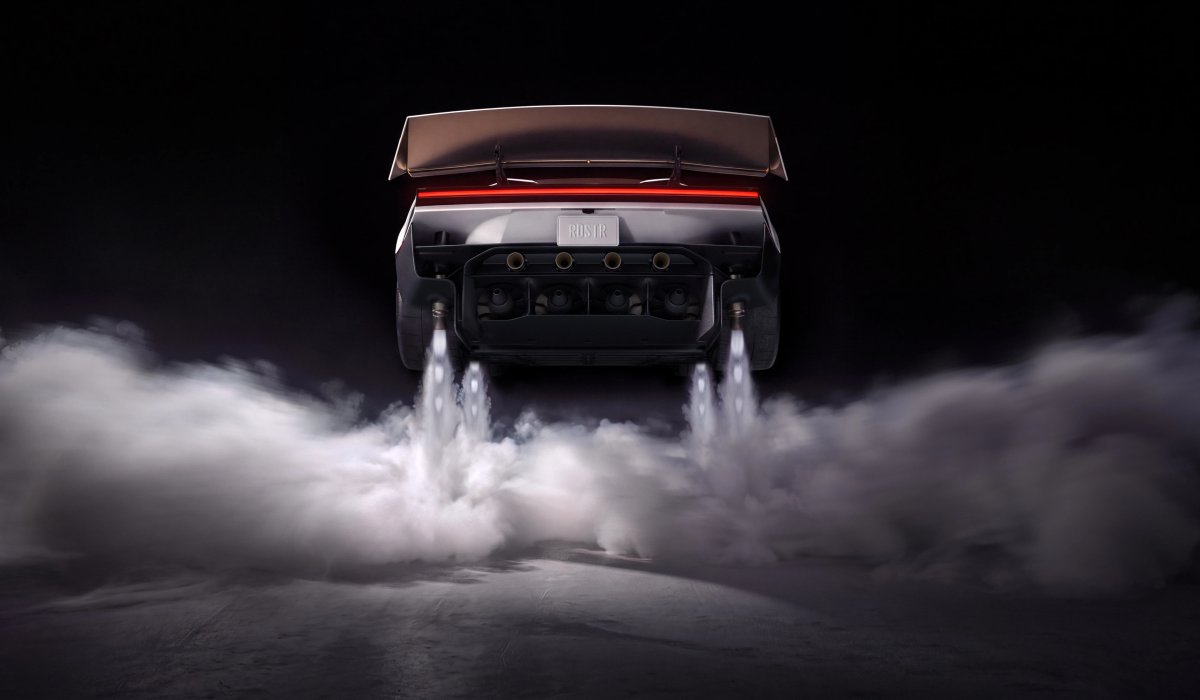
Thrust (Limited Release): Race-ready with seating for two, adding a 200-liter cold-gas thruster system with four nozzles in the rear.
Rocket (Invite Only): Adds six more thruster nozzles for the front and sides, and seats only one (passenger’s side is occupied by an additional 400-liter gas tank for a total capacity of 600 liters). It can hover over the ground, and as Tesla puts it, “Yes, it can fly.” Road legality is questionable and may vary by jurisdiction.
Not a Tesla App
On the Rocket trim, the extra nozzles include one at each corner to push the car up and two in the front for yaw control, and each burst of thrust lasts about five seconds. Tesla’s Roadster page notes that the Rocket won’t be available in all regions.
Tesla’s Roadster reservation page currently lists only the Performance, Thrust, and Rocket trims. Performance reservations require a refundable $50,000 deposit, while Thrust requires $250,000. Final pricing hasn’t been announced, and production starts in 2028.
Acceleration and Top Speed
The Roadster hit 0-60 mph in 0.81 seconds during a live test (with thrusters engaged), and Tesla says production cars will be quicker. Here’s how the trims stack up in sprint time:
Performance: Under 1.6 seconds
Thrust: 0.85 seconds, according to Lars and Franz (Tesla lists it as under 0.9 seconds)
Rocket: Under 0.59 seconds
Tesla hasn’t shared a 0-60 time for the standard Roadster yet.
Not a Tesla App
Top speed is still in flux. On stage, Tesla said the Roadster can reach over 230 mph, while the spec details we’ve seen list 214 mph for now, with a 330 mph version planned. As for the Rocket, Top Gear’s Tom Ford said that “even Tesla isn’t really sure how fast it can be.” Musk has said he wants it to eventually approach half the speed of sound (Mach 0.5, or 383 mph).
Suction Fans, Active Aero, and Suspension
The Roadster’s multi-mode fan system, available from the Performance trim up, works with a ground-sealing system to pull air from under the car. Tesla says it creates enough suction to hold the car upside down, even when stationary, which means it generates downforce at zero speed.
Not a Tesla App
Active aero covers almost every surface. Movable skirts run along the front, sides and rear, panels on the fenders open up, and the hood can open for more airflow. The active rear wing adjusts automatically and can also help slow the car down, similar to a plane’s flaps.
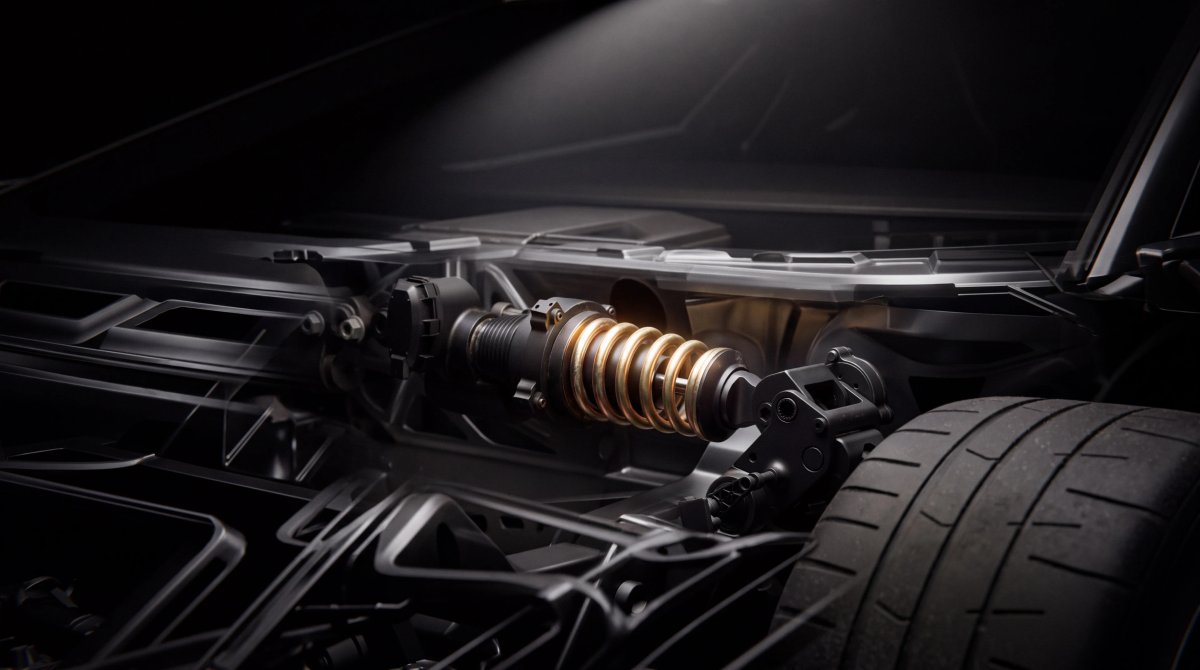
Activating Track Mode lowers the car through its adaptive suspension and transforms it for High-Downforce or Low-Drag driving. Up front, it uses a double-wishbone suspension, and carbon-ceramic brakes handle stopping.
Not a Tesla App
Design, Doors, and Interior
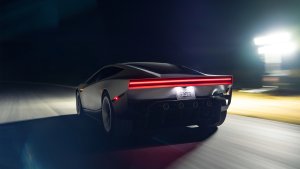
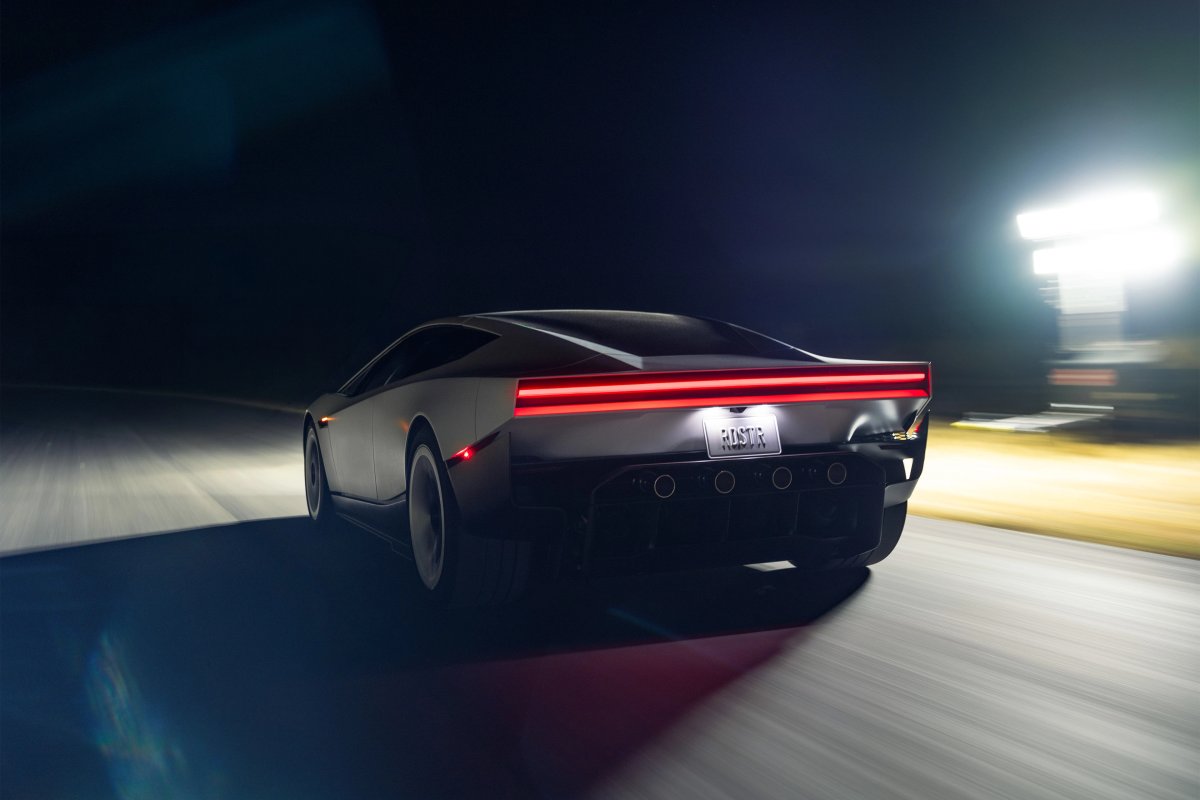
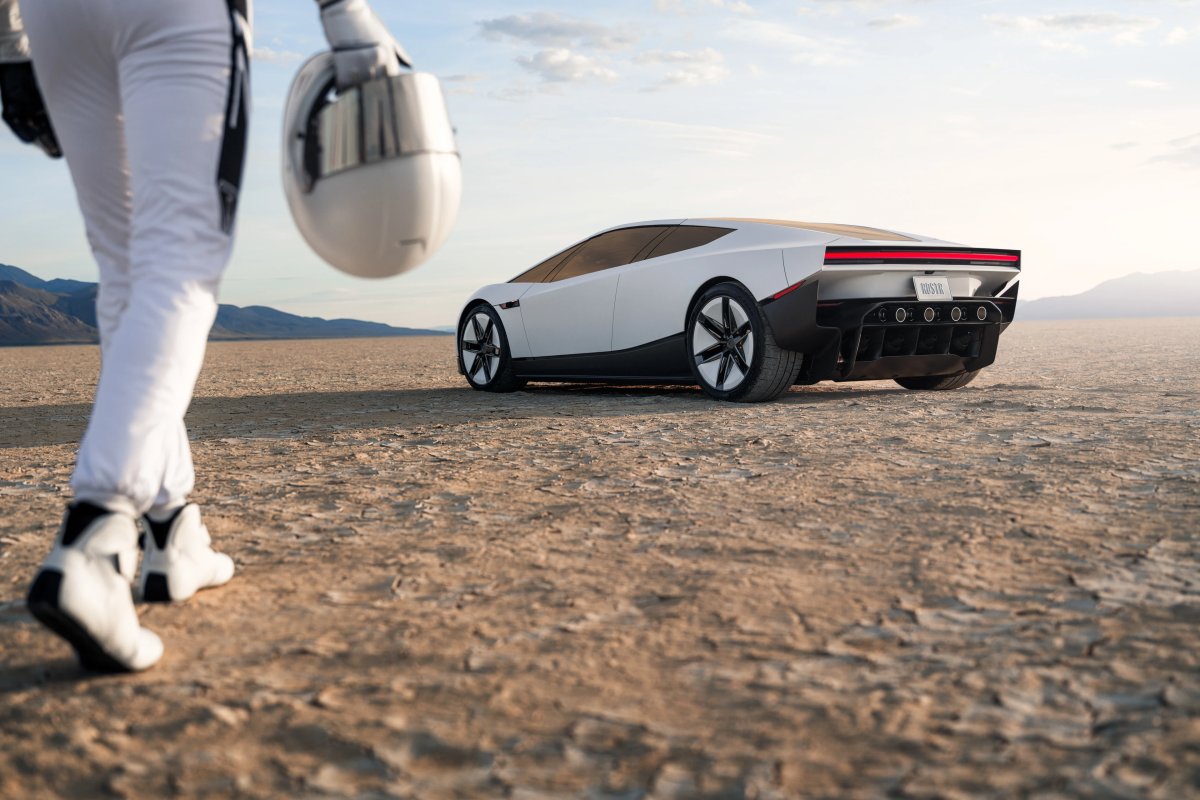
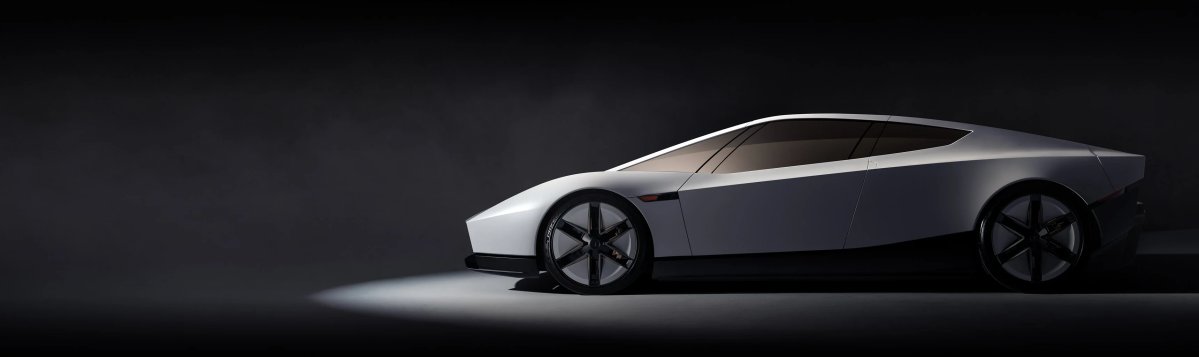
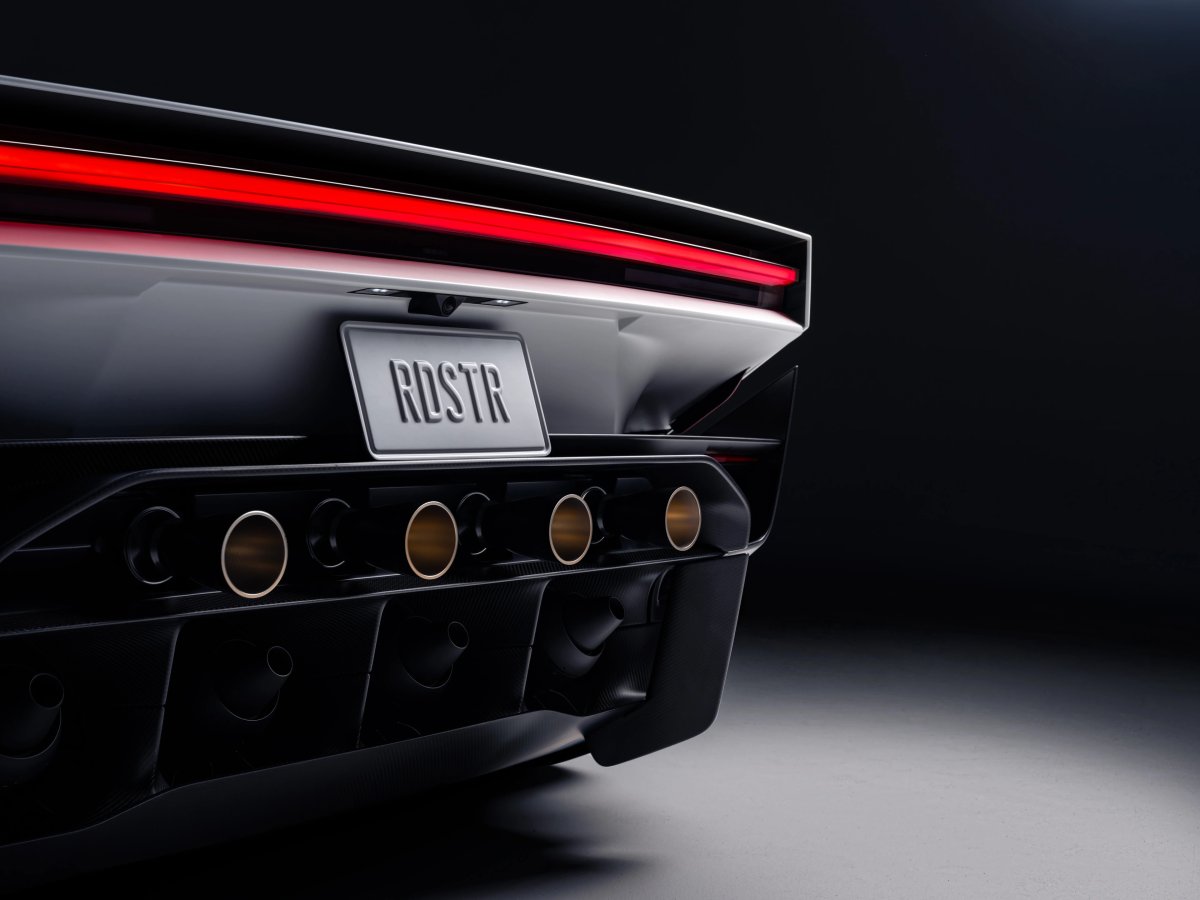
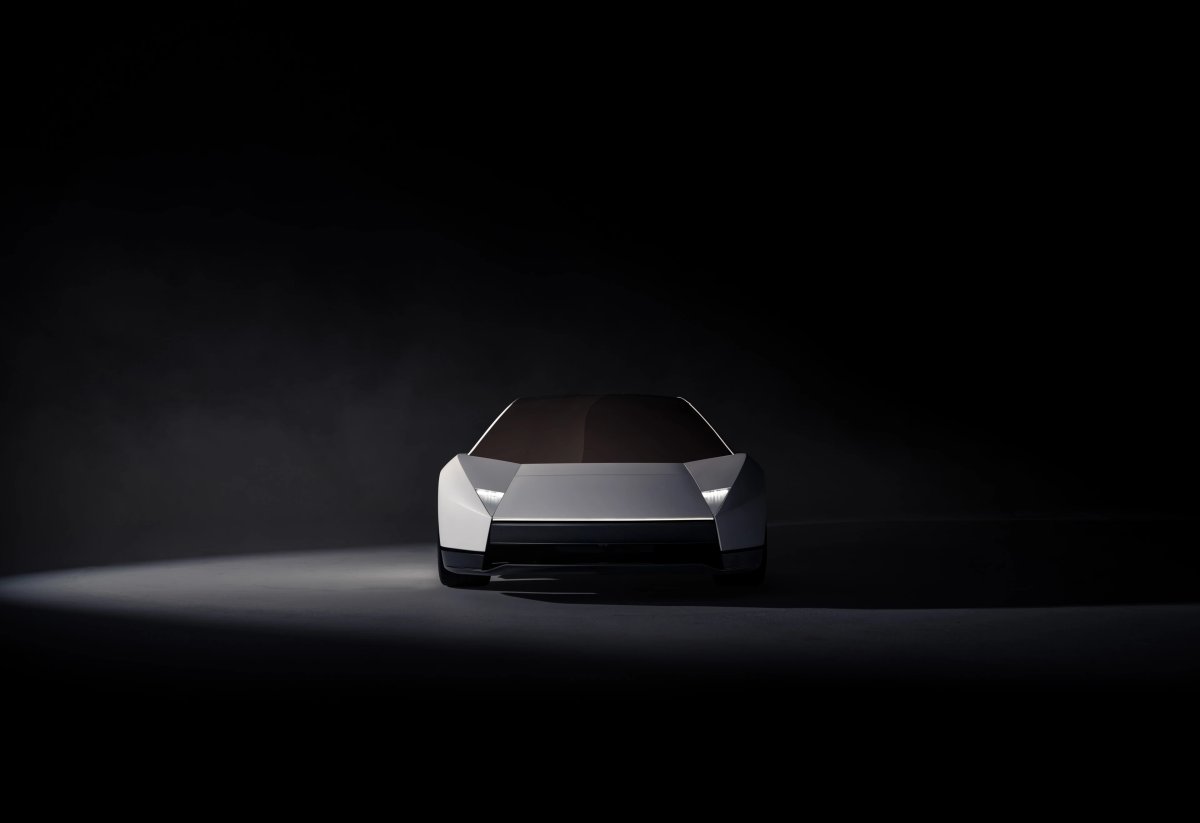
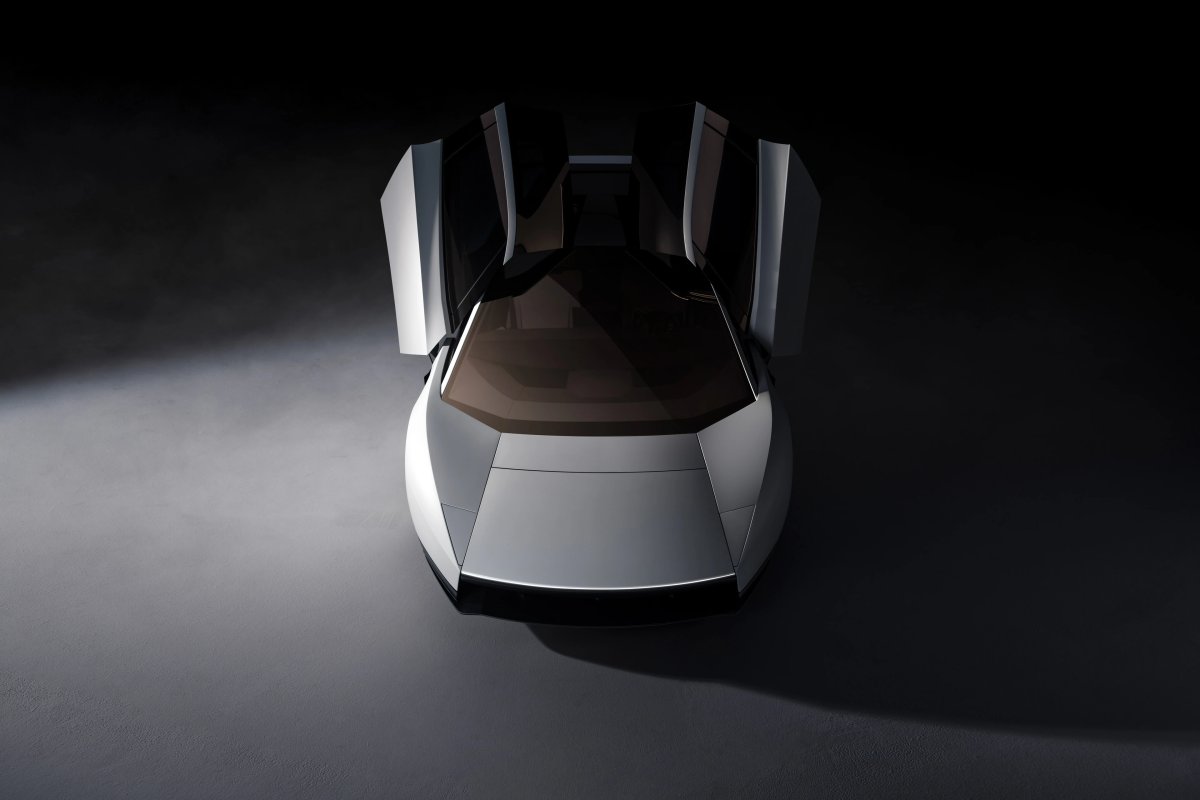
Ano White paint takes inspiration from aerospace coatings that protect rockets from UV, extreme cold, and corrosion. The slightly gold-tinted windows mimic the copper coating on spacesuit visors, with titanium accents. Basically, you can really tell a rocket company had a hand in designing the new Roadster. The chassis is adorned with hidden pop-down headlights (no word yet on whether they’ll include matrix LEDs), a full-length taillight, and lightweight thin-spoke wheels.
Not a Tesla App
The Roadster uses manual scissor-style doors that lift upward, truly embracing its supercar DNA.
Not a Tesla App
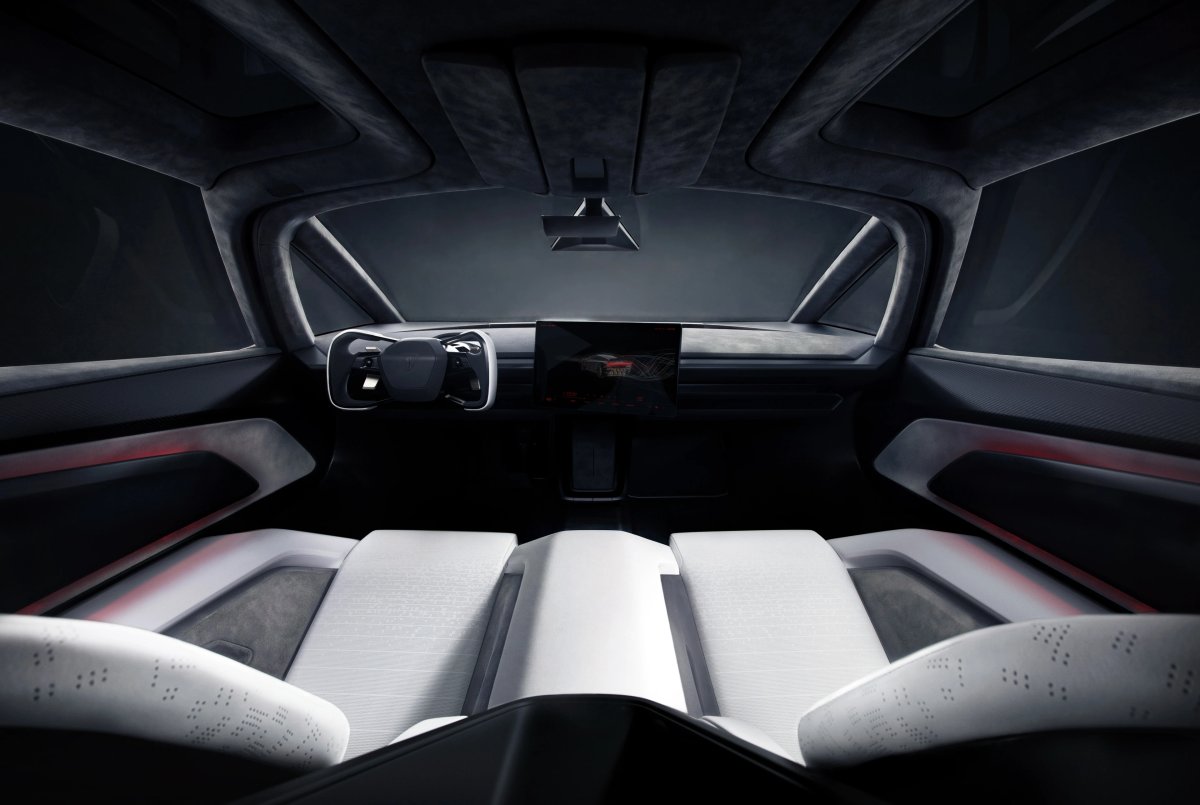
Inside, the “Supersonic” interior pairs pure white upholstery with gray microsuede bolsters. The steer-by-wire yoke works alongside brake-by-wire and throttle-by-wire. A center touchscreen is joined by two smaller forward displays, plus a small red display near the windshield showing speed and lap times. The early UI uses red text throughout.
Not a Tesla App
To save weight, the seats are molded into the chassis. Only the seatbacks adjust, while the pedals move toward the driver instead. The seats are heated (but likely not cooled), and the car also gets a wireless phone charger. Tesla says magnesium, titanium, and carbon fiber help reduce mass throughout.
Will the Roadster Get FSD?
Tesla hasn’t confirmed FSD support. The Roadster does have a front bumper camera, and it technically drove itself during the demos at Thursday’s event. Still, Tesla calls it “the last great driver’s car,” and Musk has said it will eventually be the only manually driven vehicle Tesla makes.
With production set for 2028, some of these specs, especially top speed and pricing, will likely change before the first deliveries. We’ll be digging into more of the lesser-known details soon.


![Watch Tesla FSD Clear a Path for an Ambulance at a Red Light [VIDEO]](https://www.notateslaapp.com/img/containers/article_images/fsd-beta/tesla-fsd-vehicle-safety-report-hero.webp/b9228e7535af54aa32407f354fe24b17/tesla-fsd-vehicle-safety-report-hero.jpg)