Description: High Occupancy Vehicle lanes are generally faster than other lanes. However, the requirements for their use differ from state to state, with many states requiring a minimum number of occupants. The setting is buried under Controls > Navigation > Use HOV Lanes, which makes it annoying to get to for something you may want to turn on and off often. Thankfully, we can now use a voice command.
Discovered on: December 27, 2024
Subscribe
Subscribe to our newsletter to stay up to date on the latest Tesla news, upcoming features and software updates.
The Cybercab is getting new seats. Eric Earley, Tesla’s chief engineer for the Cybercab, confirmed the change during his “Inside Cybercab” session at the X Takeover event at Giga Texas on Saturday, as reported by @teslawelt on X.
New seats aren’t the only change on the way, either. According to @nikkharris, Earley told the crowd that “some very cool upgrades are coming to the experience in Cybercab very soon.” He didn’t say what those upgrades are or when they’ll arrive.
How the Cybercab’s Seats Work Today
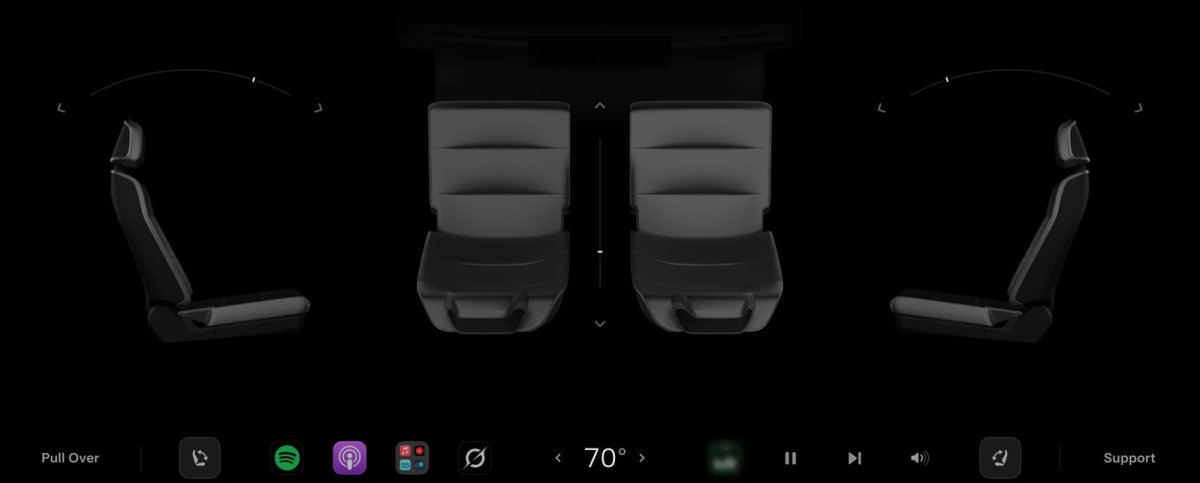
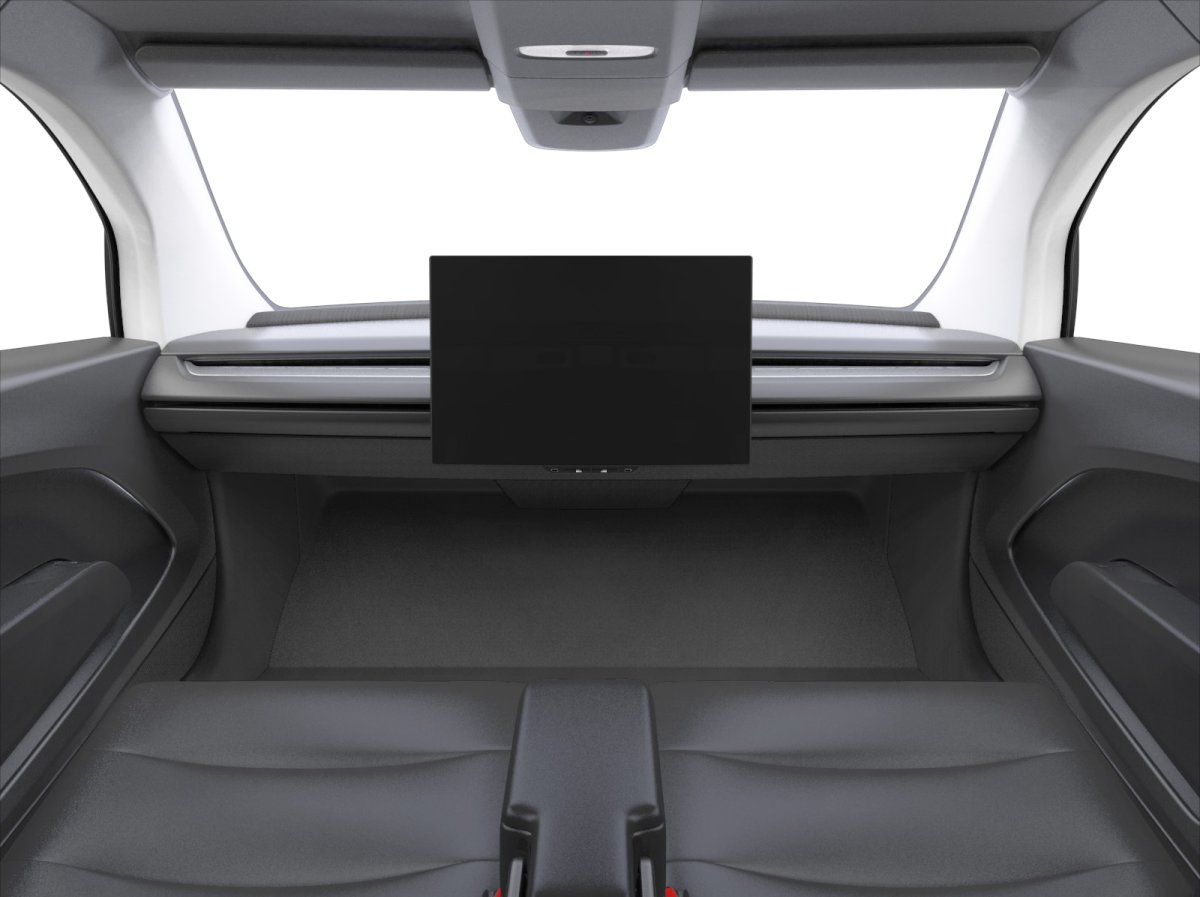
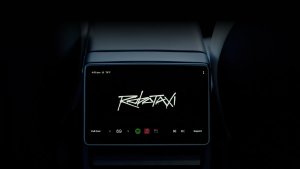
The Cybercab seats two, but its seats work more like a bench. Both seats slide forward and back together, and riders can only recline each seatback individually through the touchscreen. The cabin also offers enough legroom for passengers well over six feet tall.
Tesla may already know what riders want. In early September, it started surveying Cybercab riders on new cabin features shortly after public rides launched, asking them to pick from options like heated seats, ventilated seats, fully reclining seats, a tray table, a wireless phone charger, and more storage, with room to write in their own ideas. The Cybercab currently skips heated and ventilated seats, preconditioning the cabin for riders before pickup instead. The redesigned seats could incorporate some of that feedback.
Not a Tesla App
What the other “very cool upgrades” Earley mentioned could be is anyone’s best guess at this point, but one of them could be the ability to bring up the external cameras on the central touchscreen. When a Cybercab rider recently asked for a way to pull up the rear and repeater cameras on demand, a Tesla software engineer replied on X, confirming that the feature is in the works.
Dallas Is Next
X Takeover attendees also said Earley described the current Austin fleet as only the beginning, with Tesla aiming to flood the city with Cybercabs and expand state by state, safety first. Tesla now has more than 300 Cybercabs in Austin, and the Cybercab panel at the event reiterated that Dallas is the next city to get Cybercab rides, something Tesla VP Ashok Elluswamy also said last week. Houston and Miami, both active Robotaxi markets, are also likely candidates.
Not a Tesla App
As Tesla builds and deploys more Cybercabs, future production units could arrive with the new seats, while software upgrades like on-demand camera views could reach the existing fleet through an update.
Tesla’s Robotaxi fleet is facing fresh federal scrutiny. The National Highway Traffic Safety Administration (NHTSA) has opened an inquiry into claims that Tesla’s Robotaxis exceed speed limits in active school zones, as reported by Drive Tesla Canada.
The defect petition inquiry, opened on October 9, covers an estimated 1,000 vehicles, including both retrofitted Model Y robotaxis and purpose-built Cybercabs.
What NHTSA Is Looking Into
The inquiry stems from a petition submitted on September 23, which alleges that Tesla’s Full Self-Driving (FSD) system doesn’t obey reduced speed limits in school zones. The petitioner included three videos as evidence.
NHTSA has identified four incidents of Robotaxis exhibiting this behavior so far: one formal complaint filed with the agency and three reports shared on social media. None involved a collision, injury, or fatality.
It’s still early. NHTSA hasn’t determined whether Tesla’s Robotaxi software has a safety defect, and it’s reviewing the evidence before deciding whether to open a formal investigation. Tesla isn’t the only one facing these questions, either. Waymo has also drawn federal scrutiny over incidents involving school buses and reduced-speed areas.
The new inquiry comes as Tesla keeps growing its Robotaxi network. Tesla says it now operates a fleet of more than 300 Cybercabs in Austin — in addition to Model Y robotaxis — and Dallas is next in line for Cybercab rides.
For now, Robotaxi operations continue while NHTSA reviews the school zone evidence. The agency’s decision on whether to escalate to a formal investigation, along with Tesla’s October 30 response on the Cybercab probe, will show how much these probes could slow Tesla’s expansion plans (if at all).






![Tesla Is Currently Charging Driverless Robotaxis by Hand [VIDEO]](https://www.notateslaapp.com/img/containers/article_images/robotaxi/cybercab_wireless_charging.png/5f6d15a2c2c51fabcba2ca185490a6f9/cybercab_wireless_charging.jpg)

![Tesla Charge Cable Release Shortcut [VIDEO]](https://www.notateslaapp.com/img/containers/article_images/2021/ccs-adapter.jpg/421865c8caf303a233af78578e975b56/ccs-adapter.jpg)