Tesla has begun rolling out its latest software update, 2025.38, and it's a feature-packed release, enough for us to label it as this year’s Fall Update. The update brings significant visual upgrades to navigation, the first international Grok expansion, and a host of highly-requested quality-of-life improvements for the Dashcam, driver profiles, and more.
Here’s a full breakdown of everything new.
3D Buildings for Navigation

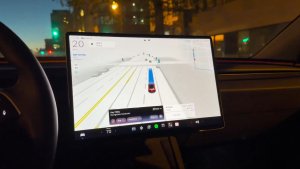
The most visually striking change in this update is the introduction of 3D buildings and cityscapes directly into the navigation map view. For users subscribed to Premium Connectivity, a new Cube icon on the map screen enables a detailed, three-dimensional rendering of buildings on the map, adding a new layer of visual richness. You can watch a video and read about the full details here.
Grok Launches in Canada
Tesla’s AI assistant, Grok, has officially launched in Canada. This marks the first international expansion for the feature outside of the United States. Canadian owners with Premium Connectivity (or anyone on WiFi) can converse with Grok by holding down the voice command button.
Grok is currently in Beta and does not issue commands to your car. Existing voice commands remain unchanged and can be accessed by tapping the voice command button or the right scroll wheel on pre-refresh models.
Tesla is still planning to add a wake word for Grok, so that users can just say “Hey, Grok,” instead of having to press the mic button.
Dashcam Viewer Street Names
The dashcam viewer has received a pair of extremely useful updates.
First, the title of each recording now includes the street name in addition to the town or city. This feature is available in both the Dashcam Viewer within the vehicle and the Tesla app, making it easier to find past recordings.
Note that if you’re in a low GPS precision area like a parking garage, the nearest identified street may be shown. If you are off the beaten path, no street name will be visible and only the town will be displayed.

This feature is available on all vehicles, including legacy Model S and Model X vehicles.
Dashcam Video Quality
The second feature for Dashcam in this update is improved video streaming quality. Since Tesla does not store Dashcam footage on their servers and the videos are stored on a USB drive in the vehicle, the vehicle needs to stream the content for you to view it through the Tesla app.
In this update, Tesla increased the video quality at which the vehicle streams this data. We hinted at this feature coming in the Tesla 4.49.5 app update, which saw the addition of things like “Flexible Dashcam bitrate.”
While the app allows you to download Dashcam videos directly onto your phone, the highest quality is always on the USB drive in your vehicle. However, with this new variable bitrate addition, the vehicle will hopefully be able to stream a video of similar quality with a good connection. The good news is that Tesla didn’t just increase the video quality, which could make it difficult to use under slow connections; they implemented the ability to scale the bitrate of the video up or down, depending on the vehicle’s connection.
This feature is not available for legacy Model S and Model X vehicles, but the good news is that it does include all Model 3 and Model Y vehicles, including those with HW3 and Intel infotainment units. If you’re unsure whether you have Intel or AMD, check out our guide on how to tell which you have.
New Scroll Wheel Functions

More customization has been added to the left scroll wheel’s quick menu, which allows you to hold down the left scroll wheel to access a variety of functions. You can set it to one specific function, or a menu where you can scroll through various options. This update adds the following functions:
Mute or Unmute Navigation
Enable or Disable Bioweapon Defence Mode (if equipped)
Enable or Disable Music Light Sync (if equipped)
We’re actually fairly excited about this addition. The ability to quickly and easily mute or unmute the voice guidance is appreciated, as it currently requires several taps, unless you use the voice command.
Profile Locking with Phone Key

A fantastic new security and convenience feature was also rolled into this update. You can now lock a specific driver profile to particular phone keys, ensuring it can only be accessed by those specific keys.
If someone tries to select that profile without the linked phone key in proximity, a “Profile Locked” message appears. All locked profiles also have their profile photo hidden in the vehicle selection menu.
This is an excellent solution for families with multiple drivers or those who rent out their vehicles, as it keeps the primary owner profiles safely locked away. While this feature may not seem like a big deal, a driver’s profile can reveal sensitive information such as the person’s home and work addresses, navigation favorites and addresses, ability to open garage doors through HomeLink or MyQ, and more.
We feel like there’s more coming with this feature. Tesla already has great parental controls, which limit the vehicle’s max speed, acceleration, and more. While Parental Controls currently require a PIN every time you want to enable or disable the feature, we could see Tesla letting you tie parental controls to specific profiles in the feature, meaning that a teen would only be able to use their profile and not be able to access their parents’ profile, which has parental controls turned off.
New Charging Visualization

An undocumented change in this update is an immersive visual improvement that has been added to the Model 3 and Model Y while they’re charging. The on-screen 3D vehicle visualization now displays a detailed model of the charging post behind the vehicle, with different chargers appearing, depending on the type of charger being used.
Tesla will show a generic charger for third-party chargers, as shown below, but they’ll also show Wall Connectors, Superchargers, and presumably other Tesla connectors such as the mobile charging connector.
While the full-screen visualization is reserved for AMD-based vehicles, Tesla is also adding the charger visualization to Intel vehicles. However, it’ll only be displayed on the visualization area on the left.
Easily Log In to Streaming Services
Logging in to a music or video service with the onscreen keyboard can be frustrating, especially if you have to do it multiple times since the vehicle occasionally chews up your credentials.
Tesla is improving this whole process and making it much less painful. We first saw this improvement with the introduction of Grok, where the vehicle simply sent a notification to the Tesla app, allowing the user to tap it and log in on their device.

Tesla is now expanding this to all music services and, hopefully, video streaming services as well. When you launch a streaming service, you can now tap on Link Account, and you’ll receive a notification in the Tesla app, which will take you to the login screen. You’ll still have the option to scan a QR code, which will take you to the same location if you prefer.
There’s a video below of the new process.
New way to sign into Media Accounts on 2025.38 (you get the notification when you hit „Link Account“ but you still have the option to show the QR-Code if needed) pic.twitter.com/9avXx6lvWa
— Max Bracco (@max_bracco) October 9, 2025
Apple Music Improvements
This update introduces Apple Music improvements to the whole fleet, including legacy Model S and Model X. Tesla says that playlists are now organized with folders, and there are artist pages with more information. There’s also a Recently Played area that displays more of your listening history.
Release Rollout
Update 2025.38
Percent of Fleet
Installs Today
This release has started a fairly rapid rollout to Tesla’s fleet around the world, with the vast majority of installs starting in North America. This update will likely continue to roll out in increasingly larger waves.
But Wait, What About FSD V14.1?
Tesla’s latest FSD, v14.1 (impressive FSD v14.1 videos), is based on update 2025.32. As a result, anyone receiving 2025.38 may not be eligible for the latest FSD version until Tesla updates it to 2025.38.
However, we already know various updates are coming to FSD, including FSD v14.2 and FSD v14.3. Given the braking issues influencers have seen with FSD v14.1, it’s unlikely that it’ll go out to additional users. FSD v14.2 and higher could be based on update 2025.38, making everyone eligible to receive the update, but we’ll have to wait and see.
Either way, a big update is coming your way. Stay tuned as we discover more undocumented features in update 2025.38. You can also read the full release notes for this update. Thanks to Max Bracco for a lot of the details and images.