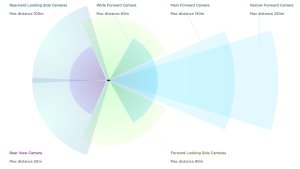
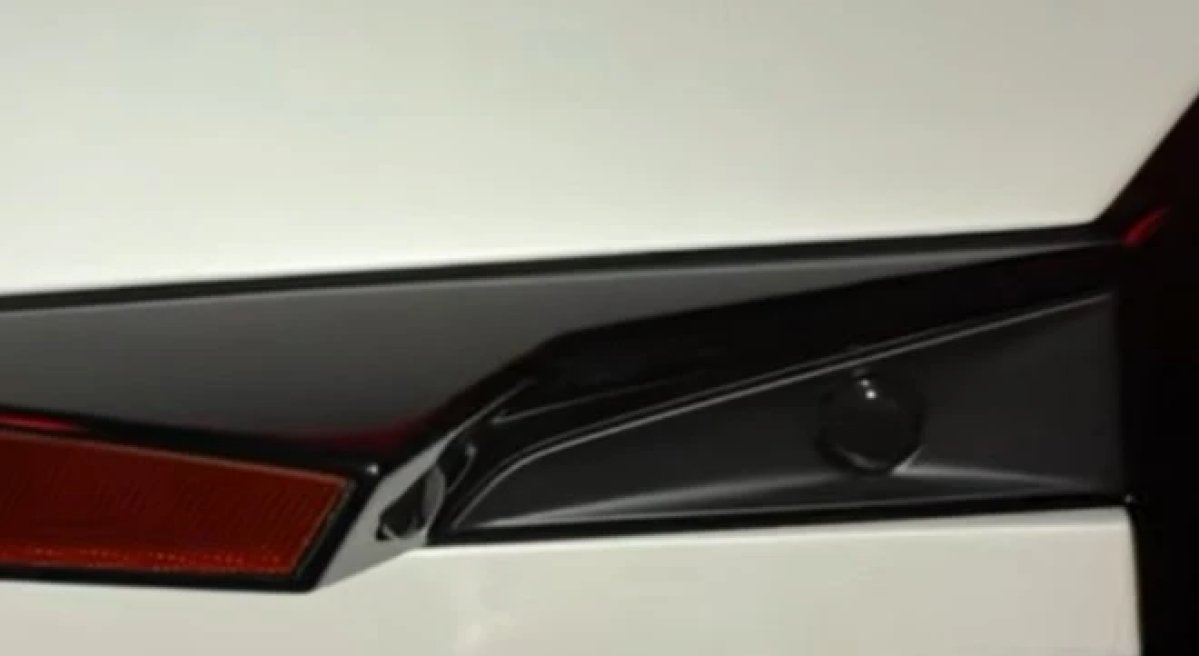
The new Tesla Roadster won’t get the complete Full Self-Driving (FSD) experience. During MotorTrend’s walkthrough of the Roadster, the host pointed out the car’s typical camera suite, which includes a front bumper (nose?) lens, and asked Tesla chief designer Franz von Holzhausen whether it would support FSD (via @CARN0N).
“This will do a limited version of FSD,” von Holzhausen replied. He didn’t say exactly how it would be limited or what features Tesla would skip out on.
Not a Tesla App
Why FSD Will Be Limited on the Roadster
Asked why, von Holzhausen pointed to “the extreme windshield and idea of just being a performance driving car.” The hardware isn’t the issue. As he put it, “the camera and hardware is there.”
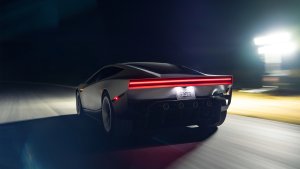
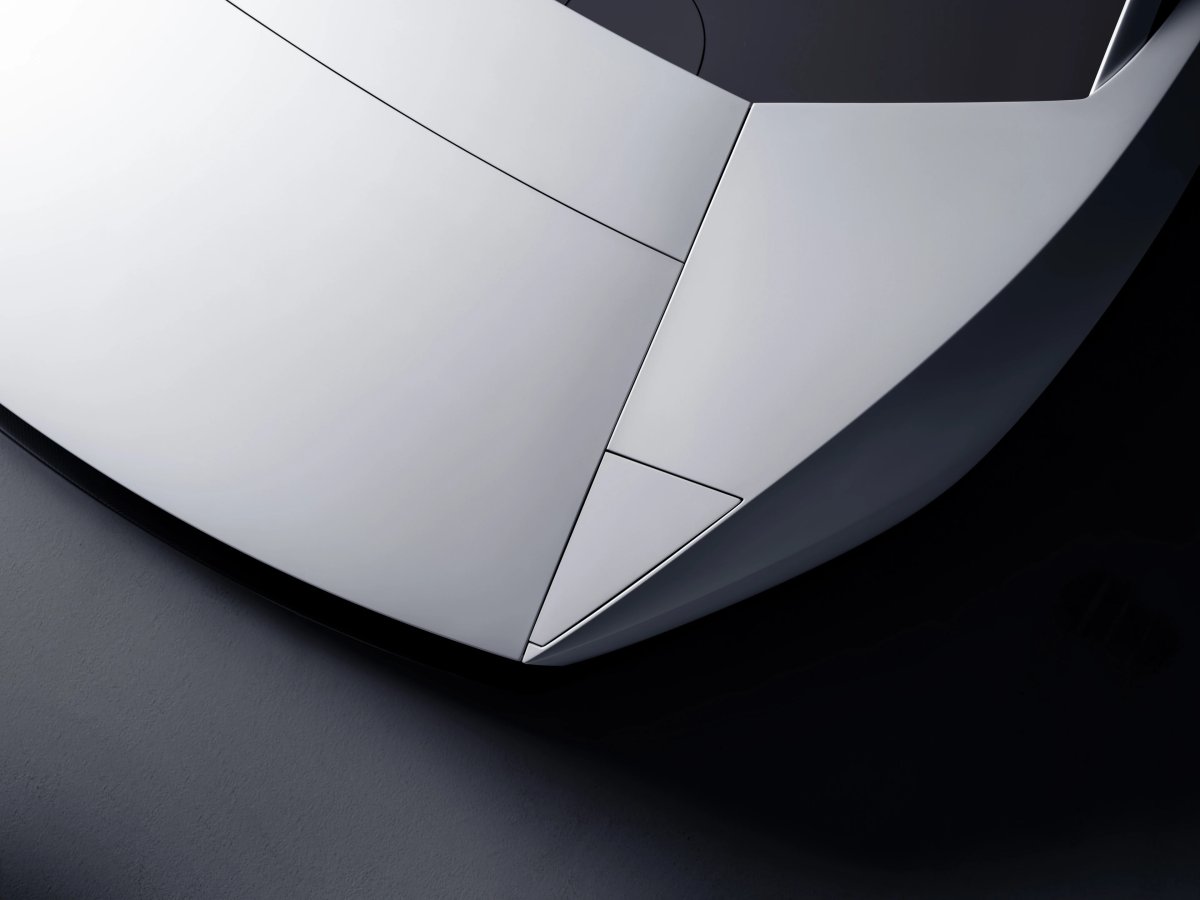
The Roadster’s design is a big part of the problem. Its steeply raked windshield, low wedge shape and transforming aero make it unlike anything else in Tesla’s lineup. Add suction fans, an active rear wing and cold-gas thrusters, and you have a car that is, for lack of a better word, ridiculous, with complications FSD wasn’t trained for.
Not a Tesla App
Volume is the other issue. Early estimates from analysts suggest Tesla will build only about 2,000 Roadsters per year once production starts in 2028. That’s well below even the Cybertruck, which is already Tesla’s lowest-volume consumer vehicle. Training FSD for an entirely new vehicle that will sell in such small numbers isn’t practical.
A Driver’s Car First
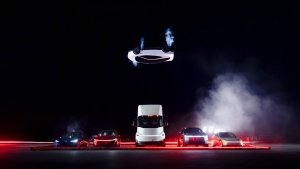
The Roadster isn’t without autonomy. Every stunt at Tesla’s Roadster unveil, including driving upside down, hovering in the air, and the kickflip over Tesla’s commercial lineup, was performed autonomously. Musk said that was “to make sure we don’t kill anyone,” though Tesla didn’t say what software handled it, and it likely wasn’t FSD.
Musk has since come right out and said owners will be able to ask the Roadster to perform the tricks shown at the event on its own, adding that “it will be sentient.”
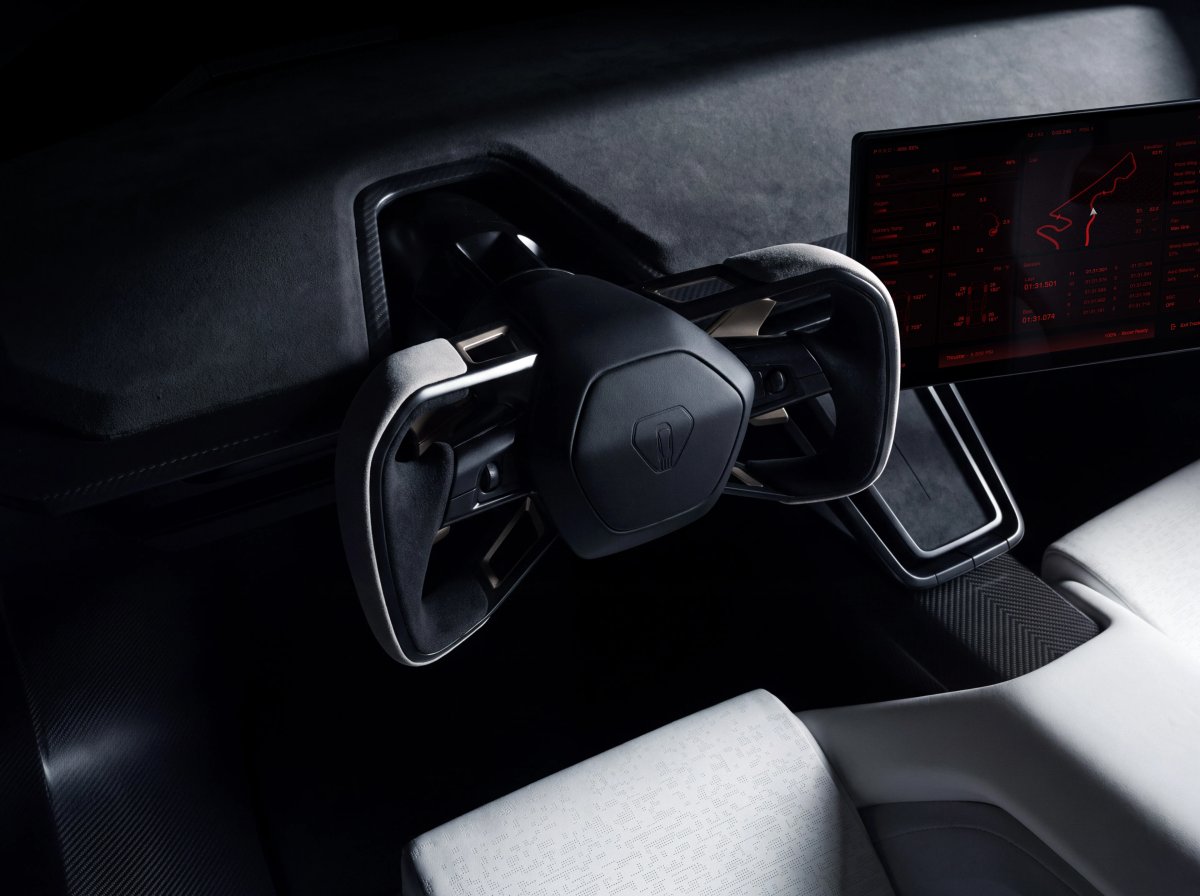
However, Tesla is positioning the Roadster as “the last great driver’s car” first. It uses a steer-by-wire yoke with by-wire brakes and throttle, and Musk has said it will eventually be the only manually driven vehicle Tesla makes. All of that suggests that while the new Roadster may end up being able to drive itself, it goes against Tesla’s entire ethos, in that it is actually intended to be driven by a human.
If you missed the event (welcome back from your stay under a rock, I guess), you can watch the full Roadster reveal on demand. With production still a couple of years away, we’ll likely learn exactly which FSD features make the cut closer to launch.
Tesla’s Full Self-Driving (Supervised) is handling more than routine driving these days. New footage shows a Cybertruck on FSD clearing a path for an ambulance from a full stop at a red light, without any input from the driver.
Cybertruck owner @mrtimer2022 shared the video on X, saying the truck was stopped in the middle of five lanes of traffic when an ambulance approached from behind, with the intersection mostly blocked.
How FSD Cleared the Way
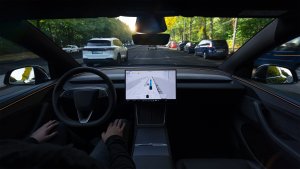
Dashcam clips from the Cybertruck’s external cameras show the truck sitting at 0 mph with Self-Driving active. As the ambulance’s lights appear behind it, FSD engages the right turn signal and starts creeping forward, turning right across three lanes into an open pocket. That leaves a clear lane for the ambulance, which passes through the intersection without slowing down. Once it’s safe, the truck merges onto the new road and picks up speed.
Check out the videos below:
FSD also updated the truck’s navigation automatically to account for the unplanned turn. The owner noted that “this wasn’t just a pull over while driving,” calling it “a full ‘let’s make a gap for that emergency and keep them on their way’ purposeful action from a full stop.” The maneuver shows that FSD today is worlds ahead of the troubles it had with emergency vehicles during its early days.
FSD Keeps Getting Smarter
This is the latest example of FSD taking on more complex situations and reacting to traffic in real time. Tesla recently added Automatic Collision Evasion, a new feature that can engage FSD to steer around a crash when braking alone isn’t enough, even while you’re driving manually. It can also re-engage FSD if the cabin camera spots severe inattentiveness or FSD is accidentally disengaged. The feature is exclusive to HW4 vehicles.
Then there’s FSD v15, which is expected later this year or early next year. It’ll increase the underlying neural network parameters 10x, from about 1 billion to 10 billion. With that much more capacity, edge cases like making room for an emergency vehicle should become even easier for FSD to handle.




![Watch Tesla FSD Clear a Path for an Ambulance at a Red Light [VIDEO]](https://www.notateslaapp.com/img/containers/article_images/fsd-beta/tesla-fsd-vehicle-safety-report-hero.webp/b9228e7535af54aa32407f354fe24b17/tesla-fsd-vehicle-safety-report-hero.jpg)