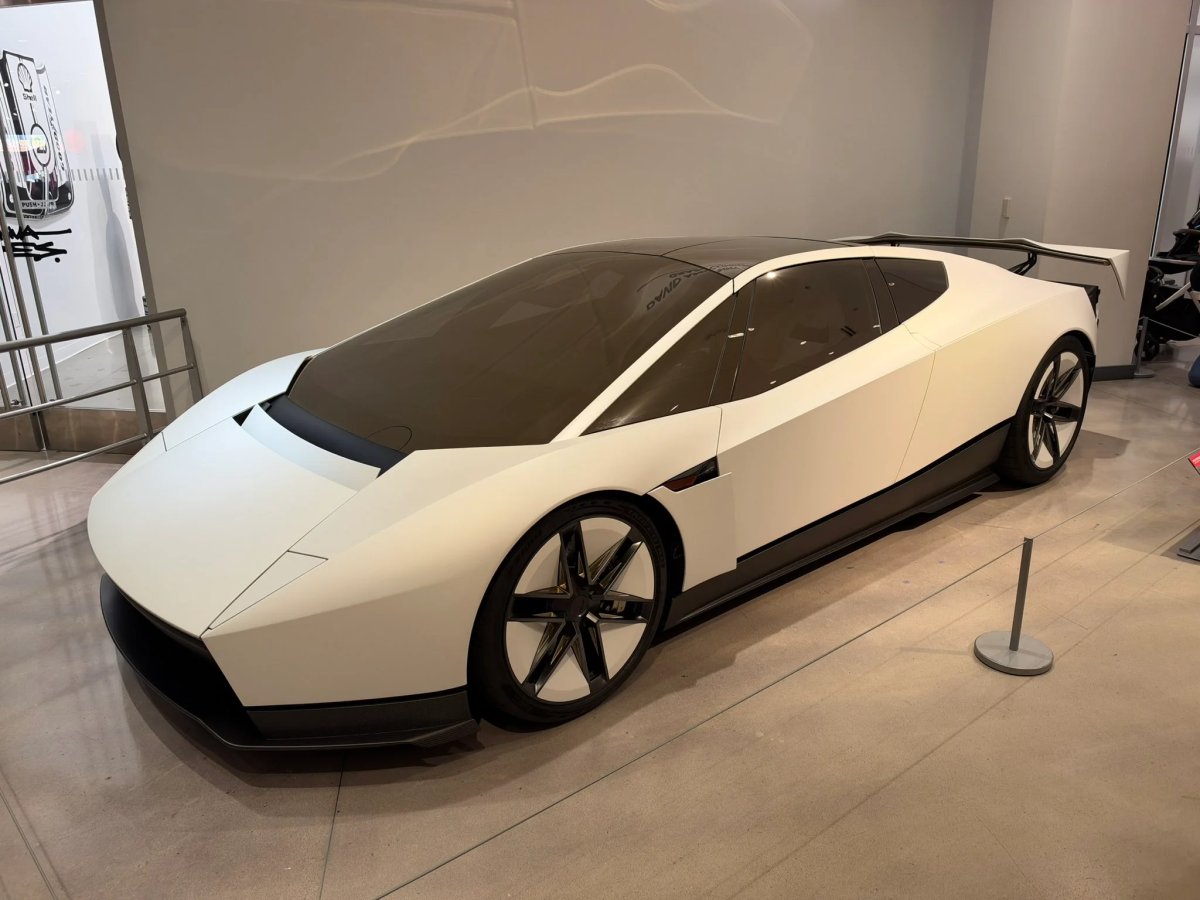
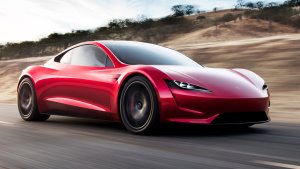
If you’re in Los Angeles this weekend, you can see Tesla’s new Roadster in person. Tesla announced on X that the Roadster is on display at the Petersen Automotive Museum, with the exhibit running from October 24 to 27 in the Main Lobby.
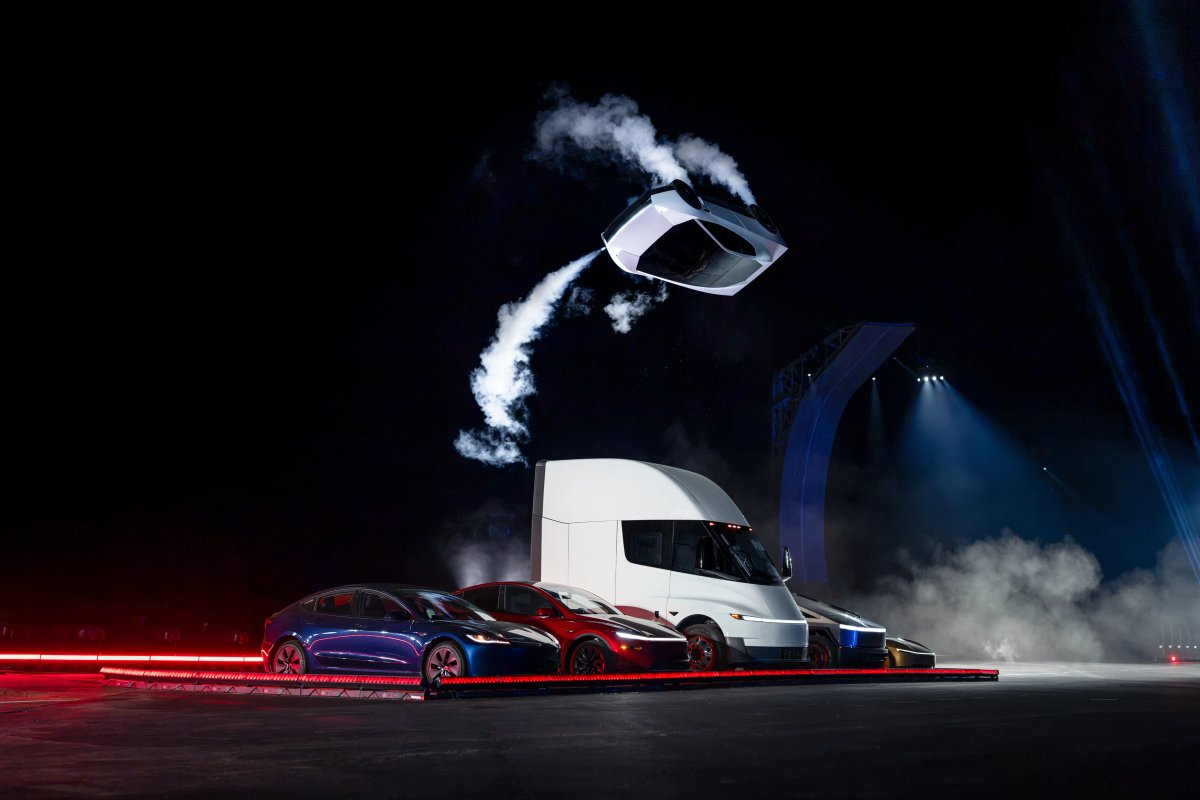
It’s the first chance for the public to see the new Roadster since Tesla unveiled it at SpaceX’s test site in McGregor, Texas, earlier this month. The car is only there through Tuesday, so there isn’t much time to stop by.
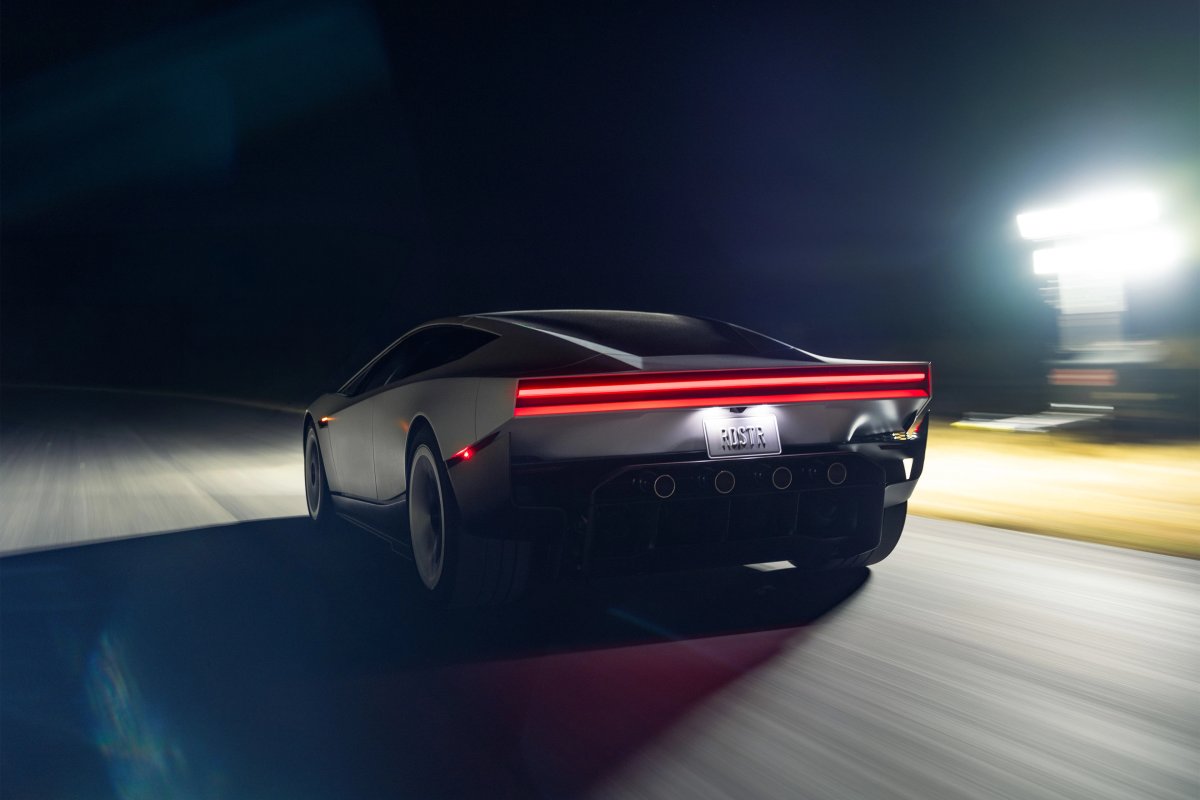
Tesla plans four versions of the Roadster. The standard car makes 1 MW, or about 1,340 hp. Performance adds suction fans, adaptive suspension, and more torque for a 0-60 time under 1.6 seconds. Thrust adds a 200-liter cold-gas thruster system with four rear nozzles, cutting 0-60 to under 0.9 seconds. Rocket is invite-only, seats just one, and adds six more nozzles and a bigger tank so it can actually fly and maneuver in the air. We’ve covered each trim’s specs, pricing, and performance in more detail.
The Thrust is also the trim that original Founders Series reservations were converted to. As noted in the museum’s description of the exhibit, the Roadster with its cold-gas thrusters hit 0-60 mph in under one second at the unveiling — 0.81 seconds, to be precise.
Not a Tesla App
Look, But Don’t Touch
The Petersen’s exhibit page calls the Roadster Tesla’s “last best driver’s car.” It also highlights the active aero and fan-driven suction system that let it create an additional 2Gs of downforce to stick to surfaces upside down, even when standing still.
Don’t expect to climb inside, though. The exhibit is roped off, so visitors can only look and take photos. That’s a step back from the reveal event, where several attendees got up close and even sat in the car. You’ll also notice the prototype has no side mirrors, though Tesla says U.S. production cars will have them.
What’s Next for Roadster
Production is set to begin in 2028. Reservations currently require a refundable $50,000 deposit for Performance and $250,000 for Thrust. With Tesla taking the Roadster on the road this soon after its reveal, it wouldn’t be surprising to see it at more museums or showrooms in the months ahead.
Tesla has added another chipmaker to its growing list of silicon partners. Intel says Tesla has agreed to become a foundry customer for its upcoming 14A manufacturing process. Neither side has said what chip Intel will actually build.
Simply Wall St’s Bailey Pemberton reported that the news arrived alongside a broader Intel update. Intel also shared progress on output from its 18A node and announced a $20 billion equity raise to fund new factories for its foundry expansion.
A Big Get for Intel Foundry
Pemberton notes that Tesla gives Intel “a high profile external client willing to bet on its leading edge roadmap.” Intel has needed exactly that as it tries to prove it can compete with TSMC and Samsung on cutting-edge chips.
The two aren’t strangers. Earlier this year, Tesla and SpaceX partnered with Intel on the Terafab project, the massive chip factory Tesla hopes will eventually produce all of its chips in-house. The 14A deal appears to be separate, with Intel making chips in its own fabs.
So, What Chip Is It?
One possibility is a custom infotainment chip, but that’s a long shot. Tesla usually buys off-the-shelf processors for its Media Control Unit. The first-gen MCU ran on an Nvidia Tegra chip, MCU 2 used an Intel Atom processor, and MCU 3 switched to AMD Ryzen. An MCU 4 with a custom Intel-made chip isn’t impossible, just unlikely.
Tesla's upcoming AI5 chip will see volume production in 2026. This isn't what the actual chip will look like.
@BrianRoemmele
A more likely explanation is that Tesla is securing extra capacity for its AI chips. AI5 already follows a dual-foundry strategy with Samsung and TSMC, and Samsung recently started trial production of AI5 at its Texas fab, with mass production expected in 2027. A single AI5 chip offers five times the compute of two current-gen AI4 chips combined. Tesla plans to put it in Optimus robots and AI training clusters before it eventually reaches vehicles. With that kind of demand, a backup supplier makes sense.
The timing points somewhere else, though. Intel markets 14A as a rival to TSMC’s 1.4nm-class A14 process, landing around 2028. AI5 is built on Samsung’s 2nm and TSMC’s 3nm nodes, so whatever Intel builds will likely be more advanced. That makes AI6 a strong suspect, even though Samsung already holds a $16 billion AI6 contract. It could also be a chip Tesla hasn’t announced yet.
For now, Tesla and Intel haven’t shared dollar figures or timelines. If 14A stays on track for 2028, Tesla’s mystery chip should come into focus soon enough, possibly during Musk’s next update on the AI chip roadmap.