Tesla’s next-generation silicon is officially moving off the drawing board and onto physical wafers. Samsung has kicked off trial production for Tesla’s much-anticipated AI5 chip at its brand-new foundry in Taylor, Texas. The move marks a crucial transition from laboratory design to physical validation as Samsung works to verify manufacturing yields ahead of high-volume production.
According to a report from Seoul Economic Daily, Samsung recently started wafer fabrication on its advanced 2-nanometer node at the Taylor site (via Drive Tesla Canada). While full operations were initially targeted for later in the year, Samsung fast-tracked prototype production to handle a massive wave of custom silicon orders. A key catalyst for the early activity is Tesla, which locked in a massive $16.5 billion contract to have its next-gen chips manufactured at the site.
A 5X Upgrade in Computing Power
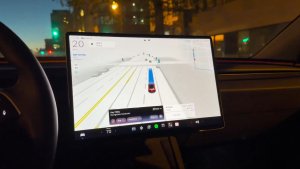
The jump to AI5 represents far more than just an incremental upgrade for Tesla’s self-driving hardware stack. AI5 is poised to rival the generational jump from Hardware 3 to Hardware 4, where the older HW3 computers had merely 15% of the memory bandwidth found on HW4/AI4. Looking ahead, AI5 is expected to outclass AI4 by delivering roughly 5x the raw performance.

That step change looks even more dramatic when you look at the physical layout of the current-gen boards. Modern Tesla vehicles currently rely on two AI4 chips working side by side on a single board. Elon Musk has previously said that a single AI5 chip can deliver five times the compute power of two AI4 chips combined. That processing power density will help reduce power consumption while giving neural networks plenty of room to scale.
Where AI5 Heads First
The start of prototype production comes after Musk confirmed earlier this spring that AI5 chip design was completed and had officially exited the tape-out stage. That cleared the engineering pipeline for Samsung to take the digital blueprints and start printing test patterns on physical silicon.
Samsung is targeting the end of 2026 to wrap up yield verification, with mass production at the Texas fab slated to kick off in 2027. Trial production already kicking off bodes well for that target timeline. Despite all of this progress, drivers shouldn’t expect to see AI5 inside a new Model 3 or Model Y anytime soon. Musk has noted that AI5 will debut in Optimus robots and AI training clusters at Tesla data centers long before reaching consumer vehicles.
Tesla maintains that existing AI4 silicon has plenty of headroom to achieve unsupervised autonomy. Driverless, steering wheel-less Cybercabs are already operating commercially without AI5 — though they do pack a beefier FSD computer than consumer builds — letting Tesla prioritize the newest silicon for its humanoid robot program and AI training. Eventually, Tesla plans to move to a nine-month development cycle across future chip iterations (Musk has roughly outlined designs up to AI9).
What About AI4+?

In the meantime, older vehicles face a separate path. While Tesla maintains AI4 can handle both the latest full-fledged FSD builds and future unsupervised capabilities, it has acknowledged that older HW3 cars will require hardware upgrades to support full autonomy. Tesla previously announced an upgraded AI4+/AI4.5 computer with more memory that’s widely viewed as the retrofit solution for HW3, though owners are still waiting for an official update on production and expected availability.
With trial production underway in Texas, Tesla’s long-term hardware roadmap is finally materializing in silicon. Even if AI5 lands in Optimus first, its eventual arrival in vehicles will give Tesla’s autonomous ambitions all the muscle they need.