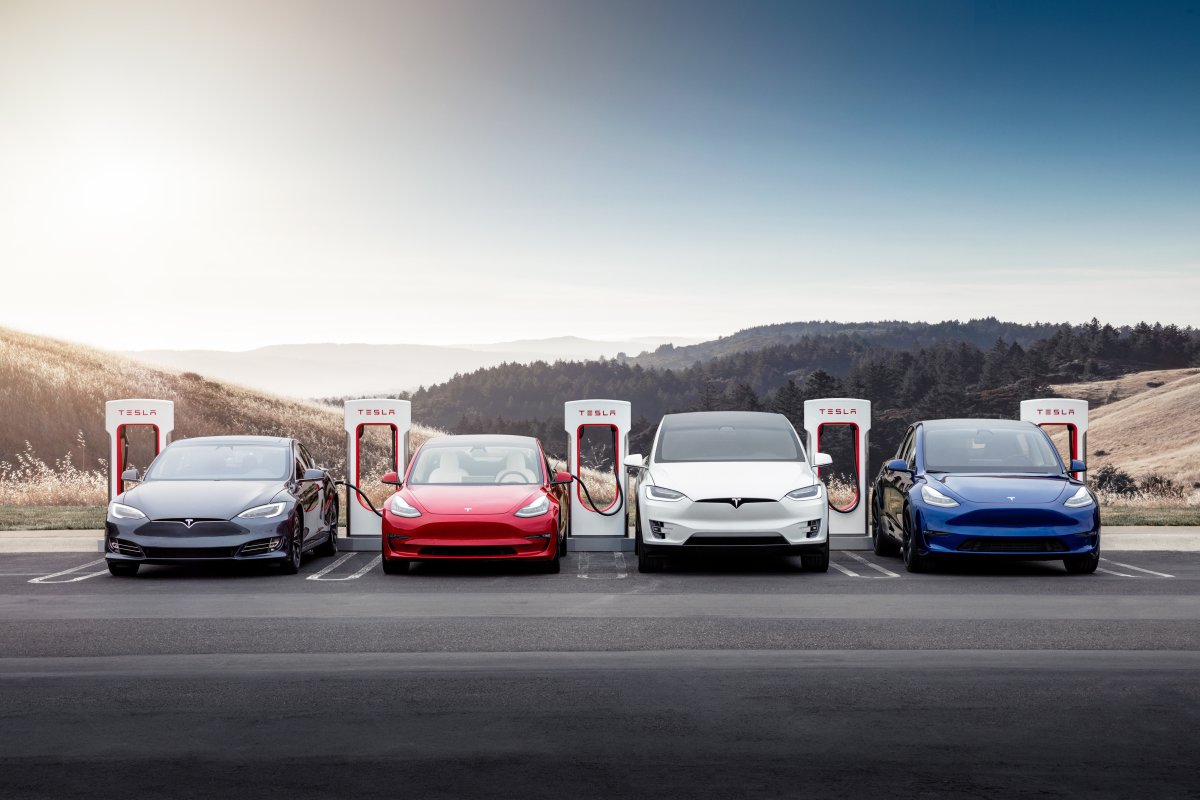
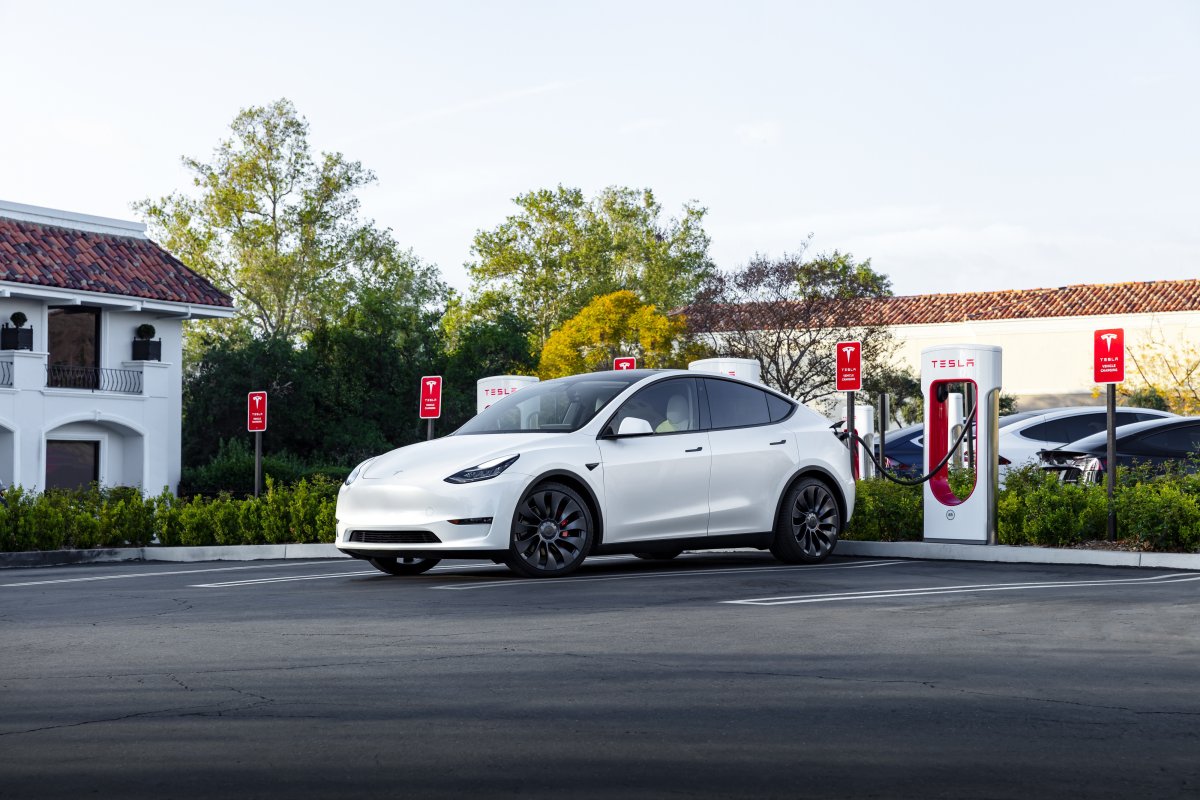
If your recent Supercharger sessions seem to cost a little more than they used to, you’re not imagining it. Tesla’s Supercharger prices have climbed up to 15% over the past year, depending on what’s plugged in. The jump was big enough to nudge up the average price of EV fast charging across the U.S.
According to the report, non-members now pay an average of $0.569 per kWh at Tesla Superchargers, 15% more than a year ago. These are the drivers who own non-Tesla EVs and don’t pay for the Tesla Supercharging Membership. Members pay the same rate as Tesla owners, at $0.396 per kWh, but that price also rose about 9%.
Rivian
A 15% jump sounds worse on paper than it feels in practice. A 60 kWh session now costs about $34.14 instead of $29.70, roughly $4.50 more. About 80% of EV charging happens at home, so the price bumps work out to around $66 more per year for the average non-Tesla driver who uses Superchargers for all of their public fast charging.
The per-kWh rate isn’t the only thing you pay, either. Depending on where you charge and how busy the site is, Supercharging may incur congestion or idle fees. In the U.S., those run $0.50 per minute when a site is at least half full and double to $1 per minute when it’s completely full. They’re waived if you move your car within five minutes. Our full guide to Supercharger idle and congestion fees explains how to avoid them.
Catching Up to Other Networks
The increase doesn’t make Superchargers the most expensive option out there. It mostly brings Tesla’s pricing in line with everyone else. Paren found that the national average for non-Tesla fast chargers has held steady at around $0.533 per kWh for five straight quarters. Tesla’s price bump alone pushed the overall average up about 2%, to $0.540 per kWh.
Not a Tesla App
Non-members now pay slightly more at a Supercharger than at the average third-party fast charger, but the gap is only a few cents per kWh, which the smoother, friction-free experience could easily justify.
A Network That Keeps Growing
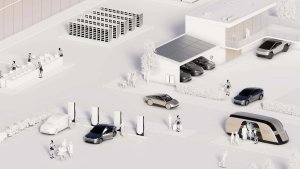
The higher prices come as the network keeps expanding quickly. Tesla’s global Supercharger network recently passed 85,000 stalls at 9,000 locations after adding about 2,700 new stalls worldwide last quarter, 1,287 of them in the U.S. Tesla is also speeding up deployment with pre-fabricated designs like its new pre-assembled Accordion Superchargers that are easier and cheaper to install.
More drivers from other brands are plugging into Superchargers every month, so prices probably won’t drop anytime soon. Even so, at under 60 cents per kWh, a Supercharger stop is still a much cheaper road trip expense than a tank of gas for most drivers.
The Cybertruck won’t be coming to Australia or New Zealand after all. Tesla is emailing reservation holders in both countries to let them know their orders are being canceled, nearly seven years after it started taking Cybertruck reservations.
“After careful consideration, plans to produce Cybertruck for Australia and New Zealand have been discontinued,” Tesla wrote in the email.
Refunds and a Free Year of FSD
Tesla says it’s “unable to fulfil your reservation and it will be cancelled,” and that reservation holders will get a full refund for any payments made. A separate email with refund details will follow, and Tesla will process the refund within 30 days of the customer confirming those details.
To thank them for their early support, Tesla is also offering affected reservation holders a complimentary one-year FSD (Supervised) subscription if they order a new Model 3 or Model Y by the end of 2026. At $149 AUD per month, that’s a $1,788 value as compensation for a $150 deposit that’s also being refunded.
Why Tesla Dropped the Right-Hand Drive Cybertruck
Both Australia and New Zealand drive on the left, so selling the Cybertruck there would have required a right-hand drive version. That market was always going to be small, and Tesla likely decided the expected sales weren’t enough to justify adapting its production line.
What This Means for the Cybertruck
The decision adds to questions about the Cybertruck’s long-term future. In the U.S., Tesla recently raised Cybertruck prices by $5,000 despite underwhelming sales, which led us to wonder whether the Cybertruck could eventually be discontinued. Scrapping a right-hand drive version after years of reservations doesn’t inspire much confidence, especially as Tesla takes on another low-volume vehicle in the new Roadster.
Still, the Model S and Model X discontinuation earlier this year came suddenly too. Those two sold far more units than the Cybertruck and had a richer legacy, helping bring both EVs and Tesla into the mainstream, but low volumes still played a part in Tesla ending them.
For now, the Cybertruck remains on sale in North America and other left-hand drive markets. Australian and Kiwi fans hoping to get one will have to look at importing a left-hand drive model, assuming local regulations (and their wallets) allow it.