Whenever Tesla prepares for a major product launch, observers expect dramatic stage demos and bold performance claims. But for the upcoming next-generation Roadster reveal, preparations appear to be reaching into the sky. A newly established no-fly zone in central Texas suggests that the unveiling might involve hardware operating well off the asphalt.
Longtime Tesla watcher Joe Tegtmeyer (@JoeTegtmeyer), known for his regular aerial tracking of Giga Texas, recently flagged the airspace closure on X. A Temporary Flight Restriction (TFR) has been established over SpaceX’s rocket development and test facility in McGregor, located just outside Waco — the site of the much-anticipated Roadster unveil. The FAA notice, first spotted by @INiallAnderson, bars all aircraft and drones within a 1.5-nautical-mile radius from the surface up to 10,000 feet, effective from September 18 through October 2.
Why the Timing Points Directly to the Roadster
The timing and location leave little room for coincidence. Tesla has officially scheduled its Roadster reveal event in Waco for October 1, with the airspace restriction concluding the following morning.
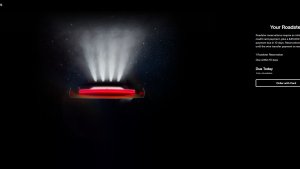
The public reveal has been nearly a decade in the making. First announced in late 2017, the halo sports car faced years of delays as Tesla prioritized mass-market models like the Model 3 and Model Y, along with the Cybertruck. After pushing back several target dates — including a tentative window earlier this spring and then deeper into the summer — Tesla recently reopened Roadster reservations for prospective buyers. A refundable $50,000 deposit now buys you a place in line ahead of next month’s presentation.

A Ground Demonstration or Actual Liftoff?
Tesla doesn’t usually close down airspace for product debuts. Airspace shutdowns are generally reserved for rocket launches or hazardous altitude testing. Preventing drone footage leaks makes sense if Tesla plans on doing some testing out in the open that it wants to keep under wraps ahead of the public reveal, but it doesn’t make sense for the event itself since Tesla typically livestreams its major unveils anyway (this month’s Cybercab launch was an outlier).
What’s more, Elon Musk recently emphasized that people need to witness this reveal firsthand to believe what the car can do. “We actually need an audience to vouch for the fact that this is not AI,” he said at an event earlier this week.
Instead, the strict 10,000-foot ceiling points directly to long-standing promises surrounding the Roadster’s optional SpaceX Package. Musk has repeatedly claimed the supercar could be equipped with cold-gas thrusters powered by high-pressure composite tanks, enabling sub-one-second 0-60 mph sprints and, perhaps even more outlandishly, the ability to briefly “fly.”
Those wild claims gained fresh traction after video from SpaceX’s McGregor facility started making the rounds recently, showing a shrouded gantry testing what appears to be a vehicle firing thrusters and lifting off the ground. Firing pressurized thrusters creates massive acoustic pressure and debris risks, easily explaining why regulators would mandate an empty safety envelope overhead.
I'll just put this out there https://t.co/VfpgpWLg0H pic.twitter.com/65i2ZmSEvl
— TheSpaceEngineer (@mcrs987) September 13, 2026
Whether the demonstration involves a short hover hop or an eye-watering thrust-assisted launch, the FAA filing indicates Tesla and SpaceX are staging something far beyond a standard vehicle demo. We’ll find out just how high the Roadster aims when the stage lights turn on in Waco. In the meantime, take a look at everything we know about the Roadster so far.