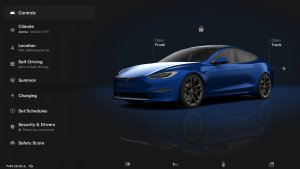
Gas cars burn the same fuel on their last day as they did on their first. EVs are different. Because they run on electricity from the grid, they get cleaner over time as that grid shifts toward renewable energy, even if nothing about the car itself changes.
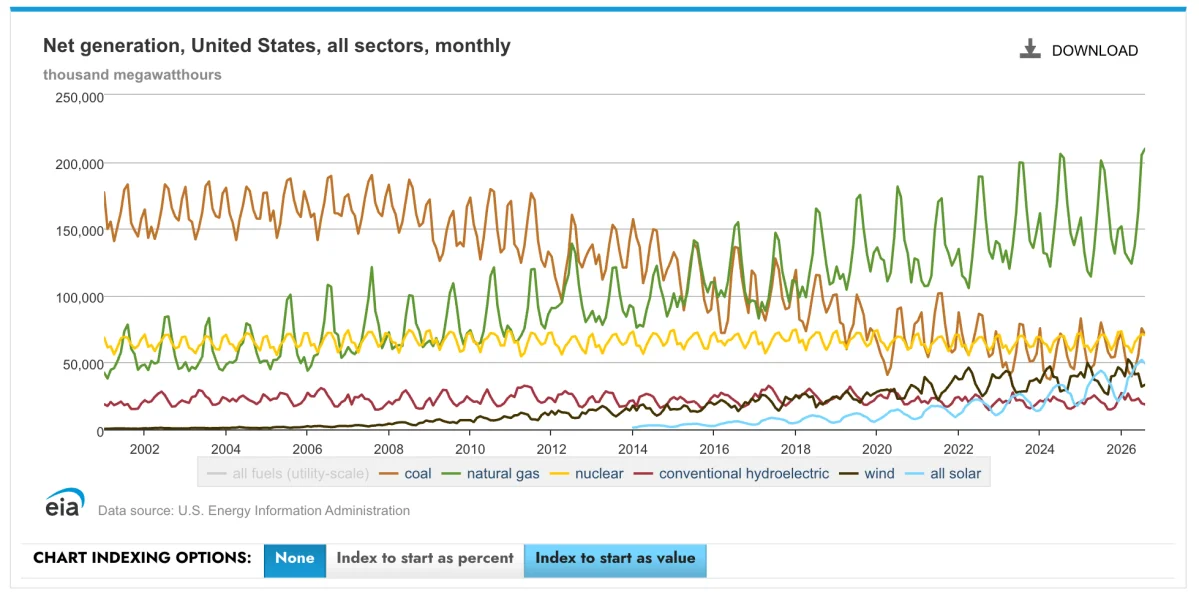
Data from the U.S. Energy Information Administration (EIA) shows how much that grid has changed in just the last few years.
Same Car, Cleaner Electricity
As an EV ages, its battery may lose some of its maximum driving range, but the car doesn’t get any less efficient. It uses about the same amount of energy per mile as it always has.
What changes is where that energy comes from. If you took delivery of a Model 3 when deliveries started in July 2017, here’s how the U.S. grid charging it has changed since then, based on EIA’s net generation figures:
Source | 2017 Share | 2025 Share |
|---|---|---|
Natural gas | 32.2% | 40.9% |
Coal | 29.9% | 16.6% |
Nuclear | 19.9% | 17.7% |
Wind | 6.3% | 10.4% |
Hydroelectric | 7.4% | 5.5% |
Utility-scale solar | 1.3% | 6.8% |
With a couple of months still left before we get full-year data for 2026, we’re using 2025 for this comparison instead. Renewable sources, including wind, solar, hydro, geothermal, and biomass, made up about 17% of utility-scale U.S. generation in 2017. In 2025, they made up about 24%. Add nuclear, and close to 42% of the grid now comes from sources that don’t burn fuel, up from 37% in 2017.
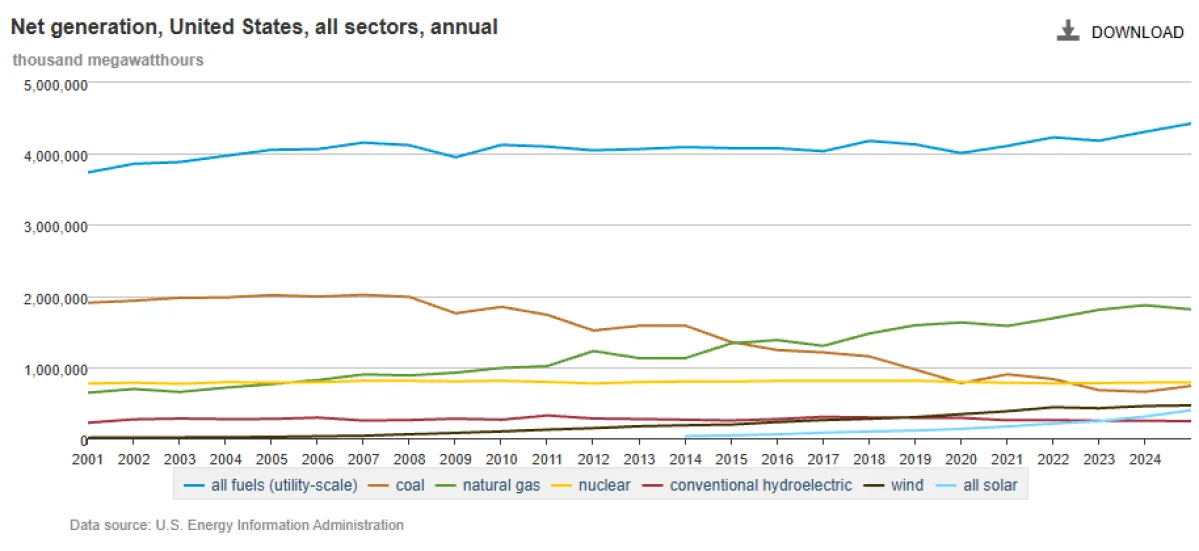
That shift happened even as overall demand grew. Total utility-scale generation rose from about 4.04 billion megawatt-hours in 2017 to 4.43 billion in 2025, and it’s only expected to grow as our appetite for AI data centers does.
Coal Is Falling Fast
The biggest change is coal. U.S. coal generation dropped about 39% between 2017 and 2025, from roughly 1.21 billion to 735 million megawatt-hours. Coal now produces only about 40% of what it did in 2002, when it was still generating more than half of the country’s electricity.
Natural gas passed coal as the largest source of U.S. electricity around the middle of the last decade and has kept growing since. Nuclear output has stayed almost flat since the early 2000s, but it now produces more power each year than coal because coal has fallen so far. Nuclear briefly passed coal in 2019 and has stayed ahead since 2022.
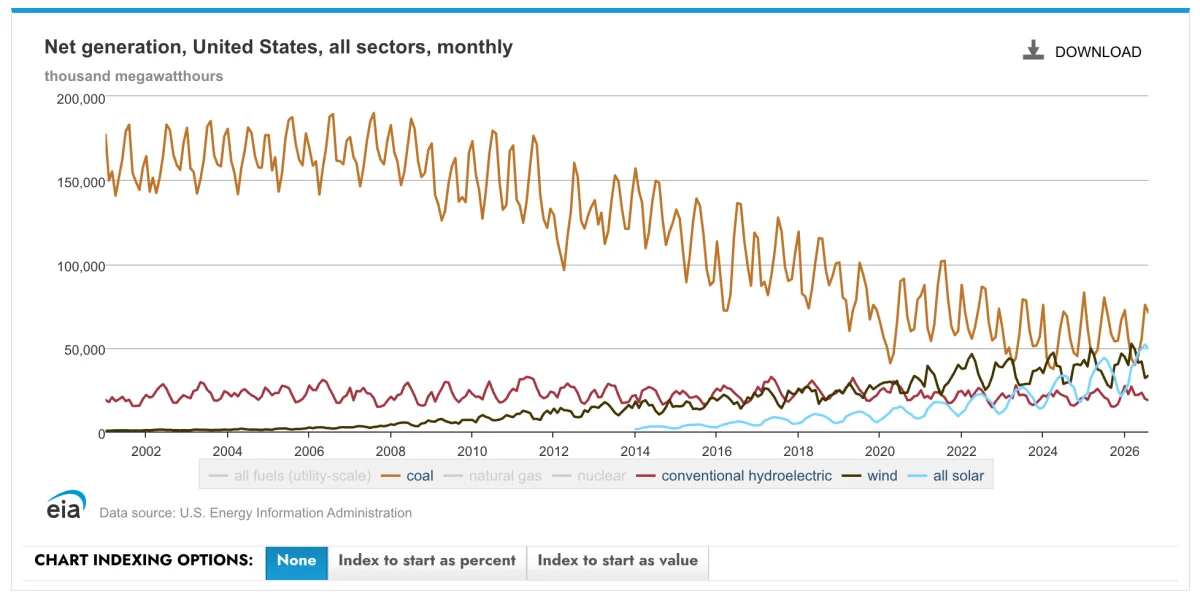
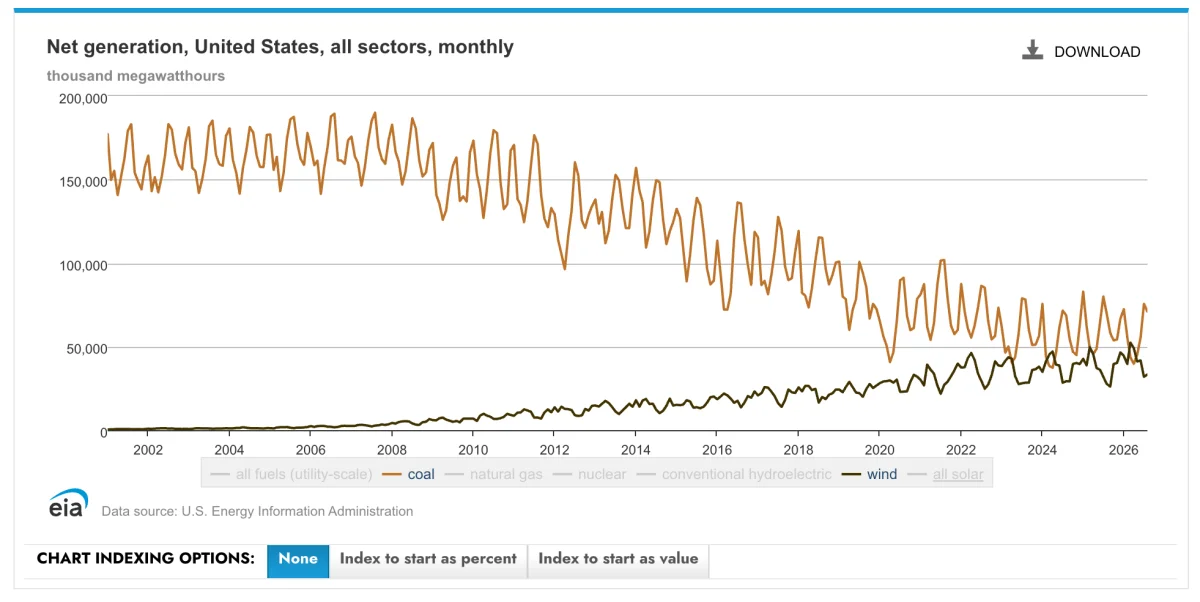
Renewables are starting to catch up too. Wind generation grew about 81% between 2017 and 2025, and EIA’s monthly data shows wind generation has already topped coal in some months, including during spring 2024 and early 2026. Utility-scale solar grew more than fivefold over the same period, and counting rooftop solar, total U.S. solar generation went from about 77 million megawatt-hours in 2017 to more than 393 million in 2025.

Cheaper to Run, Cleaner Every Year
EVs aren’t completely zero-emission when you count how the electricity is made, and building the battery has its own footprint. Even so, EVs come out ahead of gas cars over their lifetimes on the current grid mix because electric motors turn far more of their energy into motion than combustion engines do. And unlike a gas car, an EV’s emissions per mile keep dropping as the grid cleans up.
Cost is part of the picture, too. Like most new technologies, EVs cost more upfront early on, but scaling by Tesla and Chinese manufacturers has brought prices much closer to gas cars. Cheaper charging and lower maintenance help EVs win on total cost of ownership, and running on domestic electricity instead of gasoline also reduces reliance on imported oil. Policy debates are still ongoing, with a new House bill proposing to bring back the federal EV tax credit, but the efficiency advantage doesn’t depend on incentives.
If coal keeps falling and wind and solar keep growing at their current pace, the Tesla in your driveway will keep getting cleaner every year you own it.
Follow Us on Google
Add Not a Tesla App as a preferred source on Google to see more of our stories in Top Stories.
Add to Preferred SourcesOrdering a New Tesla?
Get FSD free for 3 months by using our referral code.