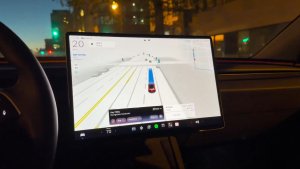
Tesla has made some subtle but significant changes to its owner's manual for the 2023.12 software update, revealing improvements to the Automatic Emergency Braking (AEB) system. These changes include the ability for AEB to function while the vehicle is in reverse and an increased operational speed range. The latest improvements reflect Tesla's continued commitment to enhancing the safety and performance of its vehicles.
Thanks to a reader named Randall, who brought the changes to our attention. The latest 2023.12 software update includes these improvements outlined in the updated Tesla owner's manual. Previously, the manual described AEB as being designed to reduce the impact of frontal collisions. But, as of the 2023.12 owner's manual, which was released a couple days ago, Tesla has changed this word to:
Automatic Emergency Braking is designed to reduce the impact of frontal and reverse collisions with limited functionality while in Reverse.
AEB Available at Higher Speeds
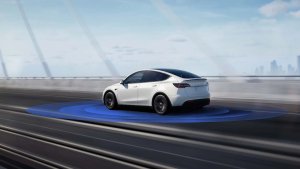
The new description in the updated owner's manual highlights a few key changes. Now, the system is designed to determine the distance from detected objects, not just those in front of the vehicle. When a collision is considered unavoidable, AEB will apply the brakes to reduce the vehicle's speed and the severity of the impact, just as before. However, the operational speed range has been increased, with AEB now functioning between approximately 3 mph (5 km/h) and 124 mph (200 km/h); it previously maxed out at 90mph (150 km/h).
AEB Recognizes Threats in Reverse and More
In addition to the increased speed range, AEB now works while the vehicle is in reverse. This new feature is expected to be available outside of Full Self-Driving (FSD) Beta and across various regions. Tesla typically specifies when a feature is limited to certain regions or requires FSD Beta, but no such limitations have been mentioned for the enhanced AEB.
These changes are in addition to the ones mentioned in the Impact Report, which included the system recognizing perpendicular threats.
The owner's manual also provides additional information on when AEB does not apply the brakes or stops applying them. These situations include:
Turning the steering wheel sharply
Pressing and releasing the brake pedal while AEB is applying the brakes
Accelerating hard while AEB is applying the brakes
The detected vehicle, motorcycle, bicycle, or pedestrian is no longer ahead
Furthermore, the manual clarifies that AEB is always enabled when starting your Tesla. To disable it for the current drive, users can touch Controls > Autopilot > Automatic Emergency Braking. It's important to note that even if AEB is disabled, the vehicle may still apply the brakes after detecting an initial collision to reduce further impact.
These updates to Tesla's AEB system are expected to improve overall safety for drivers and pedestrians alike. With automatic emergency braking now functioning in reverse and at higher speeds, Tesla continues to push the boundaries of automotive technology and safety. As always, Tesla owners should remain vigilant and attentive while driving, as no system can guarantee complete protection against collisions.