Earlier this year, Tesla unlocked the true potential of the Cybertruck's massive battery pack by introducing Powershare Grid Support in Texas. Now, Tesla is officially expanding its Vehicle-to-Grid (V2G) and Vehicle-to-Everything (V2X) capabilities to the largest electric vehicle market in the United States: California.
PG&E and @Tesla have just announced that the Cybertruck, Tesla Powershare Gateway and Tesla Universal Wall Connector have all been approved for participation in PG&E's residential Vehicle‑to‑Everything (V2X) program, marking a major milestone for bidirectional EV integration in… pic.twitter.com/kjrF7kyLKO
— Sawyer Merritt (@SawyerMerritt) April 20, 2026
The PG&E Integration
According to a recent press release from Pacific Gas and Electric Company (PG&E), Cybertruck owners within their massive service territory can now enroll in the utility's residential V2X program. This integration allows owners to actively use their trucks to support the local electrical grid and get paid for their energy contributions.
Tesla Energy officially confirmed the expansion on X, highlighting the dual benefits of the program.
.@Cybertruck, Tesla Powershare Gateway & Tesla Universal Wall Connector can now participate in PG&E's residential Vehicle‑to‑Everything (V2X) program
— Tesla Energy (@teslaenergy) April 20, 2026
Powershare Grid Support lets you power your home in an outage & earn money by selling power back to the electric grid during grid…
Hardware Requirements
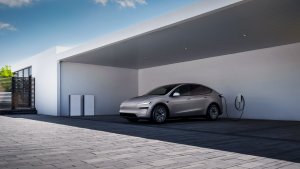
To participate in the California program, owners will need three specific pieces of hardware: the Cybertruck itself, a Tesla Powershare Gateway, and a Tesla Universal Wall Connector. This specific hardware combination allows the vehicle to safely isolate the home from the grid during a blackout to provide backup power, while also enabling it to seamlessly export energy back to the electrical grid when authorized.
Earning Money While Parked
The primary draw of Powershare Grid Support is the financial incentive. During periods of high grid stress, such as extreme summer heatwaves when air-conditioning demand spikes, PG&E will call on enrolled vehicles to discharge a portion of their battery packs back into the electrical grid.
In exchange for providing this distributed energy, Tesla owners will earn money. This effectively turns Cybertrucks into a grid power bank and generates revenue for the customer when the vehicle isn’t in use.
Building on the Texas Foundation
This California expansion follows the successful launch of V2G features in Texas back in February 2026. By proving the technology in two of the largest and most demanding energy markets in the country, Tesla is actively demonstrating how electric vehicles can act as mobile Megapacks. As more trucks hit the road, this decentralized network of batteries will play a crucial role in stabilizing local grids and providing vital backup power to communities.