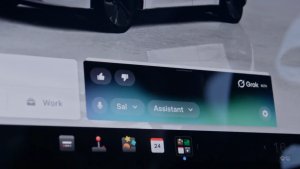
The National Highway Traffic Safety Administration (NHTSA) has concluded its investigation into Tesla's 'Passenger Play' feature, stating it will not pursue a recall of the scrutinized vehicles. Passenger Play allowed passengers in the vehicle to play certain games like the Sky Force Reloaded while the vehicle was in motion. Tesla was quick to respond to NHTSA's concerns and issued an update that requires the vehicle to be in park before games can be launched.
The closure of the probe comes amidst continuing concerns over the potential for driver distraction.
Investigation Ends, Still Leaves Room for Future Actions
While NHTSA's conclusion signifies a milestone in Tesla's ongoing scrutiny, it does not entirely absolve the electric vehicle maker. The administration emphasized that the end of the investigation does not mean a safety-related defect doesn't exist. Furthermore, the NHTSA's decision opens the possibility for future action if additional concerns arise.
NHTSA's apprehensions were primarily rooted in Tesla's decision to allow video games to be played on the front center touchscreen of the vehicle while in motion. Having acknowledged these concerns, Tesla voluntarily took action by disabling the 'Passenger Play' feature through an over-the-air software update soon after NHTSA launched its investigation in December 2021.
Tesla's Voluntary Disabling of Feature Commended
The administration confirmed that Tesla reported a 97% completion rate of the software update disabling 'Passenger Play', within a month of its release. The agency lauded Tesla's swift action, which showcased a responsible approach toward ensuring driver safety and mitigating distractions. This action appeared to significantly address NHTSA's concerns, as the agency cited the importance of "affirmative technology-based lockouts" as more effective than merely using labels or disclaimer screens.
Ongoing Scrutiny of Tesla's Autopilot System
Despite the conclusion of this specific probe, Tesla remains under the lens of the NHTSA, which is currently investigating Autopilot. The investigation, covering approximately 830,000 Tesla vehicles, aims to understand better human factors concerning Tesla interfaces and the dynamic driving task.
A History of Safety First
Tesla has always portrayed itself as an automaker that prioritizes safety. From advanced driver assist systems to top-tier safety ratings, the electric car manufacturer has consistently sought to revolutionize transportation safety norms. The swift action in disabling the controversial 'Passenger Play' feature further underscores the company's commitment to road safety and user well-being.
Tesla’s case serves as a potent reminder for all automakers that in-vehicle infotainment devices must balance entertainment and safety. In 2014, the NHTSA issued guidelines encouraging automakers to design in-vehicle devices so the driver can’t use them to perform inherently distracting secondary tasks while driving. As the lines between automobiles and technology blur, the importance of these guidelines will only grow.
Although the 'Passenger Play' investigation has concluded, Tesla’s journey with the NHTSA is far from over. The ongoing probe into Tesla’s Autopilot system indicates that the auto giant will remain under close watch to ensure the highest levels of safety for users and fellow road users alike.