As Tesla’s Full Self-Driving (Supervised) system gets better at handling city roads and highways, it is becoming clear where the software still struggles. Drivers can generally trust the car to get them from point A to point B, but once it arrives at the destination, the final parking job is often a completely different story.
Learning From Your Habits
The issue received renewed attention on X after Tom Blomfield, a partner at Y Combinator, praised the software but noted his one regular point of friction. He posted, “I no longer need to drive my car. The only time I take control is to back into my garage because it’s down an awkward ramp.”
Elon Musk chimed in with a solution, replying, “Upcoming releases of FSD will remember your parking preferences, so that the car goes to the right location at your home, office, school drop off, etc. Destination parking is by far the biggest reason people now intervene with FSD. Critical safety interventions are extremely rare.”
Upcoming releases of FSD will remember your parking preferences, so that the car goes to the right location at your home, office, school drop off, etc.
— Elon Musk (@elonmusk) June 17, 2026
Destination parking is by far the biggest reason people now intervene with FSD. Critical safety interventions are extremely…
While FSD's parking logic has improved in recent builds, teaching the neural net to remember your specific habits will bridge a massive gap. Early attempts to fix this came when FSD v14.1 introduced new Park at Destination options, but the choices remain limited and rigid. The car still parks at a stall far away from the front entrance at a grocery store more often than not, or pulls into the wrong spot in your driveway.

Tracking Disengagement Data
Musk’s insights into why drivers take over the wheel come directly from the vehicle data pipeline. Tesla first introduced its new FSD disengagement menu in v14.3.2 earlier this spring, which forces drivers to choose between options like Navigation, Parking, Critical, and Other whenever they take over control.

Because the pop-up cannot be dismissed without selecting a category, owners often tap options at random just to clear the screen while driving. Even with potential false positives, this is the first time Tesla has shared actual results from the feedback loop. Based on Musk's comments, parking is the most common cause of interventions, standard navigation issues and miscellaneous driver takeovers sit somewhere in the middle, and critical safety events are incredibly rare.
The upcoming parking preference tracking should go a long way in meeting the community's desire for solving the overall parking problem with more detailed options. In addition to this feature, giving drivers more granular controls to select specific spots in a parking lot or favor spots close to the entrance when routing to a store would be a major win.


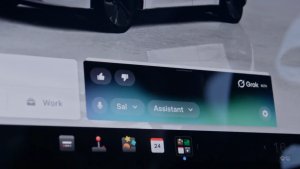
Musk did not provide a concrete release date for this automated parking preference learning, but it fits into a larger push to give owners much tighter control over their arrival experience. Later this fall, users will also gain the ability to use Grok voice controls with FSD, which could eventually let you tell the car exactly where and how to park using simple spoken commands.