With Tesla's purpose-built autonomous vehicle edging closer to public deployment, real-world development is hitting the streets. Recent ground testing has given us a glimpse into exactly how the Cybercab is learning to interact with everyday road obstacles.
Parking Lot Trials in Austin
A couple of new clips that have surfaced online show Tesla employees actively conducting hardware testing in an Austin, Texas, parking lot. The video footage, originally captured by @JksnRobotaxiATX, shows field engineers placing objects directly in front of the vehicle (via @tesla2moon).
— Jackson Blatz (@JksnRobotaxiATX) June 18, 2026
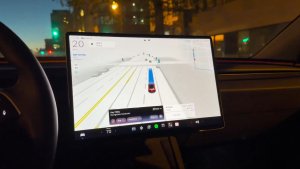
The engineers used an orange traffic cone and what looks like a can of paint to map out how well the front bumper camera picks up items sitting right in the lower blind spot. The Cybercab unit being tested had a steering wheel and an employee in the driver's seat, while Full Self-Driving (Supervised) appeared to be handling the low-speed navigation maneuvers.
— Jackson Blatz (@JksnRobotaxiATX) June 18, 2026
This field test comes after EPA filings gave us our first official look at the Cybercab’s specifications earlier this week. These documents outlined the core specs for the vehicle, including a 48 kWh battery pack and a maximum carrying capacity of 617 lbs (about 280 kg).
Expanding the Vision Stack
Because the Cybercab is built from the ground up to be driven autonomously by a vision-only neural network, it carries a robust suite of optics. This includes two (larger) front cameras on the windshield and a new internal trunk camera to watch over passenger luggage. It also utilizes the same front bumper camera that Tesla started adding to the Model Y with the “Juniper” refresh to catch low-lying obstructions.


Interestingly, consumer FSD doesn’t actually use the front bumper camera for driving — at least not on other models. Instead, newer Tesla vehicles that have that lower camera only use it for close-up parking, peering past blind intersections, and Actually Smart Summon (ASS).

Seeing this specialized blind spot testing means engineers could be working on integrating the front bumper camera into FSD’s driving logic. Alternatively, the test vehicle might already be running an internal FSD build that actively uses the bumper camera, and this could be validation testing, or they could simply be calibrating hardware for a completely separate safety feature.
Fleet Production Gains Momentum
The timing of these hardware tests fits perfectly into Tesla's aggressive Cybercab manufacturing ramp. Mass production officially kicked off at Gigafactory Texas in late April. Since then, production lines have gained momentum, and Cybercab units have been rolling off the line at a steady pace.
We have seen a mix of steering wheel-less units and those built with manual controls rolling out of Giga Texas, and public road testing is expanding. Over 150 Cybercabs were spotted staging in Texas lots recently, including more than 100 at the factory.
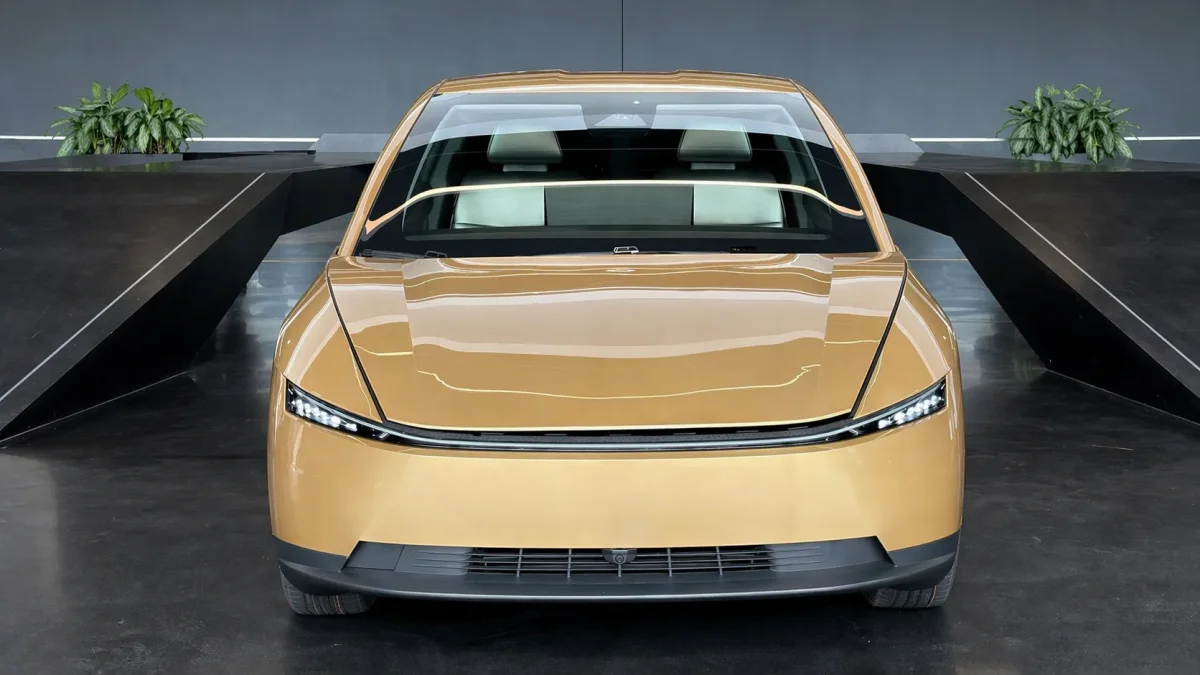


Tesla still has to navigate regulatory hurdles before it can legally offer commercial robotaxi rides using vehicles lacking pedals or steering wheels. However, the regulatory path is opening up locally. Tesla recently self-certified its FSD-driven Robotaxi vehicles as Level 4 autonomy-compliant in Texas under a fresh state law.
If push comes to shove, Tesla has confirmed a backup plan to deploy Cybercabs with steering wheels and pedals if certain regional laws demand them. Given that active Cybercab road testing is underway and the factory is pumping out fully built units in droves, seeing engineers fine-tune low-level obstacle detection suggests a public debut could be right around the corner.