Tesla is preparing to release a new update (version 2025.45.32.1) in China for the Lunar New Year, which falls on February 17th. This is the equivalent of the Holiday Update for everyone else.
While these updates focus on the needs and wants of Chinese owners, many are relevant to other regions and owners as well, and they often trickle out to other regions in future updates.
While this update includes Chinese-specific features such as Kugou Music, QQ Music Karaoke Mode, WeChat Integration, and more. One feature in particular applies to everyone, and it should have everyone pretty excited.
Tesla is calling this new feature the “Automations” app, which will allow owners to program their vehicles to perform specific actions based on predefined triggers.
This is similar to the popular “If This Then That” (IFTTT) service, which lets you define conditions and actions when those conditions are met. For example, if the driver door is opened (condition) and there’s a phone on the wireless charger (condition), then the vehicle should say “Please don’t forget your phone” (action).
Release Notes
These are the translated release notes of the new Automation App.
Use the new “Automations” app to create a personalized vehicle experience. You can build custom automation routines for different daily scenarios.
By creating your own exclusive automations, when the vehicle detects that a certain event has occurred and specific conditions are met, it will automatically perform predefined actions.
For example, you can set an automation so that when the driver’s door opens (event), if someone is detected in the driver’s seat (condition), the system will play a voice reminder saying “Please don’t forget to take your personal belongings” (automated action).
How It Works
Based on the leaked images and the translated text, the Automations app appears to function as a simplified scripting engine for the car. It uses a three-step logic flow similar to iOS Shortcuts or Tasker on Android.
In the release notes, Tesla specifically lists an example that’s possible: When the driver’s door opens, if someone is detected in the driver’s seat, the system will play a voice reminder saying, “Please don’t forget to take your personal belongings.”
That automation would look something like this:
Event: Something happens (e.g., Driver’s Door Opens).
Condition: A specific state must be met (e.g., Driver is Seated).
Action: The car performs a task (e.g., Play Voice Message).
The real power of this feature is that you can use any combination of the system's available conditions and actions, chaining them together to create truly personalized features.
Tesla has used something like this for years, adding features such as turning on the dome lights when the doors are opened or playing a fart sound when someone sits down. Now, they’re giving users the power to create their own, personalized features.
Conditions & Actions Available
Unfortunately, this update is still in testing with Tesla employees, so the information available is extremely limited. The only things we have to go by are the release notes and the example Tesla provided.
However, the fact that Tesla’s example said you could set an event like the door opening or someone sitting in the driver’s seat, and an action of the vehicle saying specific words, leads us to believe there will be numerous options.
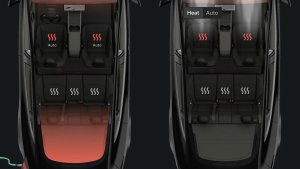
Other events could be selecting a driver profile, opening a window, shifting into Park, using the turn signals or enabling FSD. The actions could be even more varied, such as turning on the headlights and dome lights, changing the ambient lighting color, playing a sound, turning on seat heaters, opening a specific app, and more.
However, we’ll have to wait until this update starts rolling out to the public to know which events and actions are available.
Vehicle Automation
For years, Tesla owners have relied on third-party API apps, complex API workarounds, or OBD-port access to automate their vehicles. This update would bring some of that control natively into the infotainment screen.
The release notes for the feature don’t mention anything specific to the Tesla app, so for now we expect these controls to be exclusively available in a new Automations app in the vehicle.
This feature empowers users to build their own micro-features. Instead of users requesting features that may be unique to their situation, they’ll now be able to build them themselves.
China First, Global Later?
As of now, the feature is tied to firmware 2025.45.32.1, a China-specific build that has gone out to select employees.
Given the universal appeal of programmable automation, it is highly likely that this feature will be migrated to North American and European fleets in a 2026 software update, much like we’ve seen with other features that initially started in China.