To show off its scalability, Tesla has officially launched its first major expansion of its Robotaxi service area in Austin, Texas. The expansion comes just 22 days after the program’s initial public launch.
That’s a stunningly quick pace that sets a benchmark for how fast we’ll be expecting Tesla to roll out additional expansions as they validate and safety-check in additional area and cities. The new geofence not only adds a significant amount of new territory, but also makes Tesla’s service area in Austin approximately 4 miles larger than Waymo’s.
The expansion, which went live for users in the early access program earlier today, reshapes the map into… what we can call an upside-down T (Tesla logo meaning), but it’s open to interpretation. It helps connect more parts of the city, and increases the service area by more than double.
So far, the initial launch has been operating without any significant issues, which means Tesla is ready and willing to continue expanding the program.
Rapid Scaling
While the larger map is a clear win for early-access users and especially those who live in Austin, the most significant aspect here is just how fast Tesla is going. Achieving a major expansion in just over three weeks since its initial launch is a testament to Tesla’s generalized autonomy approach with vision only.
Unlike methods that require intensive, street-by-street HD mapping that can take months or even years just to expand to a few new streets, Tesla’s strategy is built for this type of speed.
This is Tesla’s key advantage - it can leverage its massive fleet and AI to build a generalized, easily-applicable understanding of the world. Expanding to a new area becomes less about building a brand-new, high-definition map of every street light and obstacle, but instead a targeted safety validation process.
Tesla can deploy a fleet of validation vehicles to intensely focus on one zone, allowing the neural nets to learn the quirks of that area’s intersections and traffic flows. Once a high level of safety and reliability is demonstrated, Tesla can simply just redraw the geofence.
Geofence Size
Tesla went from approximately 19.7 sq mi (51 sq km) to 42.07 sq mi (109 sq km)in just 22 days, following the initial launch and safety validation. Within a few short days of launch, we began seeing the first Tesla engineering validation vehicles, hitting Austin’s downtown core, preparing for the next phase.
The larger footprint means more utility for riders, and that’s big, especially since the new service area is approximately four square miles larger than Waymo’s established operational zone in the city.
Highways and Fleet Size
The new territory enables longer and more practical trips, with the longest trip at tip-to-tip taking about 42 minutes from the southern edge of the old geofence to the northern edge of the new geofence. For now, Tesla has limited its fleet to operating exclusively on surface streets and does not use highways to complete its routes.
We also don’t know if Tesla has increased the vehicle fleet size quite yet - but if they’re intending to maintain or reduce wait times for even the early-access riders, the fleet size will easily need to be doubled to keep up with the new area.
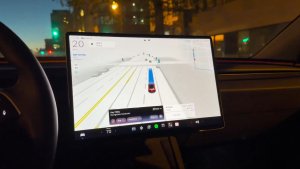
This video clip shows the @robotaxi follows the Interstate (I-35) but does not take the highest.
— Joe Tegtmeyer 🚀 🤠🛸😎 (@JoeTegtmeyer) July 14, 2025
Nice views of downtown Austin too! pic.twitter.com/rAn9McBH7e
Next Expansion Underway
Perhaps the most telling bit about how fast Tesla is expanding is that they’re already laying the groundwork for the next expansion. Validation vehicles have been spotted operating in Kyle, Texas, approximately 20 miles south of the geofence’s southern border.

This means that while one expansion is being rolled out to the public, Tesla is already having its engineering and validation teams work on the next expansion. That relentless pace means that if this keeps up, Tesla will likely have a good portion of the Austin metropolitan area - the zone they’ve applied for their Autonomy license for - serviceable by the end of 2025.
The pilot? A success. The first expansion? Done. The second expansion? Already in progress. Robotaxi is going to go places, and the next question won't be about whether the network is going to grow. Instead, the new questions are: How fast, and where next?