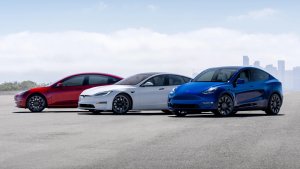
Tesla has introduced Powershare Home Backup for new Model 3 and Model Y vehicles in the U.S., bringing Vehicle-to-Home (V2H) functionality to its two best-selling cars. Tesla Energy announced on X that it’s “now available for new Model 3 & Model Y with Powerwall 3,” and says it can extend home backup by “over 2 days.”
This is a major upgrade for the lineup since the base Model 3 and Model Y didn’t even support Vehicle-to-Load (V2L) applications before, let alone V2H. Now, all Model 3 and Model Y trims are getting the hardware required for bidirectional power delivery, going straight up to V2H support. The feature applies to orders placed October 1, 2026, or later, and it brings Model 3 and Model Y up to the same Powershare capability Cybertruck owners already have.
How Powershare Home Backup Works
During an outage, a compatible Tesla plugged into your home’s Wall Connector can send its stored energy to the house alongside Powerwall. Tesla’s promo video shows exactly that setup: a Powerwall 3 and Wall Connector mounted on an exterior wall, a driver plugging in a new Model 3, and people running a fridge and laundry machine inside. Inside the vehicle, you can set limits for how much of the battery Powershare can discharge.
Powershare Home Backup is now available for new Model 3 & Model Y with Powerwall 3
— Tesla Energy (@teslaenergy) October 6, 2026
Extend your home backup by over 2 days with your vehicle pic.twitter.com/a0codvZ2yH
Powerwall 3 Is Required for Now
For homes with Powerwall 3 and a Wall Connector, no additional equipment is needed. According to Tesla’s updated Powershare page, Powerwall owners don’t need a dedicated Powershare Gateway and can simply piggyback off the existing hardware. The feature is enabled through an over-the-air update, and Powerwall 2 and Powerwall+ support is coming soon.

You’ll still need a Powerwall if you have a Model 3 or Model Y. Only Cybertruck works standalone, using a Universal Wall Connector and Powershare Gateway. Tesla likely wants to avoid undercutting its energy business by letting cars replace home batteries.
Much More Power Than V2L

Model 3 and Model Y trims that supported V2L were limited to 2.4 kW. That’s enough for tools and devices but not full-home backup. The new vehicles output 11.52 kW continuous at 240V AC, matching Cybertruck’s Powershare, with an 185A LRA motor start rating and UL1741 CRD certification.
How Long Can Your Car Power Your Home?
Tesla estimates how much backup each vehicle adds in the table below. The battery sizes are approximate since the same trim can have a different usable capacity depending on when it was produced.
Model and Trim | Backup Duration | Approx. Usable Battery Capacity |
|---|---|---|
Cybertruck (All Trims) | Over three days | 123 kWh |
Model 3 Premium/Performance, Model Y Premium/Performance | Over two days | 75 to 85 kWh |
Model 3 Standard, Model Y Standard | Up to two days | About 70 kWh |
Those estimates assume an average U.S. home using 30 kWh per day and a vehicle charged to 90%, so your mileage may vary. For scale, a Powerwall 3 holds just 13.5 kWh of usable capacity, meaning a Model 3 or Model Y stores roughly five to six times as much. Cybertruck's 123 kWh pack is why it reaches over three days.

Availability
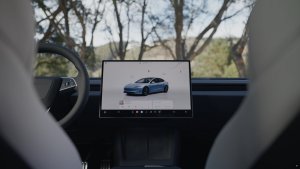
New vehicle orders from October 1 onward are all compatible. Some earlier Model 3 and Model Y builds are also capable, most likely those built just before that date, once the new parts hit production lines. To check if your vehicle has the feature, go to Software > Additional Vehicle Info on the touchscreen and look for Powershare Support: Enabled.
Powershare Grid Support, which sends excess energy to the grid when demand is high and earns you money, is available for Cybertruck in limited markets. It isn’t available for Model 3 or Model Y yet.
Expect Powerwall 2 and Powerwall+ support in the U.S. to arrive first, followed by Tesla expanding Powershare Home Backup to other markets. Tesla just added V2L functionality to all Model 3 and Model Y vehicles built at Giga Shanghai, so those could be next in line for V2H support.