For years, the promise of an autonomous robotaxi and Unsupervised FSD has been just over the horizon. But in a candid statement during an xAI hackathon, Elon Musk stated that it’s about to become a reality.
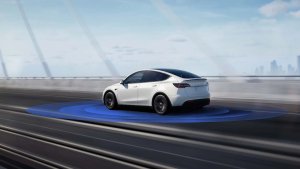
According to Elon, Tesla is preparing to launch fully driverless Robotaxis in Austin, Texas, with no human safety monitors inside, in approximately three weeks.
This won’t be a continuation of the test with a hovering Tesla safety monitor in the passenger seat. This is proper Unsupervised FSD - a vehicle operating entirely on its own, crossing the autonomy Rubicon from advanced driver assistance to genuine autonomy.
FSD is Solved
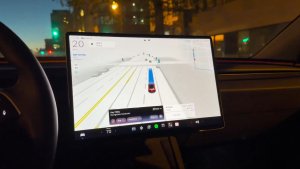
Elon’s confidence in this timeline appears to stem from recent breakthroughs with FSD’s performance. "Unsupervised is pretty much solved at this point," Musk stated, referring to the core challenge of unsupervised driving.
He also went on to confirm that Tesla is currently in a validation phase for Unsupervised Robotaxi. This step will involve proving that the system’s intervention or failure rate is sufficiently low to operate without human oversight.
If successful, this validation clears the way for the removal of the safety driver - a milestone that competitors like Waymo took years to achieve, but Tesla will take mere months to accomplish after launching its Robotaxi service in June of this year.
NEWS: Elon Musk says FSD Unsupervised is "pretty much solved at this point" and that @Tesla will be launching Robotaxis with no safety monitors in about 3 weeks in Austin, Texas. He also teased a new FSD model is coming in about 1-2 months.
— Sawyer Merritt (@SawyerMerritt) December 10, 2025
"We're just going through validation… https://t.co/Msne72cgMB pic.twitter.com/i3wfKX3Z0r
A Small Model
The most technically revealing portion of Elon’s update is what is driving the car. He clarified that this initial Austin launch will be powered by “quite a small model.” However, given that he is speaking at the xAI hackathon, it should be mentioned that LLMs like Grok are hundreds, if not thousands, of times more compute-intensive and larger than specialized tools like FSD.
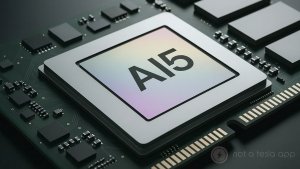
However, it also implies that Tesla has managed to optimize its current architecture on a highly polished version of FSD v14. This version can handle the specific operational design domain of Austin without needing a massive compute overhaul like AI5.
For a known, geofenced environment, the current model has reached a local maximum of proficiency that effectively solves Unsupervised FSD. The next step will be taking all these learnings and applying them to the more generalized consumer FSD models.
Unsupervised is pretty much solved at this point
Reasoning in Larger Model Next Year
While the small model handles the immediate launch, Elon never misses a chance to tease what’s next. In this case, a new model, described as an order of magnitude larger, is slated for deployment in January or February 2026 - likely FSD v14.3.
Unlike the current iteration, which relies heavily on learned reflexes, this new model will introduce reasoning and further reinforce learning capabilities. We did a deep dive on reasoning and System 2 thinking here, if you’re interested in learning what exactly this means.
In short, however, it allows the car to deliberate and plan through complex, novel scenarios, rather than just reacting to them in the moment. This larger model will be the key to scaling FSD Unsupervised nationwide.
For now, though, all eyes will be on Austin. In three weeks, potentially by the end of 2025, if Elon’s timeline holds, the training wheels will finally come off.